On 7/14, a cyclist riding in the bike lane on The Embarcadero hit a pedestrian crossing with the traffic light. She died a month later. While rare, this fatality shows why all vehicles, motorized or not, need to respect traffic laws.


The victim, 67-year-old Dionette Cherney, was visiting from Washington, D.C. She "suffered a head injury (on July 14) in the crash, from which she did not recover". Her death now opens "the question of what charges, if any, might be filed against the (25-year-old) cyclist."
Cherny is "the first pedestrian killed by a cyclist in five years in the Bay Area, according to the Bay Citizen's Bike Accident Tracker, which charts all bike crashes reported by police between 2005 and 2010." (Bay Citizen, July 15).
"In San Francisco, cyclists don't pose as great a risk to pedestrians, reports the transportation site SF Streetsblog: "811 people were injured by drivers last year, 18 people were injured by bicyclists, according to SFPD data."
The tragic collision also serves as a reminder that "ultimately, people on bikes should yield to people on foot," said Elizabeth Stampe, the executive director of Walk San Francisco".
Thanks to Ellen Fletcher
Read the full story: Woman Dies One Month After Being Hit By Cyclist In San Francisco
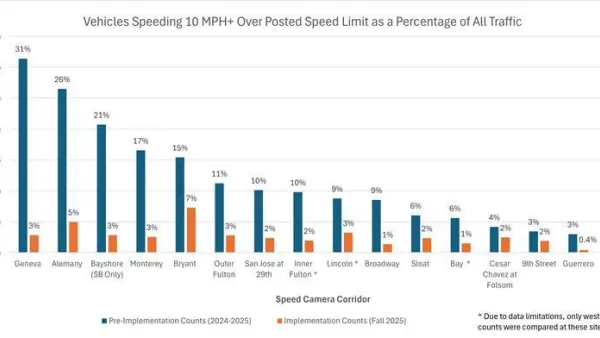
Data: San Francisco Traffic Cameras Reduce Speeding by 72%
The city’s automated enforcement program has led to a dramatic drop in speeding at camera locations.
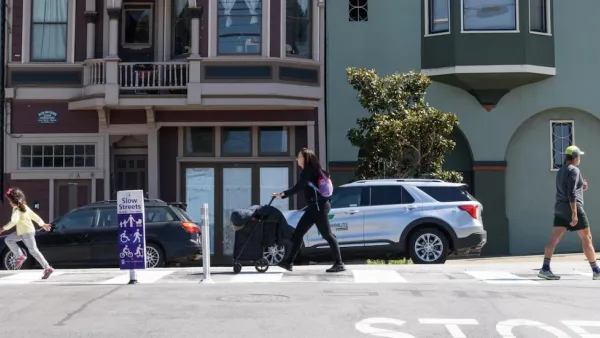
San Francisco Slow Streets Bucks Citywide Trend, Reducing Injuries by 61 Percent
Low-cost interventions aimed at slowing traffic are making a major impact on road safety.
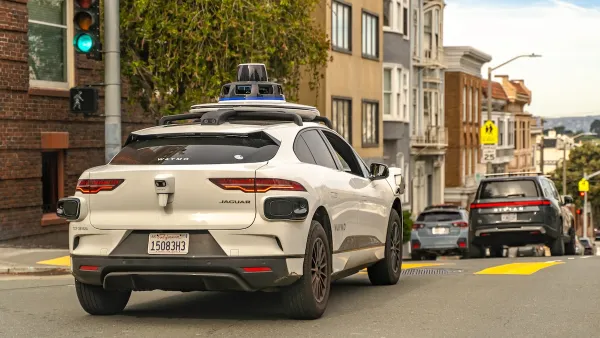
Waymo Robotaxis Often Fail to Stop for Pedestrians
One journalist recorded more than a dozen instances of Waymo autonomous cars speeding by when he tried to cross the street.

Planetizen Federal Action Tracker
A weekly monitor of how Trump’s orders and actions are impacting planners and planning in America.

California plans to bury El Niño’s downpour
If the state plays its cards right, it may be able to store a billion acre-feet of El Niño’s water in aquifers.

Desperate measures: Advocates weigh draining Lake Powell to fill Colorado River
Draining the reservoir could reduce evaporation losses by a couple hundred thousand acre-feet.

Mamdani’s pied-à-terre tax survives legal challenge
A panel of judges found that the plaintiffs failed to demonstrate injury as a result of New York City's implementation of the tax.

Eastern Nebraska is running out of electricity
Data centers and electrification are straining eastern Nebraska’s grid, throttling economic development.

Seattle passes record-breaking transit services expansion
Proposition 1 will double the city’s transit tax to add 95,000 more bus trips and preserve 180,000 bus trips annually.

FREE Course: Walkable City 1: Why Walkability?
After describing his path towards focusing on walkability as the essence of good planning, Jeff Speck marches through his five principal reasons for making more walkable places.
Reinventing Malls: Planning Alchemy—Turning Gray Fields Into Gold
The course focuses on the opportunities and imperatives that shape reinvention of mall sites.

City of Rosemead
Rutgers University, Edward J. Bloustein School of Planning and Public Policy
One Hundred Miles
University of Michigan School for Environment and Sustainability (SEAS)
Hunter College, City University of New York (CUNY)
The Architects Foundation
City of Cambridge
Montrose County
The Pocatello Development Authority