The doubling of car traffic in the past 20 years in Mumbai has created a transit culture that has become dangerous for pedestrians. More than 44 percent of Mumbai citizens walk to work, and 78 percent road fatalities are pedestrians, a study finds.


Shrinking pedestrian amenities has made the city a more dangerous environment for walkers, reports Madhavi Rajadhyaksha for Tamil News Network (TNN reports are published on The Times of India):
"Footpath width ranged from nil to three metres on the trunk road from Worli Naka to the Racecourse , falling short of the mandatory minimum width in many pockets , despite a rush of 759 adults and 259 children every hour during peak hours. 'There used to be over three-metre-wide pavements in the past which have shrunk after a flyover was constructed and road widening undertaken. Existing pavements are reduced due to encroachments by electric and telecom boxes, trees and even bus stops,' said (National Environmental Engineering Research Institute) director Rakesh Kumar."
Read the full story: City has no space for the pedestrian

2022 Deadliest Year for Pedestrians in Four Decades
Pedestrian deaths reached a four-decade high last year, signaling the failure of Vision Zero policies in most U.S. cities.
America's Killer Roads
This oped takes on American street design and blames it for causing countless road injuries and deaths.
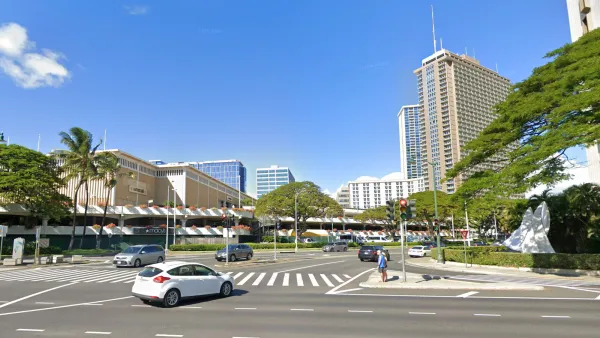
Hawaii DOT takes action after reporters call attention to dangerous crosswalk
The state made changes to a treacherous intersection after reporting revealed that traffic light timing was posting a threat to pedestrians.

Planetizen Federal Action Tracker
A weekly monitor of how Trump’s orders and actions are impacting planners and planning in America.

Amtrak, CN end decades-long dispute with eight-year agreement
The new operating agreement establishes an updated framework for the companies to work together, including processes to resolve disputes.

Judges permit Denver to divert 77,000 acre feet from the Colorado River for reservoir expansion
Overuse and climate change have caused the Colorado River’s water levels to plummet.

NYC DOT wants faster, more permanent street upgrades
The city is examining ways to build more concrete infrastructure without getting entangled in 'decades-long' projects.

'Something we’ve never seen before:' rising utility rates could strain city finances nationwide
Data centers, climate change and other factors have caused utility rates in the United States to increase by 38% since 2020.

Trump to overrule local leaders, lease millions of acres of America’s Pacific Island territories’ seafloors to mining companies
International law says that the Indigenous people of America’s territories have a right to prior and informed consent regarding projects that impact their countries.

FREE Course: Walkable City 1: Why Walkability?
After describing his path towards focusing on walkability as the essence of good planning, Jeff Speck marches through his five principal reasons for making more walkable places.
Reinventing Malls: Planning Alchemy—Turning Gray Fields Into Gold
The course focuses on the opportunities and imperatives that shape reinvention of mall sites.

Harvard University Graduate School of Design
KFH Group Inc.
Greater Baltimore Committee
The Architects Foundation
University of Cincinnati Online
The Pocatello Development Authority
The Urban Renewal Agency of the City of Pocatello