The youth of America will ditch its cities in favor of the suburbs, according to this op-ed from Joel Kotkin.


Kotkin writes that the latest census figures show more people moving into suburban areas -- including younger populations.
"The simple, usually inexorable effects of maturation may be one reason for this surprising result. Simply put, when 20-somethings get older, they do things like marry, start businesses, settle down and maybe start having kids.
An analysis of the past decade's Census data by demographer Wendell Cox shows this. Cox looked at where 25- to 34-year-olds were living in 2000 and compared this to where they were living by 2010, now aged 35 to 44. The results were surprising: In the past 10 years, this cohort's presence grew 12% in suburban areas while dropping 22.7% in the core cities. Overall, this demographic expanded by roughly 1.8 million in the suburbs while losing 1.3 million in the core cities."
Read the full story: Why America’s Young And Restless Will Abandon Cities For Suburbs
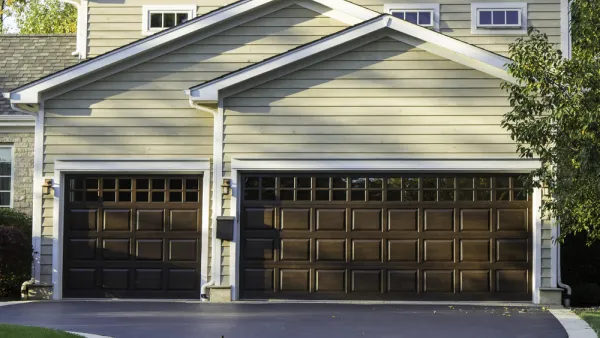
Prices Pushing Home Buyers to Suburbs
Unlike previous generations that fled cities, in part over of fears of crime, today people leave many cities because they can't afford them.
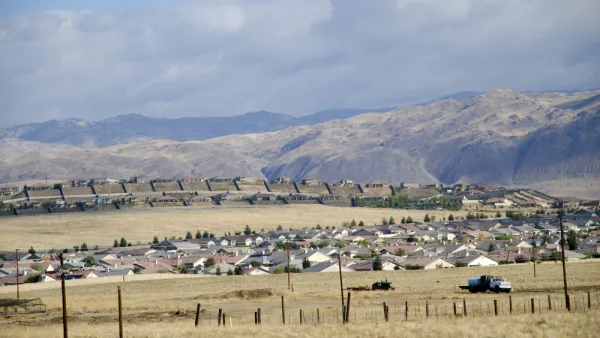
Exurbs Growing Fast
American exurbs growing again, after brief period of urbanization.

And the Oscar Goes To...
Many of the Best Picture nominees are set in cities, and none are focused on suburbia.

Planetizen Federal Action Tracker
A weekly monitor of how Trump’s orders and actions are impacting planners and planning in America.

Eastern Nebraska is running out of electricity
Data centers and electrification are straining eastern Nebraska’s grid, throttling economic development.
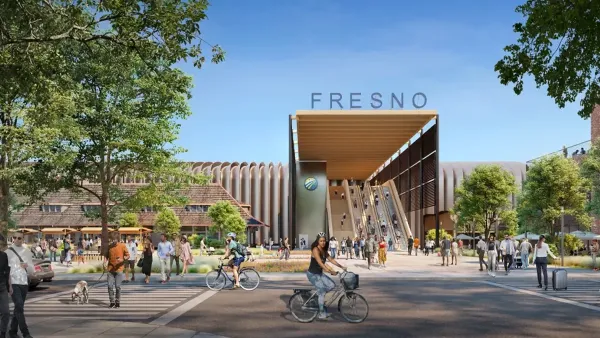
California High-Speed Rail Authority picks trainset manufacturer
The California High-Speed Rail Authority aims to start servicing passengers by 2033.

Massachusetts bogs generate both power, and cranberries
Putting solar panels above farmland is one way Massachusetts is advancing toward its goal of net-zero carbon emissions by 2050.

What could the future of LA transit look like under Raman?
The mayor-elect views broken sidewalks and potholes as crises that can be fixed with better governance.

States are counting on battery farms. Some towns don’t want them.
While fire safety has improved, some communities are still wary.

FREE Course: Walkable City 1: Why Walkability?
After describing his path towards focusing on walkability as the essence of good planning, Jeff Speck marches through his five principal reasons for making more walkable places.
Reinventing Malls: Planning Alchemy—Turning Gray Fields Into Gold
The course focuses on the opportunities and imperatives that shape reinvention of mall sites.

City of Rosemead
Rutgers University, Edward J. Bloustein School of Planning and Public Policy
One Hundred Miles
University of Michigan School for Environment and Sustainability (SEAS)
Hunter College, City University of New York (CUNY)
The Architects Foundation
City of Cambridge
The Pocatello Development Authority
The Urban Renewal Agency of the City of Pocatello