Abu Dhabi has released a new 20-year plan. It planners argue that it will be flexible enough to withstand changes in the global economy, should they come.


"The project for the downtown area, part of an investment plan called Vision 2030, will focus on upgrading infrastructure to accommodate population growth and adding developments such as housing for as many as 50,000 people, shopping malls, roads and a public transportation system, officials with the Abu Dhabi Urban Planning Council told reporters in the capital yesterday.
'We're planning for the coming 20 years so our plans are always flexible, subject to changes based on the variables or the changes that are happening around us,' said the chief engineer of the project, Amr Hamade. He wouldn't disclose the cost, saying he expects it to change over the course of the work."
Though oil money has enabled the emirate to withstand the current downturn in the economy, its property market has faced troubled and is expected to see more in the coming years.
Read the full story: Abu Dhabi’s 20-year urban plan gives priority to housing

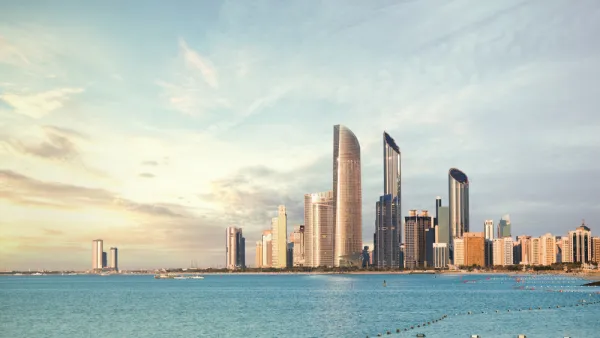
Largest Desalinated Water Reserve Ever Unveiled in Abu Dhabi
The UAE has created a storage facility under the desert that can provide up to 100 million liters per day in the event of an emergency.

Hyperloop Readies For BIG Debut in the UAE
A test of a "fully-operational" Hyperloop transportation system is scheduled to take place next week in the United Arab Emirates.
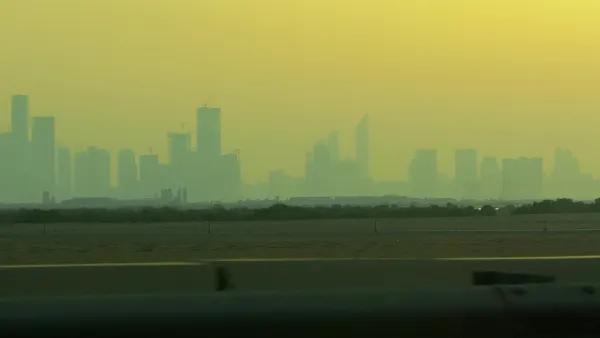
Planning for an Eco-Friendly City in the Desert
Building a new eco-friendly city in the middle of a country so reliant on fossil fuels is no easy task, but development is well underway for Masdr City to rise in the UAE

Planetizen Federal Action Tracker
A weekly monitor of how Trump’s orders and actions are impacting planners and planning in America.

Chicago breaks ground on $3 billion megadevelopment
The new neighborhood, titled Foundry Park, will one day host 3,700 residences.

This MA town is drowning in its own sewage — and residents like it that way
Susan Murcott, a waste water expert, said if Carlisle didn't address their leaking sewage, the problem could turn “deadly.”

Amtrak cuts ribbon on Seattle Airo maintenance facility
The $250 million, nearly 100,000-square-foot building can house an entire Cascades Airo trainset.

To power data centers, Google seeks autonomous control of thousands of homes’ electricity
The tech company has signed a deal to indirectly pay Mid-Atlantic residents to reduce their power demand when the grid is strained.

From robotaxis to robotrains: LA, DC weigh driverless transit
If approved, the projects will take years to implement and face financial and technical hurdles.

FREE Course: Walkable City 1: Why Walkability?
After describing his path towards focusing on walkability as the essence of good planning, Jeff Speck marches through his five principal reasons for making more walkable places.
Reinventing Malls: Planning Alchemy—Turning Gray Fields Into Gold
The course focuses on the opportunities and imperatives that shape reinvention of mall sites.

City of Rosemead
Rutgers University, Edward J. Bloustein School of Planning and Public Policy
One Hundred Miles
The Architects Foundation
University of Cincinnati Online
Montrose County
The Pocatello Development Authority
The Urban Renewal Agency of the City of Pocatello