Architect Michael Liu asks, "Is it appropriate for a private fee-generating nongovernmental organization to assume what amounts to a regulatory role in the building industry?"


LEED certification is widely recognized today as the central tool in the United States for recognizing sustainability in buildings. But as governmental agencies begin to require it, is too much power being focused in the hands of a "fee generating monopoly", as one critic put it.
Liu writes:
"The issue then is not the LEED rating system, the virtues and shortcomings of which can be separately discussed, but the process of certifying buildings and the creation of a fee-generating bureaucratic structure to do so."
Read the full story: The Shadow Government

15 Cities Receive Grant Support LEED for Cities and Communities Program
The LEED for Cities and Communities grant program will support the first 15 cities to seek certification under LEED v4.1
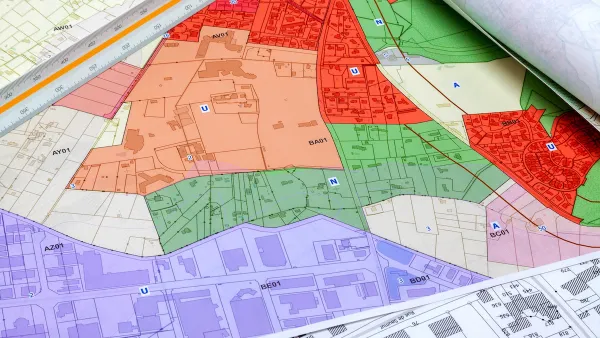
How Zoning Affects Greenhouse Gas Emissions
As the urgency of the climate crisis increases, a paper in the Notre Dame Law Review argues that increased density is not a universally effective strategy to reduce emissions and that different strategies are needed for low-carbon places versus high-carbon ones.
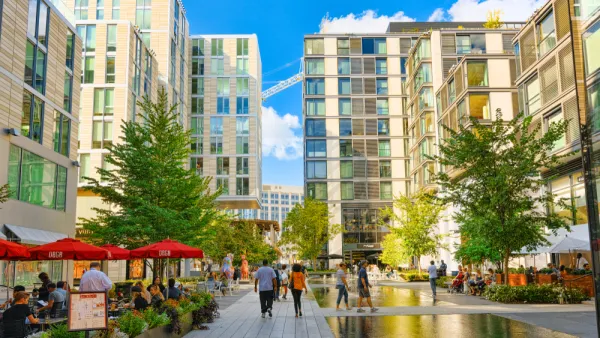
LEED Spells Rent Premiums in D.C.
In the multi-family residential market of Washington, D.C., LEED-certified buildings ask higher rents of residents.

Planetizen Federal Action Tracker
A weekly monitor of how Trump’s orders and actions are impacting planners and planning in America.

Washington state to charge fee to drivers with fuel-efficient cars
Revenue from the fee will go towards supporting the state’s highways.

Illinois considers spending $1 billion in taxpayer money on data center
A quantum computing campus and data center are currently under construction in Chicago.

HUD to end aid for mixed-immigration-status households
The new rule is projected to impact 80,000 people, nearly half of whom are children.

Trump has changed his mind on congestion pricing — maybe
The Trump administration is offering $100 million in grants so cities can implement their own traffic control programs.

‘Demolition of our heritage:’ Some US tribes speak out against BAAJA
A coalition of indigenous groups in the United States are concerned about provisions in the bill that may weaken their ability to halt large energy projects.

FREE Course: Walkable City 1: Why Walkability?
After describing his path towards focusing on walkability as the essence of good planning, Jeff Speck marches through his five principal reasons for making more walkable places.
Reinventing Malls: Planning Alchemy—Turning Gray Fields Into Gold
The course focuses on the opportunities and imperatives that shape reinvention of mall sites.

City of Charlotte
City of Rosemead
Rutgers University, Edward J. Bloustein School of Planning and Public Policy
University of Michigan School for Environment and Sustainability (SEAS)
Hunter College, City University of New York (CUNY)
The Architects Foundation
University District Partnership