South Korea is emerging as a new center of Asian mega development. With a variety of large-scale and small-scale projects, the country is taking a specific interest in sustainable development.


This profile from The Architect's Newspaper explores the growth of projects in South Korea and how they are at the cutting edge of emerging design ideas.
"After generations of political turmoil, South Korea can now guarantee a degree of economic stability. As a result and on a grand scale, Korean companies that went abroad to build some of the tallest buildings around the world (Samsung led construction on the Burj Khalifa) are now looking to field monuments on their own native soil. Even at the grass-roots level, there is a growing interest in avant-garde architecture and design-home-brewed as well as imported-providing opportunities for small firms and young designers to have an impact on the street by designing art galleries and small homes.
...Because Seoul and Busan are mostly horizontal metropolises, sprawling laterally rather than vertically, permits for these high-rises were individually negotiated as anomalies to existing zoning laws. When issuing permits for such major projects, local Korean public authorities require that a certain amount of square footage be dedicated to public amenities. For example, KPF's 110-story Hyundai Tower in Seoul will house a museum, an orchestra hall, and a cineplex. These policies exemplify a growing public demand for cultural centers and high-end public spaces."
Read the full story: Feature> Nation Building
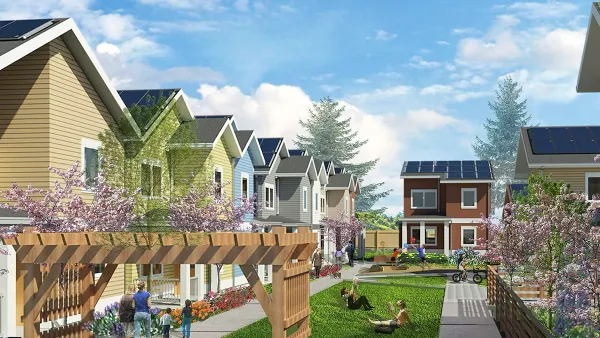
‘Fish-Friendly’ Washington Development Blends Affordability and Sustainability
A community land trust took on a difficult site in suburban Seattle — and ended up with a sustainable, diverse, mixed-ownership-form development that challenges multiple norms.
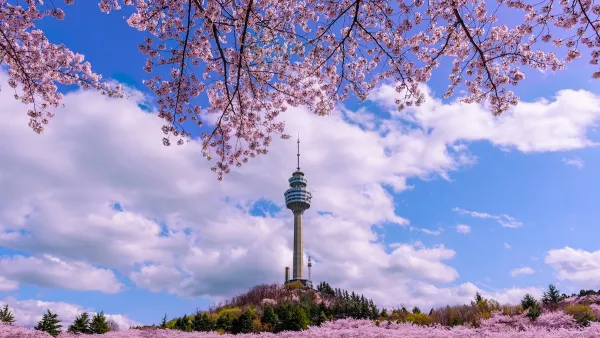
Seoul’s Urban Parks Blossom with Books
The Reading in Seoul Garden event invited residents to enjoy free reading and relaxation activities, including digital and live programs, in scenic parks, fostering a sense of community amid the city’s autumn landscapes.
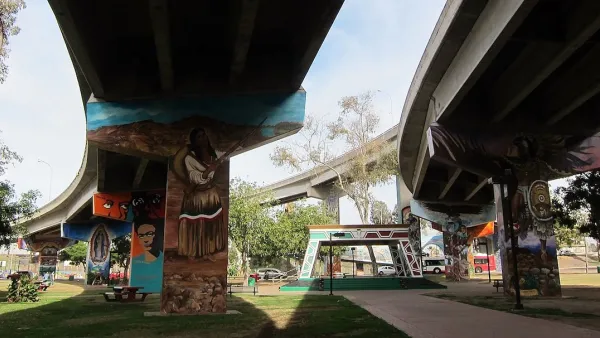
Opinion: Enhancing Inclusive Development: The Crucial Role of the Creative Class in Urban Planning
How bringing local artists into the development process can foster more vibrant, equitable neighborhoods.

Planetizen Federal Action Tracker
A weekly monitor of how Trump’s orders and actions are impacting planners and planning in America.

California plans to bury El Niño’s downpour
If the state plays its cards right, it may be able to store a billion acre-feet of El Niño’s water in aquifers.

Desperate measures: Advocates weigh draining Lake Powell to fill Colorado River
Draining the reservoir could reduce evaporation losses by a couple hundred thousand acre-feet.

Los Angeles just elected an urban planner as its mayor
Transportation analysts are optimistic that Raman will be more aggressive in addressing transit issues than Bass.

Mamdani’s pied-à-terre tax survives legal challenge
A panel of judges found that the plaintiffs failed to demonstrate injury as a result of New York City's implementation of the tax.

Eastern Nebraska is running out of electricity
Data centers and electrification are straining eastern Nebraska’s grid, throttling economic development.

FREE Course: Walkable City 1: Why Walkability?
After describing his path towards focusing on walkability as the essence of good planning, Jeff Speck marches through his five principal reasons for making more walkable places.
Reinventing Malls: Planning Alchemy—Turning Gray Fields Into Gold
The course focuses on the opportunities and imperatives that shape reinvention of mall sites.

City of Rosemead
Rutgers University, Edward J. Bloustein School of Planning and Public Policy
One Hundred Miles
University of Michigan School for Environment and Sustainability (SEAS)
Hunter College, City University of New York (CUNY)
The Architects Foundation
City of Cambridge
Montrose County
The Pocatello Development Authority