As water resources become increasingly important in the American West, new tactics for sharing among farmers, environmentalists and urban officials are showing how arid areas can withstand shortages.


The report by the Western States Water Council is titled "Agricultural/Urban/Environmental Water Sharing: Innovative Strategies for the Colorado River Basin and the West" and highlights some examples of water users collaborating in ways they have avoided in the past.
"[T]he most interesting parts of the report are the success stories of various stakeholders interviewed for the project. Among them: farmers and cities in Arizona trading surface and groundwater resources in times of scarcity; ranchers in Oregon accepting payments from environmental groups to reduce hay harvests and leave more water in stream for fish; a ditch company in New Mexico selling water shares to Audubon for bird habitat; and irrigation companies in Colorado forming a "Super Ditch" to pool their excess water and lease it to cities, rather than giving up ownership."
Read the full story: Water Sharing in the Over-shared West

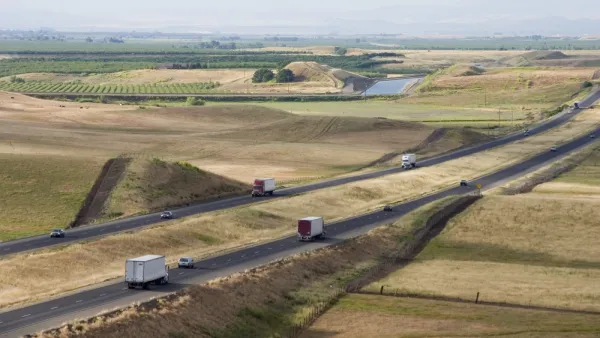
Grant Program Will Pay California Farmers To Repurpose Fallow Land
A new state grant program will help California farmers convert idle land to new purposes in an effort to mitigate the environmental and economic effects of drought on the state's Central Valley.
Funds Scarce for Texas' Water Conservation Plans
Texas is getting dryer and dryer--and the costs to implement water delivery projects only go up as localities and regions scramble to secure the bulk of the funds necessary to build them. Ramit Plushnick-Masti reports.
A 'Drought-Proof' City
By focusing on reducing water use to levels that could be served by its two water sources, the city of El Paso, Texas, has been able to quench its thirst without running dry.

Planetizen Federal Action Tracker
A weekly monitor of how Trump’s orders and actions are impacting planners and planning in America.

Amtrak, CN end decades-long dispute with eight-year agreement
The new operating agreement establishes an updated framework for the companies to work together, including processes to resolve disputes.

Judges permit Denver to divert 77,000 acre feet from the Colorado River for reservoir expansion
Overuse and climate change have caused the Colorado River’s water levels to plummet.

NYC DOT wants faster, more permanent street upgrades
The city is examining ways to build more concrete infrastructure without getting entangled in 'decades-long' projects.

'Something we’ve never seen before:' rising utility rates could strain city finances nationwide
Data centers, climate change and other factors have caused utility rates in the United States to increase by 38% since 2020.

Trump to overrule local leaders, lease millions of acres of America’s Pacific Island territories’ seafloors to mining companies
International law says that the Indigenous people of America’s territories have a right to prior and informed consent regarding projects that impact their countries.

FREE Course: Walkable City 1: Why Walkability?
After describing his path towards focusing on walkability as the essence of good planning, Jeff Speck marches through his five principal reasons for making more walkable places.
Reinventing Malls: Planning Alchemy—Turning Gray Fields Into Gold
The course focuses on the opportunities and imperatives that shape reinvention of mall sites.

Harvard University Graduate School of Design
KFH Group Inc.
Greater Baltimore Committee
The Architects Foundation
University of Cincinnati Online
The Pocatello Development Authority
The Urban Renewal Agency of the City of Pocatello