This essay from Pop Matters explores the connection between street art and urbanism.


Author David Ensminger talks about his work as a photographer, and the city as his subject.
"Some days, this means witnessing desperation that simmers just below the not-so-Teflon surface, and sometimes this means observing the naked language of the city: people making their own homegrown street media and pursuing art (at times on accident) in the middle of stifling humidity and doldrums days. Locally, my own Houston neighborhood mixes modest bungalows from the ‘30s with streamlined, stretched out condos that make gentrification appear like a vacuous suburban dream of inner city resurrection. The streets are never a blank canvas.
I discover an indigent kind of poetry: mushrooms oozing from a chopped off tree; rain water finding its way to broken tile street corners; murals meditating in front of piles of cookout pit ash and melon rinds in parks just meters away from a freeway; homemade print outs asking for help finding missing dogs stapled to electric poles above puddles with dragonflies zipping by; and a profusion of flyers, stencils, graffiti, stickers, and vernacular art environments. I am not a professional photographer, nor do I pretend to wield any pretensions about a digital camera I barely know how to cradle. Stop, witness, and push a button. That's my resolve, my habit.
My pictures of street life reveal multiple sides below the radar of ozone city life. One side reveals homegrown businesses with some grit trying to survive the new economy by hammering out their promotion with folk art tendencies by making their own signage, while another unveils officially sponsored graffiti and murals thriving in communities often unnoticed but blasting their messages of survival, unity and hope, anyway."
Read the full story: In the City of Friction and Frisson: Street Art and Urbanism
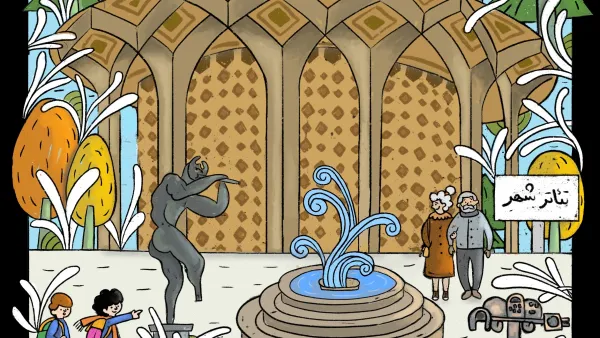
War and Place: The Iran you Don't see in the News
The world is watching Iran right now through the narrow lens of conflict. When governments see the world through a target reticle, smoke fills the frame — and the places people actually live get ignored.
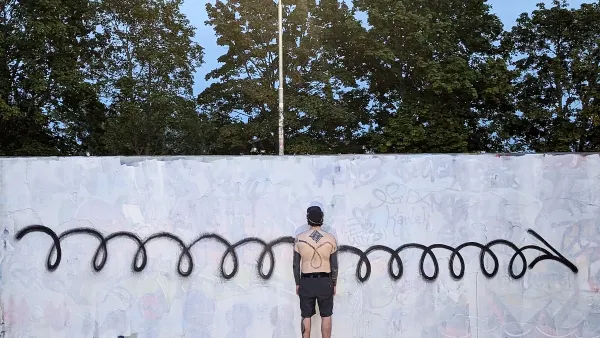
“Skin, Like a City, Will Tell You if You’ve Ignored its History”
Once an urban planner, Sean Colgrave traded in infrastructure for ink when he became a tattoo artist. Now he says: one profession has a lot to learn from the other.
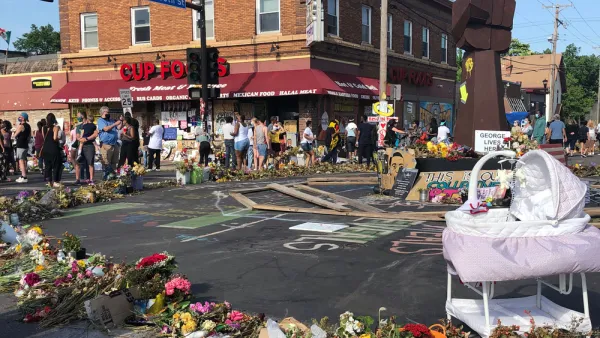
The Racial Reckoning in Public Spaces
Following George Floyd’s murder in 2020, there was an explosion of anti-racist street art across the country. “When we allow ourselves to release our emotions, oftentimes what is produced out of that is art.”

Planetizen Federal Action Tracker
A weekly monitor of how Trump’s orders and actions are impacting planners and planning in America.

California plans to bury El Niño’s downpour
If the state plays its cards right, it may be able to store a billion acre-feet of El Niño’s water in aquifers.

Desperate measures: Advocates weigh draining Lake Powell to fill Colorado River
Draining the reservoir could reduce evaporation losses by a couple hundred thousand acre-feet.

In Texas, data centers are swallowing promised parkland
Residents who moved to Taylor, Texas for a rural community now have to contend with three data centers in their backyard.

How a Chicago-sized wind farm beat the odds and powered on
The project spanned five presidential administrations and a standoff with a U.S. military base.

MTA gives itself 30 days to transform pit into basketball court
The site has been under construction since 2022; the city originally estimated it would finish the court in 2024.

FREE Course: Walkable City 1: Why Walkability?
After describing his path towards focusing on walkability as the essence of good planning, Jeff Speck marches through his five principal reasons for making more walkable places.
Reinventing Malls: Planning Alchemy—Turning Gray Fields Into Gold
The course focuses on the opportunities and imperatives that shape reinvention of mall sites.

City of Rosemead
Rutgers University, Edward J. Bloustein School of Planning and Public Policy
One Hundred Miles
Hunter College, City University of New York (CUNY)
The Architects Foundation
University of Cincinnati Online
City of Cambridge
Montrose County
The Pocatello Development Authority