The word "resilience" suffers from a vagueness of meaning shared with words like "green" and "sustainability", writes Michael Mehaffy, who sets out to clarify this meaningful term for architecture and planning.


Mehaffy writes:
"So what is meant by the term "resilience?" It's usually defined as the ability of a system to absorb disruptions without tipping over to a new kind of order - one that can be disastrous for the organisms involved."
Mehaffy discusses the difference between "engineered resilience" - the kind constructed by humans - and "ecological resistance," which is often much more able to withstand complex catastrophes.
"As an example, we can look at the Fukushima nuclear reactors. They were masterfully designed to produce reliable, clean, safe energy for many years. That system was, in its own self-specified terms, resilient. As long as the conditions for which the system was designed were maintained, all was well.
But the trouble was, the system did not exist in a vacuum - it was embedded in a much larger set of natural systems."
Thanks to Robert Steuteville
Read the full story: What the heck do we mean by “resilient design” anyway?
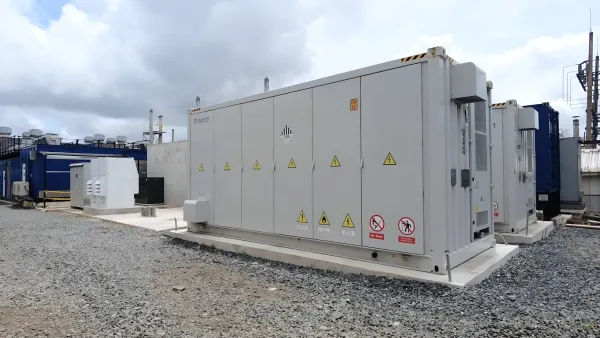
Texas is Counting on Battery Systems to Limit Power Outages This Winter
ERCOT says new battery storage and other systems set in place after 2021’s devastating winter storm will help prevent an energy emergency this winter.

Seven Brilliant Projects Keeping New Orleans Safe from Stormwater
20 years post Katrina, New Orleans has shored up and reinvented itself to absorb millions upon millions of gallons of stormwater. Their success holds lessons for landscape architects all over the world.
In a Warmer, Wetter and More Disaster-prone World: “Nature is the Greatest Designer”
A conversation with the American Society of Landscape Architects’ CEO Torey Carter-Conneen and board president Kona Gray.

Planetizen Federal Action Tracker
A weekly monitor of how Trump’s orders and actions are impacting planners and planning in America.

California plans to bury El Niño’s downpour
If the state plays its cards right, it may be able to store a billion acre-feet of El Niño’s water in aquifers.

Desperate measures: Advocates weigh draining Lake Powell to fill Colorado River
Draining the reservoir could reduce evaporation losses by a couple hundred thousand acre-feet.

Los Angeles just elected an urban planner as its mayor
Transportation analysts are optimistic that Raman will be more aggressive in addressing transit issues than Bass.

Mamdani’s pied-à-terre tax survives legal challenge
A panel of judges found that the plaintiffs failed to demonstrate injury as a result of New York City's implementation of the tax.

Eastern Nebraska is running out of electricity
Data centers and electrification are straining eastern Nebraska’s grid, throttling economic development.

FREE Course: Walkable City 1: Why Walkability?
After describing his path towards focusing on walkability as the essence of good planning, Jeff Speck marches through his five principal reasons for making more walkable places.
Reinventing Malls: Planning Alchemy—Turning Gray Fields Into Gold
The course focuses on the opportunities and imperatives that shape reinvention of mall sites.

City of Rosemead
Rutgers University, Edward J. Bloustein School of Planning and Public Policy
One Hundred Miles
University of Michigan School for Environment and Sustainability (SEAS)
Hunter College, City University of New York (CUNY)
The Architects Foundation
City of Cambridge
Montrose County
The Pocatello Development Authority