Both houses of the Michigan Legislature have passed bills expanding the governor's right to declare a "financial emergency" and appoint managers to run cities, towns and school districts with little local oversight.


The Michigan House and Senate have each passed bills expanding the governor's power to appoint Emergency Financial Managers, who could remove top administrators and elected officials, put millage increases on the ballot, lay off employees, slash services, and merge the city or school district with a neighboring government entity. Governor Snyder, a Republican, called for a substantially revised emergency manager process in January, warning that the current law doesn't allow the state to act pro-actively, providing early intervention long before a city or school district faces financial collapse.
When told that the bill could undermine local control, Gov. Rick Snyder said, "Local control? I'll tell you what, I think that in a lot of these places there is no control."
Thanks to Chris Robbins
Read the full story: Michigan Senate passes emergency manager bills

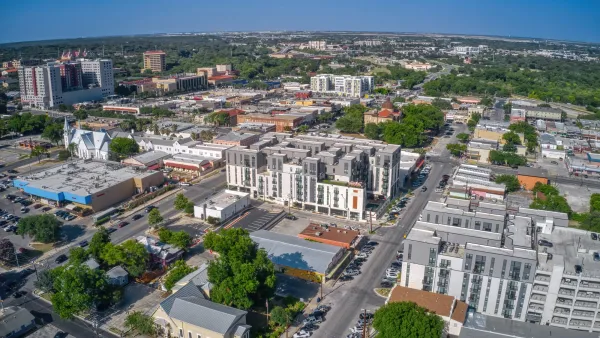
Texas town's data center ban challenged by state senator
In June, San Marcos became the first city in Texas to prohibit data centers.

California’s Half Moon Bay says coastal regulations hinder housing development
The town is entirely within the jurisdiction of the California Coastal Commission, which imposes a layer of strict development regulations.

California Gives 15 Cities ‘Final Warning’ to Submit Mandatory Housing Plans
Communities are required to produce housing elements that accommodate sufficient housing for all income levels.

Planetizen Federal Action Tracker
A weekly monitor of how Trump’s orders and actions are impacting planners and planning in America.

‘Going backwards:’ Baltimore mayor, students rally against state's transit funding plan
Maryland's proposed six-year plan provides no funding for Baltimore’s BMORE bus program and reduces its road maintenance funding.

Detroit to transform waterfront with $2.2 billion investment
Developers will convert about 18 acres of unused parking lot space into civic spaces.

LA to transform part of water treatment facility into new park
By rebuilding some of the Los Angeles-Glendale Water Reclamation Plant’s infrastructure, the city will free up 18,000 square feet to create a new green space for the public.

San Antonio approves $1.1 billion transit agenda
The agency has also begun construction of its Via Rapid Green line, which will service passengers from the San Antonio International Airport.

Guerilla urbanists’ DIY benches joined by sanctioned seats in Chicago
The group behind the original homemade benches said they will continue installing them across bench-less bus stops in Chicago.

FREE Course: Walkable City 1: Why Walkability?
After describing his path towards focusing on walkability as the essence of good planning, Jeff Speck marches through his five principal reasons for making more walkable places.
Reinventing Malls: Planning Alchemy—Turning Gray Fields Into Gold
The course focuses on the opportunities and imperatives that shape reinvention of mall sites.

One Hundred Miles
County of Mendocino
planning NEXT
The Architects Foundation
University of Cincinnati Online
Montrose County
Northern Illinois Transit Authority (NITA)
The Pocatello Development Authority