Agricultural spaces are increasingly being included in housing developments.


This article from Landscape Architecture Magazine takes a look at the growing trend and some of the developments that are including farm spaces.
"Until recently, few similar projects have been undertaken, but the growing interest in sustainability and localism has created a market for them. More than three decades on, Farm Colony is thriving, though with its single-family houses scattered on one-to-two-acre lots and common ownership of the farmland, it may be an outdated model. But developers are responding with a variety of new mixed-use projects that combine housing with agriculture; dozens are now in the planning stages or under construction.
For potential householders, the motivations to be nearer to the food they eat can range from light to dark: at one end, a hankering for pastoral views and organic produce, and at the other, a kind of survivalism (minus the guns). The developers of these projects get a powerful branding message to distinguish them from conventional subdivisions: Buy here, and preserve the land while enjoying its bounty. Also good for developers is that farm operations can generate cash flow while the housing and retail elements are being built out. Participating farmers get a handy market for their products, and sometimes, to help them get established, a subsidy from developers or homeowners."
Read the full story: Eat Your Subdivision
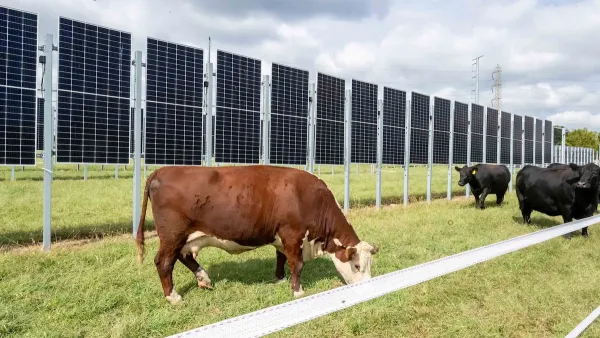
New Jersey Agrivoltaic Project Combines Solar Energy With Farming
A Rutgers University-New Brunswick demonstration farm will evaluate solar array designs to understand how they can best support grazing and agriculture on the same site.
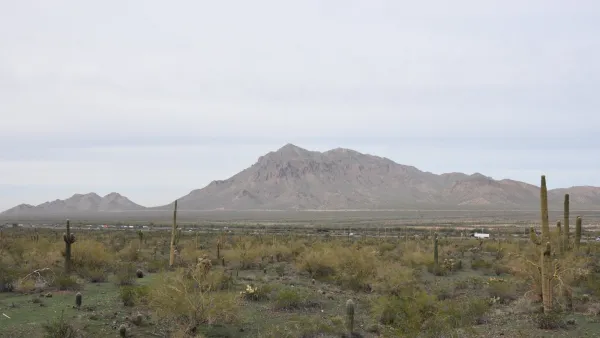
Insufficient Groundwater for Arizona County's Planned Development
New projections for Pinal County in Arizona show that water demand will exceed the area’s supply.
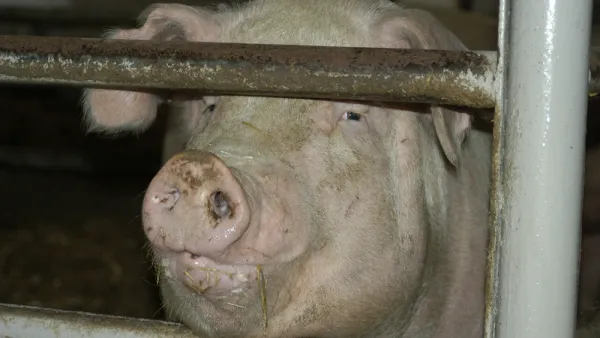
When Pennsylvania's 'Right to Farm' Means Living With the Pigs Next Door
New residents to formerly agricultural area are trying to shut down a hog-feeding operation, but so far without much success.

Planetizen Federal Action Tracker
A weekly monitor of how Trump’s orders and actions are impacting planners and planning in America.

Eastern Nebraska is running out of electricity
Data centers and electrification are straining eastern Nebraska’s grid, throttling economic development.

Study reveals best places in the U.S. for cycling, walking
New research from Streetlight Data examines bicycle and pedestrian miles per capita in the 100 largest U.S. cities by population.

DSA members accuse Mamdani of 'abandoning values' over housing redevelopment
New York City's mayor plans to replace about 2,000 units of public housing with private, mixed-income housing.

All sides of BRT debate unhappy with CDOT’s most recent move
The Colorado Department of Transportation is no longer considering center-running bus lanes for Colorado Boulevard.

Massachusetts bogs generate both power, and cranberries
Putting solar panels above farmland is one way Massachusetts is advancing toward its goal of net-zero carbon emissions by 2050.

FREE Course: Walkable City 1: Why Walkability?
After describing his path towards focusing on walkability as the essence of good planning, Jeff Speck marches through his five principal reasons for making more walkable places.
Reinventing Malls: Planning Alchemy—Turning Gray Fields Into Gold
The course focuses on the opportunities and imperatives that shape reinvention of mall sites.

City of Rosemead
Rutgers University, Edward J. Bloustein School of Planning and Public Policy
One Hundred Miles
University of Michigan School for Environment and Sustainability (SEAS)
Hunter College, City University of New York (CUNY)
The Architects Foundation
City of Cambridge
The Pocatello Development Authority
The Urban Renewal Agency of the City of Pocatello