New projections for Pinal County in Arizona show that water demand will exceed the area’s supply.


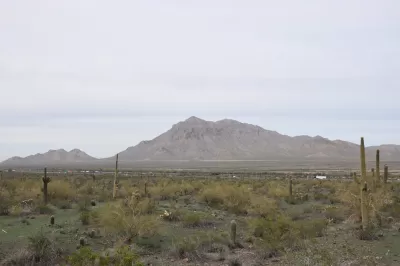
"Arizona’s top water official presented new long-term projections [recently] showing that Pinal County doesn’t have enough groundwater to provide for the fast-growing area’s cities, farms and many planned subdivisions over the coming decades," reports Ian James.
The projections show that the amount of available water is only 90 percent of the projected 100-year demand for water. The 10 percent deficit amounts to 8.1 million acre-feet, which is a significant gap, according to officials. The majority of the unmet demand is tied to agriculture and the state’s assured water supply program for new developments, notes James.
"It’s unclear what sorts of steps local water suppliers, cities, developers and growers might propose to deal with the shortfall, or how water regulators and leaders in the Legislature will respond," says James.
Read the full story: In Pinal, groundwater insufficient to meet long-term projected demands, officials say
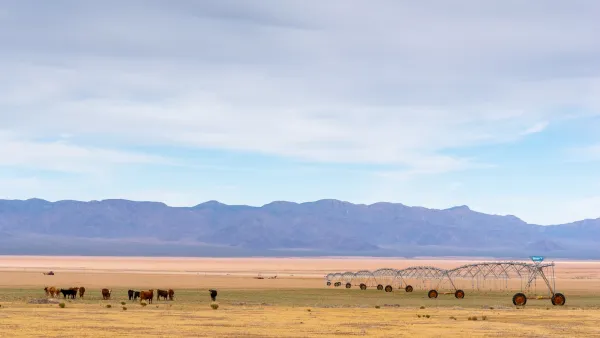
Arizona Tightens Groundwater Restrictions to Rein in Agribusinesses
The state is creating an ‘active management area’ in the western part of the state, where agribusinesses including a Saudi alfalfa exporter have practically free rein over water supplies.
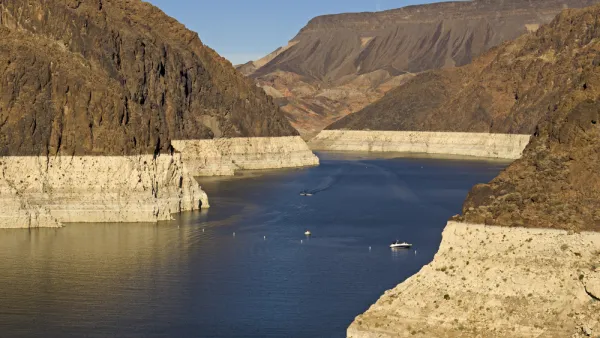
How Arizona Is Preparing for the Coming Water Shortage
Arizona will lose one-fifth of its water allotment from the Colorado River in 2022 as cuts from the river's Drought Contingency Plan take effect.
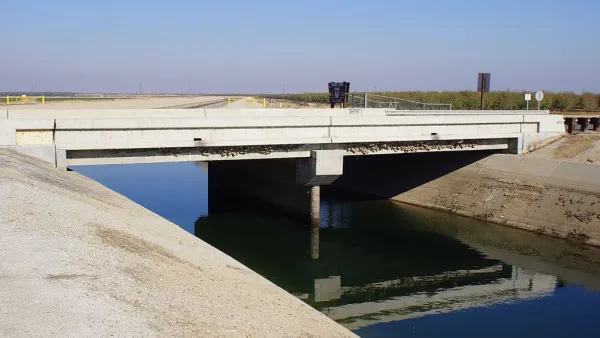
Voters to Decide on Repair of Vital Aqueduct for San Joaquin Valley
California voters in November will have the opportunity to help repair the Friant-Kern Canal, damaged by subsidence, as well as invest in watershed conservation programs, by passing a citizen-initiated $8.9 billion general obligation bond measure.

Planetizen Federal Action Tracker
A weekly monitor of how Trump’s orders and actions are impacting planners and planning in America.

California plans to bury El Niño’s downpour
If the state plays its cards right, it may be able to store a billion acre-feet of El Niño’s water in aquifers.

Desperate measures: Advocates weigh draining Lake Powell to fill Colorado River
Draining the reservoir could reduce evaporation losses by a couple hundred thousand acre-feet.

Mamdani’s pied-à-terre tax survives legal challenge
A panel of judges found that the plaintiffs failed to demonstrate injury as a result of New York City's implementation of the tax.

Eastern Nebraska is running out of electricity
Data centers and electrification are straining eastern Nebraska’s grid, throttling economic development.

Seattle passes record-breaking transit services expansion
Proposition 1 will double the city’s transit tax to add 95,000 more bus trips and preserve 180,000 bus trips annually.

FREE Course: Walkable City 1: Why Walkability?
After describing his path towards focusing on walkability as the essence of good planning, Jeff Speck marches through his five principal reasons for making more walkable places.
Reinventing Malls: Planning Alchemy—Turning Gray Fields Into Gold
The course focuses on the opportunities and imperatives that shape reinvention of mall sites.

City of Rosemead
Rutgers University, Edward J. Bloustein School of Planning and Public Policy
One Hundred Miles
University of Michigan School for Environment and Sustainability (SEAS)
Hunter College, City University of New York (CUNY)
The Architects Foundation
City of Cambridge
Montrose County
The Pocatello Development Authority