What makes effective transit-oriented development? Transportation planner Alan Huynh makes a good argument for the proximity to a cup of coffee as a defining characteristic of quality TOD.


Huynh says that no matter how much attention and dollars planners and developers pour into projects, the truth is that "People define the TOD. People have always given a meaning to things."
And the reason why many TODs don't work, says Huynh, is the lack of agreement on how to measure success. His recommendation? The coffee test.
"Coffee shops are a good measure of how walkable an area is mainly because everyone walks to get their coffee. Starbucks has intrinsic data measuring the effectiveness of the walk-in coffee v. the drive through coffee shop, and has created many more walk-in coffee stores rather than the drive through coffee shops. By measuring the walking distance and time that exists between the closest coffee shop and station site, we can measure the walkability of the station."
Thanks to The Source
Read the full story: ReThinking TOD: The Transportation Planner's Dilemma to Transit Oriented Development
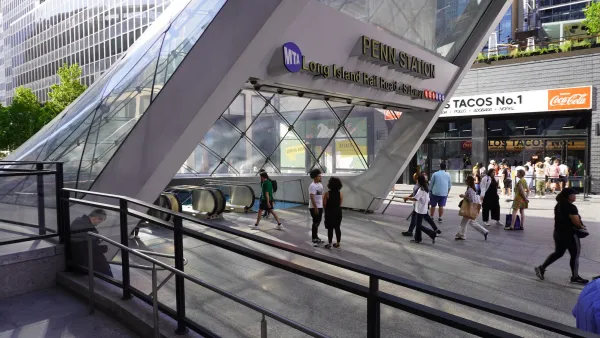
Which US cities have the most housing near transit?
Concentrating housing near frequent, reliable transit offers advantages to both residents and transit agencies, who can serve more riders more efficiently.

Study: Nearly Half of Portland TOD Residents Commute by Transit
People living in transit-oriented developments are more likely to ditch the car and opt for transit or walking, new research shows.
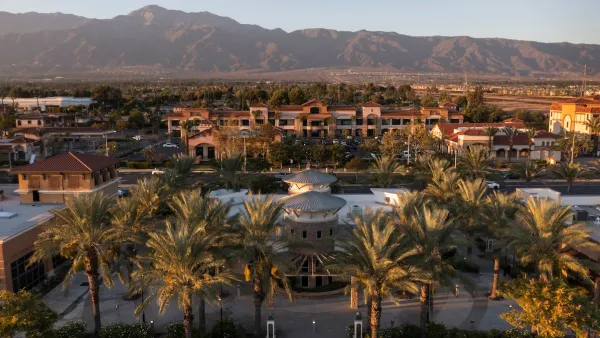
Car-Centric LA Suburb Looks to a Train-Oriented Future
City leaders in Rancho Cucamonga, the future western terminus of the Brightline West rail line to Las Vegas, want to reimagine the city as a transit-oriented, pedestrian-friendly community.

Planetizen Federal Action Tracker
A weekly monitor of how Trump’s orders and actions are impacting planners and planning in America.

California plans to bury El Niño’s downpour
If the state plays its cards right, it may be able to store a billion acre-feet of El Niño’s water in aquifers.

Desperate measures: Advocates weigh draining Lake Powell to fill Colorado River
Draining the reservoir could reduce evaporation losses by a couple hundred thousand acre-feet.

Los Angeles just elected an urban planner as its mayor
Transportation analysts are optimistic that Raman will be more aggressive in addressing transit issues than Bass.

Mamdani’s pied-à-terre tax survives legal challenge
A panel of judges found that the plaintiffs failed to demonstrate injury as a result of New York City's implementation of the tax.

Eastern Nebraska is running out of electricity
Data centers and electrification are straining eastern Nebraska’s grid, throttling economic development.

FREE Course: Walkable City 1: Why Walkability?
After describing his path towards focusing on walkability as the essence of good planning, Jeff Speck marches through his five principal reasons for making more walkable places.
Reinventing Malls: Planning Alchemy—Turning Gray Fields Into Gold
The course focuses on the opportunities and imperatives that shape reinvention of mall sites.

City of Rosemead
Rutgers University, Edward J. Bloustein School of Planning and Public Policy
One Hundred Miles
University of Michigan School for Environment and Sustainability (SEAS)
Hunter College, City University of New York (CUNY)
The Architects Foundation
City of Cambridge
Montrose County
The Pocatello Development Authority