Suburban Waukesha seeks to be the first city to pipe water from the Great Lakes since the 2008 Great Lakes Pact. But will approval just mean more sprawl in a sprawling region?


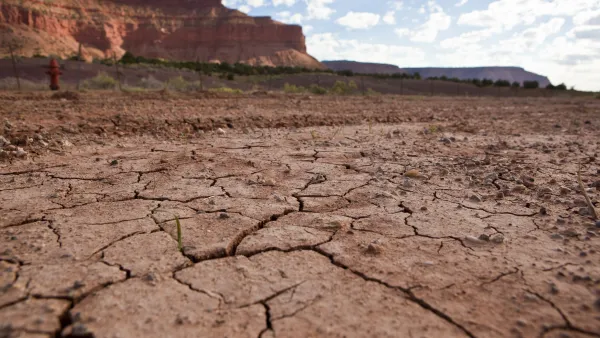
Waukesha, Wisconsin used to be known for its springs, but Angie Schmitt at Streetsblog writes that the springs of this now-much-larger suburb have dried up and wants to tap the lake:
"The proposal has sparked debates about sprawl and water policy in a region where land development has far outpaced population growth. And observers are watching this case closely because it will set a precedent which could have a profound effect on urban form and rural land throughout the Great Lakes region.
The Great Lakes Pact was designed to protect this important freshwater source from ever being depleted by water-starved communities in the U.S. South and Southwest. Ironically, however, unsustainable development patterns in relatively water-rich places near the Great Lakes have exhausted local freshwater sources."
Thanks to Angie Schmitt
Read the full story: Outside Milwaukee, Water Policy May Drain Cities and Destroy Rural Towns
The Evolving Market for Water in an Era of Droughts and Efficiencies
As some areas of the country seek out new sources of water, other areas are trying to protect what they have.
Legislators, Newspapers Line Up to Oppose Great Lakes Water Diversion Proposal
A controversial application by the small Wisconsin town of Waukesha would allow treated wastewater to flow the Root River and then into Lake Michigan. The proposal has provoked a far-reaching outcry of opposition.
Learning loss and urban schools, part 2
Did test scores in progressive cities drop more post-COVID than test scores in moderate ones?

Planetizen Federal Action Tracker
A weekly monitor of how Trump’s orders and actions are impacting planners and planning in America.

Eastern Nebraska is running out of electricity
Data centers and electrification are straining eastern Nebraska’s grid, throttling economic development.

Study reveals best places in the U.S. for cycling, walking
New research from Streetlight Data examines bicycle and pedestrian miles per capita in the 100 largest U.S. cities by population.

DSA members accuse Mamdani of 'abandoning values' over housing redevelopment
New York City's mayor plans to replace about 2,000 units of public housing with private, mixed-income housing.

All sides of BRT debate unhappy with CDOT’s most recent move
The Colorado Department of Transportation is no longer considering center-running bus lanes for Colorado Boulevard.

Massachusetts bogs generate both power, and cranberries
Putting solar panels above farmland is one way Massachusetts is advancing toward its goal of net-zero carbon emissions by 2050.

FREE Course: Walkable City 1: Why Walkability?
After describing his path towards focusing on walkability as the essence of good planning, Jeff Speck marches through his five principal reasons for making more walkable places.
Reinventing Malls: Planning Alchemy—Turning Gray Fields Into Gold
The course focuses on the opportunities and imperatives that shape reinvention of mall sites.

City of Rosemead
Rutgers University, Edward J. Bloustein School of Planning and Public Policy
One Hundred Miles
University of Michigan School for Environment and Sustainability (SEAS)
Hunter College, City University of New York (CUNY)
The Architects Foundation
City of Cambridge
The Pocatello Development Authority
The Urban Renewal Agency of the City of Pocatello