Reporter Jarrett Murphy gets behind the curtain to reveal that the Obama administration is actually doing quite a lot for cities - just very, very quietly.


While the White House Office of Urban Affairs has been a bit of a bust, it was only the most obvious part of the Obama administration's larger plan, says Murphy:
"Some of Obama's urban agenda went unheralded because it was tucked into the federal stimulus bill, particularly in the form of infrastructure improvements under the TIGER program. Aiding cities within the context of a broad $814 billion spending plan may have been unsatisfying to urban advocates who wanted a Marshall Plan for cities, but it was an easier political lift than approaching urban areas separately. "I think they saw an opportunity to fold some of these things in," [Harry Moroz of the Drum Major Institute says of the administration. "That was looking down the road and seeing that some of these things might be tough to get done on their own."
Read the full story: Obama's Urban Policy: Slow Start. Sustainable Finish?
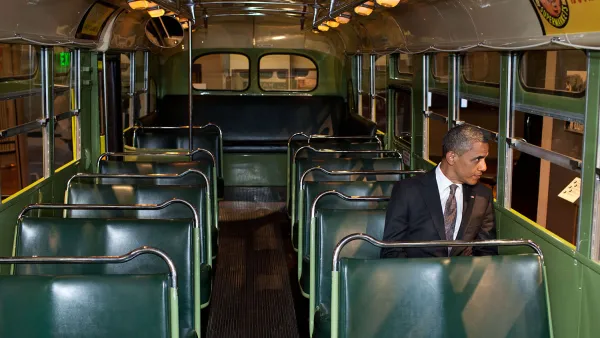
Former President Barack Obama Addresses Gentrification
Former President Barack Obama is facing a new kind of politics while working to support the development plan for the Barack Obama Presidential Center.
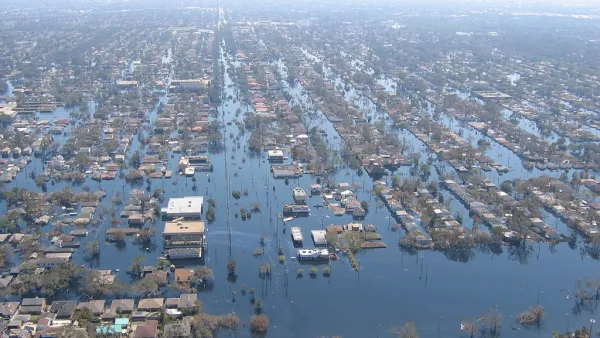
Homeland Security Advisor Recognizes Effects of Climate Change, Ignores Causes
In response to a question linking Hurricanes Irma and Harvey to climate change, White House Homeland Security Advisor Tom Bossert appeared to recognize the need to adapt. He qualified his statement regarding the "cause" of said climate change.
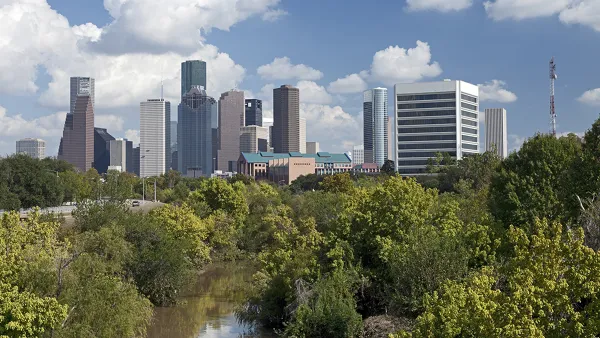
Rebuilding Houston After Harvey: 'Bigger and Better'
Those were the words President Trump expressed before his first trip to Texas while Hurricane Harvey was ravaging Houston. But experts worry that the rebuilding won't be better due to the recision of an Obama-era environmental regulation.

Planetizen Federal Action Tracker
A weekly monitor of how Trump’s orders and actions are impacting planners and planning in America.

California plans to bury El Niño’s downpour
If the state plays its cards right, it may be able to store a billion acre-feet of El Niño’s water in aquifers.

Desperate measures: Advocates weigh draining Lake Powell to fill Colorado River
Draining the reservoir could reduce evaporation losses by a couple hundred thousand acre-feet.

Los Angeles just elected an urban planner as its mayor
Transportation analysts are optimistic that Raman will be more aggressive in addressing transit issues than Bass.

Mamdani’s pied-à-terre tax survives legal challenge
A panel of judges found that the plaintiffs failed to demonstrate injury as a result of New York City's implementation of the tax.

Eastern Nebraska is running out of electricity
Data centers and electrification are straining eastern Nebraska’s grid, throttling economic development.

FREE Course: Walkable City 1: Why Walkability?
After describing his path towards focusing on walkability as the essence of good planning, Jeff Speck marches through his five principal reasons for making more walkable places.
Reinventing Malls: Planning Alchemy—Turning Gray Fields Into Gold
The course focuses on the opportunities and imperatives that shape reinvention of mall sites.

City of Rosemead
Rutgers University, Edward J. Bloustein School of Planning and Public Policy
One Hundred Miles
University of Michigan School for Environment and Sustainability (SEAS)
Hunter College, City University of New York (CUNY)
The Architects Foundation
City of Cambridge
Montrose County
The Pocatello Development Authority