Bogota's integrated mass transit system has been operation for a decade and continues to grow, but faces challenges for the coming years, from the constant growth in ridership to irregularities in construction contracts.


The Colombian capital has been transformed as a result of integrated transit policies and transportation networks, notes Jonna McKone of TheCityFix.
"Bogotá has become so easy to navigate by public transportation that its citizens approved a referendum vote endorsing an annual car-free day and outlawing rush hour car traffic beginning in 2015. TransMilenio's implementation has occurred alongside the installment of one of the world's most extensive network of bike paths, CicloRuta, as well as hundreds of new parks and plazas. Businesses are thriving. New homes have been constructed. And the ultimate benchmarker of success: nearly a million people, or 10 percent of the population, have left their cars at home for a more convenient and cost-effective public transportation system.
However, the system is not without need for improvement. Bureaucratic contracts with service providers make tweaking small components of the system difficult. And as [Darío] Hidalgo says, 'The TransMilenio system still needs attention and improvements, especially in two aspects: buses and selected stations are overcrowded and road surface needs permanent and timely maintenance.'"
Thanks to Garrett Bradford
Read the full story: TransMilenio: Ten Years Down the Line

Fighting Climate Change with Bus Rapid Transit
Bogota, Colombia's bus rapid transit system is seen as a shining example of how buses can make up a good public transportation system in cities. It's also being looked at as a model for fighting climate change.
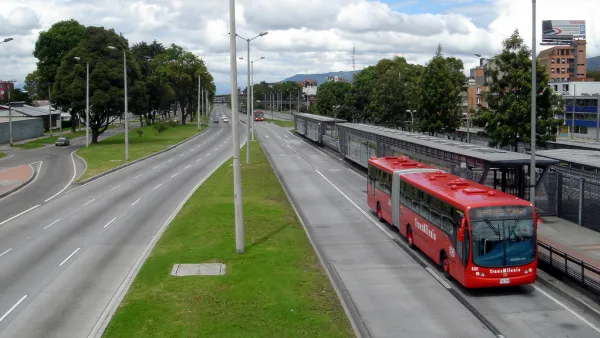
Looking to the Future as TransMilenio Turns 20
The world's most famous, and influential, bus rapid transit system, which served 2.4 million riders a day in Bogotá in the days before the pandemic, offers lessons in transit planning and management as it enters its third decade.
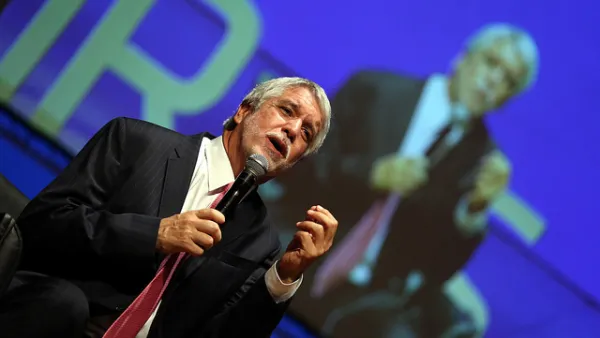
Is It Time to Rethink the Legacy of Enrique Peñalosa?
Negative responses to the "Most Influential Urbanists" list published last week overwhelmingly focused on one name on the list: Enrique Peñalosa.

Planetizen Federal Action Tracker
A weekly monitor of how Trump’s orders and actions are impacting planners and planning in America.

Amtrak, CN end decades-long dispute with eight-year agreement
The new operating agreement establishes an updated framework for the companies to work together, including processes to resolve disputes.

Judges permit Denver to divert 77,000 acre feet from the Colorado River for reservoir expansion
Overuse and climate change have caused the Colorado River’s water levels to plummet.

NYC DOT wants faster, more permanent street upgrades
The city is examining ways to build more concrete infrastructure without getting entangled in 'decades-long' projects.

'Something we’ve never seen before:' rising utility rates could strain city finances nationwide
Data centers, climate change and other factors have caused utility rates in the United States to increase by 38% since 2020.

Trump to overrule local leaders, lease millions of acres of America’s Pacific Island territories’ seafloors to mining companies
International law says that the Indigenous people of America’s territories have a right to prior and informed consent regarding projects that impact their countries.

FREE Course: Walkable City 1: Why Walkability?
After describing his path towards focusing on walkability as the essence of good planning, Jeff Speck marches through his five principal reasons for making more walkable places.
Reinventing Malls: Planning Alchemy—Turning Gray Fields Into Gold
The course focuses on the opportunities and imperatives that shape reinvention of mall sites.

Harvard University Graduate School of Design
KFH Group Inc.
Greater Baltimore Committee
The Architects Foundation
University of Cincinnati Online
The Pocatello Development Authority
The Urban Renewal Agency of the City of Pocatello