Japanese and European train producers are having to compete with Chinese firms they alledge stole their blueprints during joint ventures years earlier.


Chinese rail companies that were once junior partners with the likes of Kawasaki Heavy Industries Ltd., Siemens AG, Alstom SA and Bombardier Inc. are vying against them in the burgeoning global market for super-fast train systems. From the U.S. to Saudi Arabia to Brazil and in China itself, Chinese companies are selling trains that in most cases are faster than those offered by their foreign rivals.
The progression of China's high speed rail business is reflected in Gov. Schwarzenegger's announcement that California may seek Chinese help in construction of its own high speed rail network.
China acknowledges that the trains its own companies are now selling were developed using foreign technology. But officials say domestic companies like China South Locomotive & Rolling Stock Industry (Group) Corp., or CSR, added their own innovations that make the final product Chinese. "China's railway industry produced this new generation of high-speed train sets by learning and systematically compiling and re-innovating foreign high-speed train technology," the Railways Ministry said in a faxed response to questions.
Read the full story: Train Makers Rail Against China's High-Speed Designs

Is American Ingenuity Dead When it Comes to Transportation?
Chikodi Chima looks at the innovative ideas coming out of China like the famous road-straddling bus announced earlier this month, and asks, has America lost it's edge?
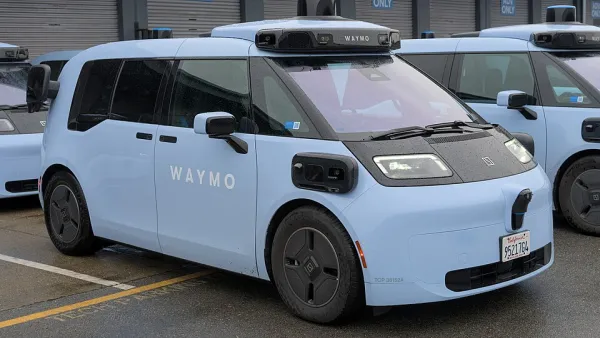
Waymo’s Ojai robotaxis from China now able to pick up all riders
Steep tariffs and tight federal laws haven’t stopped Waymo from purchasing over 3,200 vehicles from Zeekr, a Chinese manufacturer.
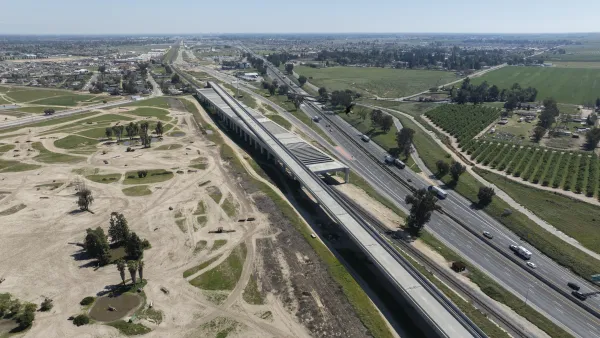
California High-Speed Rail Authority could be broke by the end of 2027
A report from the Office of Inspector General says the authority must borrow against state infusions to stay afloat.

Planetizen Federal Action Tracker
A weekly monitor of how Trump’s orders and actions are impacting planners and planning in America.

Amtrak, CN end decades-long dispute with eight-year agreement
The new operating agreement establishes an updated framework for the companies to work together, including processes to resolve disputes.

Judges permit Denver to divert 77,000 acre feet from the Colorado River for reservoir expansion
Overuse and climate change have caused the Colorado River’s water levels to plummet.

Boston has spent millions making the Green Line more accessible — and there’s no end in sight
While the city has invested millions into expanding and adding platforms to the Green Line to make it more accessible, new train cars set to arrive next year will be too tall for disabled passengers to board without raising the current platforms.

Idaho may see an 18% drop in federal surface transit funding — the largest estimated cut in the US
Transit systems in rural communities are much more reliant on federal funding to provide their services.

How ‘post-disaster gentrification’ alters neighborhoods after natural calamities
After hurricanes, fires or other calamities, the original residents of a community are often replaced by younger, wealthier residents.

FREE Course: Walkable City 1: Why Walkability?
After describing his path towards focusing on walkability as the essence of good planning, Jeff Speck marches through his five principal reasons for making more walkable places.
Reinventing Malls: Planning Alchemy—Turning Gray Fields Into Gold
The course focuses on the opportunities and imperatives that shape reinvention of mall sites.

Harvard University Graduate School of Design
KFH Group Inc.
Greater Baltimore Committee
The Architects Foundation
University of Cincinnati Online
The Pocatello Development Authority
The Urban Renewal Agency of the City of Pocatello