The Los Angeles Metropolitan Transportation Authority finally approved the construction of 7.7 miles of bus lanes along Wilshire Boulevard, with the exception of a one mile stretch in Westwood known as 'Condo Canyon.'


The $31 million project includes planned street widening, new turn lanes and resurfacing to create dedicated busway lanes that will operate between the hours of 7-9AM and 4-7PM on weekdays. The new lanes are expected to reduce bus travel times along the entirety of the route by 12 minutes, while extending times for motorists by 6 minutes. The project, which could be completed by the summer of 2012, is expected to increase daily bus ridership along the corridor from 29,000 to at least 33,000.
Some who opposed breaking up the bus lanes accused the MTA board of caving in to the interests of well-off homeowners at the expense of low-wage earners, students and others who would use the line.
"You need to prioritize the interests of those who work and go to school over the interests of a few," said Alexis Lantz of the Los Angeles County Bicycle Coalition. "You need to think beyond the views of elite Westside homeowners."
Other critics argued the project will have little effect on motorists using the boulevard or nearby parallel streets. They are more worried that the Westwood exemption sets a precedent for other interest groups to get their own areas cut out of the plan.
Read the full story: MTA Approves Bus Only Lanes On Wilshire


Four Bus-Only Lanes Under Consideration Around Los Angeles
The transit planning agency in Los Angeles is preparing to make a major addition to the city's number of bus-only infrastructure.
Bus-Only Lane in Los Angeles Faces Political Trouble
The decade-long plan for a proposed bus-only lane on Wilshire Blvd. faces yet another political battle as politicians relent to public complaints.
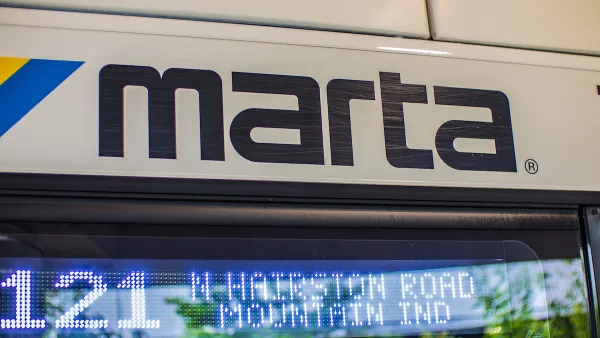
Atlanta Transit Officials Call for Traffic Cameras to Enforce Bus-Only Lanes
MARTA says bus-mounted cameras would be a more effective way to keep bus lanes clear and make upcoming bus rapid transit lines run smoothly and reliably.

Planetizen Federal Action Tracker
A weekly monitor of how Trump’s orders and actions are impacting planners and planning in America.

Amtrak, CN end decades-long dispute with eight-year agreement
The new operating agreement establishes an updated framework for the companies to work together, including processes to resolve disputes.

Judges permit Denver to divert 77,000 acre feet from the Colorado River for reservoir expansion
Overuse and climate change have caused the Colorado River’s water levels to plummet.

NYC DOT wants faster, more permanent street upgrades
The city is examining ways to build more concrete infrastructure without getting entangled in 'decades-long' projects.

'Something we’ve never seen before:' rising utility rates could strain city finances nationwide
Data centers, climate change and other factors have caused utility rates in the United States to increase by 38% since 2020.

Trump to overrule local leaders, lease millions of acres of America’s Pacific Island territories’ seafloors to mining companies
International law says that the Indigenous people of America’s territories have a right to prior and informed consent regarding projects that impact their countries.

FREE Course: Walkable City 1: Why Walkability?
After describing his path towards focusing on walkability as the essence of good planning, Jeff Speck marches through his five principal reasons for making more walkable places.
Reinventing Malls: Planning Alchemy—Turning Gray Fields Into Gold
The course focuses on the opportunities and imperatives that shape reinvention of mall sites.

Harvard University Graduate School of Design
KFH Group Inc.
Greater Baltimore Committee
The Architects Foundation
University of Cincinnati Online
The Pocatello Development Authority
The Urban Renewal Agency of the City of Pocatello