Billed as the world's first hybrid ferry, the new ships will run on a combination of wind, solar and hydrogen power (and diesel in a pinch). Service begins in April 2011.


The ferry was assembled by Hornblower Cruises and Events.
From the press release:
"The new 1,400-horsepower Hornblower Hybrid will run on a combination of energy generated by clean Tier 2 diesel engines, hydrogen fuel cells, solar panels and wind turbines. Power will come from a proton exchange membrane fuel cell that turns hydrogen into electricity. In addition, solar panels and wind turbines will help power the vessel. Efficient Tier 2 diesel engines kick in to cover additional energy needs."
Read the full story: Wind-, Solar-, and Hydrogen-Powered Ferry to Lady Liberty to be Completed in April

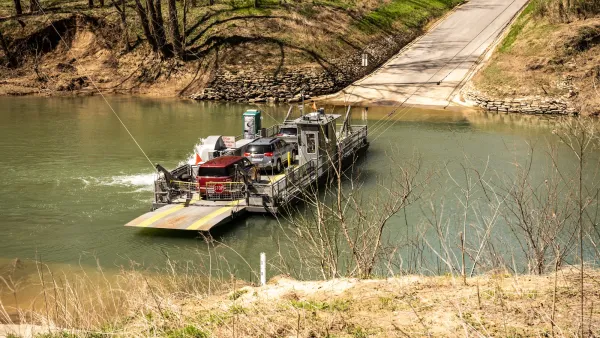
Nation’s Shortest Car Ferry Travels Just 200 Feet in a National Park
The Green River Ferry shuttles cars in a 30-second trip.
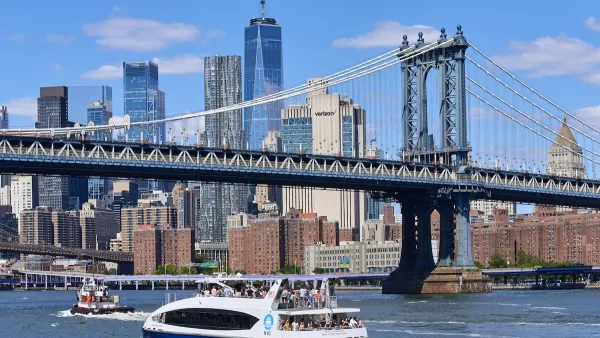
NYC's Ferry System is Quietly Breaking Ridership Records
The system, which is planning an expansion, carried over 7.4 million passengers in 2024.
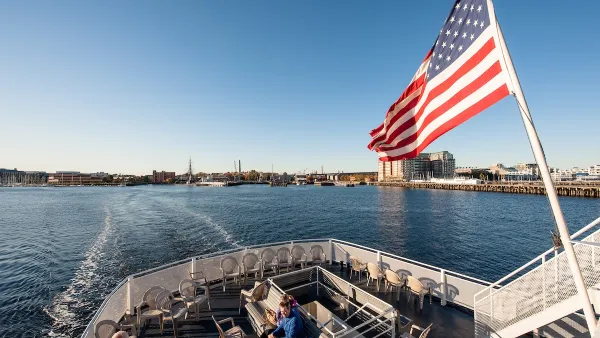
Boston Bets on Ferries as a Solution to Traffic
The T’s ferry system served 1.4 million passengers last year — and that number is growing.

Planetizen Federal Action Tracker
A weekly monitor of how Trump’s orders and actions are impacting planners and planning in America.

Amtrak, CN end decades-long dispute with eight-year agreement
The new operating agreement establishes an updated framework for the companies to work together, including processes to resolve disputes.

Judges permit Denver to divert 77,000 acre feet from the Colorado River for reservoir expansion
Overuse and climate change have caused the Colorado River’s water levels to plummet.

Boston has spent millions making the Green Line more accessible — and there’s no end in sight
While the city has invested millions into expanding and adding platforms to the Green Line to make it more accessible, new train cars set to arrive next year will be too tall for disabled passengers to board without raising the current platforms.

Idaho may see an 18% drop in federal surface transit funding — the largest estimated cut in the US
Transit systems in rural communities are much more reliant on federal funding to provide their services.

How ‘post-disaster gentrification’ alters neighborhoods after natural calamities
After hurricanes, fires or other calamities, the original residents of a community are often replaced by younger, wealthier residents.

FREE Course: Walkable City 1: Why Walkability?
After describing his path towards focusing on walkability as the essence of good planning, Jeff Speck marches through his five principal reasons for making more walkable places.
Reinventing Malls: Planning Alchemy—Turning Gray Fields Into Gold
The course focuses on the opportunities and imperatives that shape reinvention of mall sites.

Harvard University Graduate School of Design
KFH Group Inc.
Greater Baltimore Committee
The Architects Foundation
University of Cincinnati Online
The Pocatello Development Authority
The Urban Renewal Agency of the City of Pocatello