The T’s ferry system served 1.4 million passengers last year — and that number is growing.


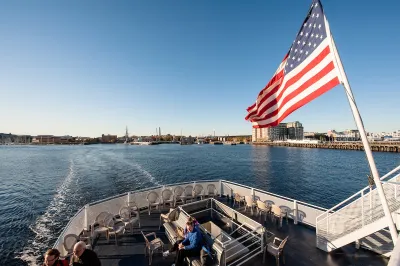
Boston residents who are tired of their car commute could consider a different option: the Massachusetts Bay Transportation Authority’s system of ferries, which criss-crosses Boston Harbor and provided 1.4 million rides in 2024. “While ferries carry less than half a percent of the T's total average weekday ridership, the number of people commuting by boat has ticked upward.”
As Andrea Perdomo-Hernandez explains in a piece for WBUR, the state government granted the MBTA and other agencies over $2 million to expand water transportation as an alternative to driving.
Boston’s mayoral candidates both support expanding ferry service, including public-private partnerships that service some of the lines. “Brian Kane, executive director of the MBTA advisory board, which represents cities and towns serviced by the T, said he’s all for expanding ferry offerings, noting water transit is more environmentally friendly than cars,” but noted that expanding service will likely require state-level support.
Read the full story: Hate traffic? Transit leaders and politicians want to boost water commutes
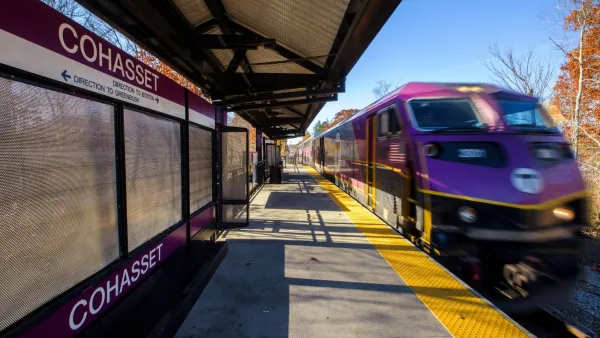
MBTA extends commuter rail discounts and lowers express bus fare to keep passengers riding into the fall
Boston-area commuters can access half-price monthly passes through November.
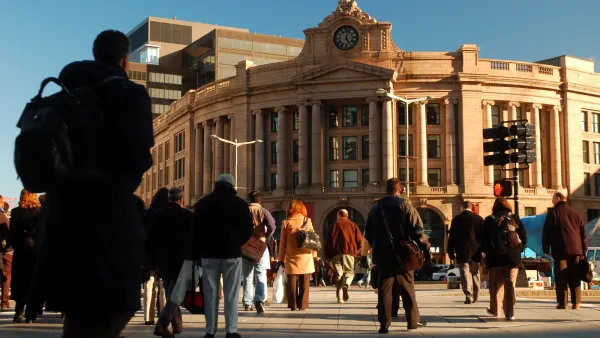
MBTA threatens to use eminent domain to pedestrianize Boston streets during World Cup
Boston city hall has been unusually reluctant to align with MassDOT and MBTA's proposed crowd management plans.
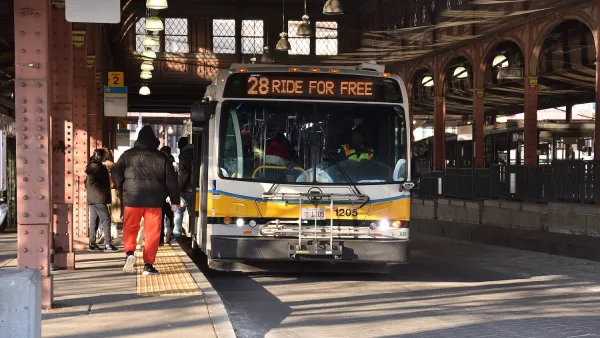
Boston’s Free Buses are Also its Slowest
Two fare-free bus lines have seen a sharp increase in travel times.

Planetizen Federal Action Tracker
A weekly monitor of how Trump’s orders and actions are impacting planners and planning in America.

California plans to bury El Niño’s downpour
If the state plays its cards right, it may be able to store a billion acre-feet of El Niño’s water in aquifers.

Desperate measures: Advocates weigh draining Lake Powell to fill Colorado River
Draining the reservoir could reduce evaporation losses by a couple hundred thousand acre-feet.

Los Angeles just elected an urban planner as its mayor
Transportation analysts are optimistic that Raman will be more aggressive in addressing transit issues than Bass.

Mamdani’s pied-à-terre tax survives legal challenge
A panel of judges found that the plaintiffs failed to demonstrate injury as a result of New York City's implementation of the tax.

Eastern Nebraska is running out of electricity
Data centers and electrification are straining eastern Nebraska’s grid, throttling economic development.

FREE Course: Walkable City 1: Why Walkability?
After describing his path towards focusing on walkability as the essence of good planning, Jeff Speck marches through his five principal reasons for making more walkable places.
Reinventing Malls: Planning Alchemy—Turning Gray Fields Into Gold
The course focuses on the opportunities and imperatives that shape reinvention of mall sites.

City of Rosemead
Rutgers University, Edward J. Bloustein School of Planning and Public Policy
One Hundred Miles
University of Michigan School for Environment and Sustainability (SEAS)
Hunter College, City University of New York (CUNY)
The Architects Foundation
City of Cambridge
Montrose County
The Pocatello Development Authority