Jay Walljasper writing in Yes! Magazine, reports on all the innovations that make Portland the premier cycling city in the U.S.


While investments are being targeted at physical infrastructure, Portland is also engaged in creating a culture of cycling through social marketing campaigns and celebrations.
"[Portland's] plans signal a strategic shift in bicycle planning-a new push to serve more than the 8-10 percent of people who feel at ease biking today. Portland is now focusing on meeting the needs of the 60 percent of people who report in surveys that they're interested in biking more but feel nervous doing it on streets with cars zooming past. Currently, about two-thirds of Portland's 314 miles of bikeways are simple bike lanes, but the city is designing more bike boulevards (residential streets optimized for bike, rather than car, traffic), bike paths (off-street trails through parks or old rail lines), and cycle tracks (bike-only spaces separated from busy streets by a median, grade separation, or wide strip of painted pavement)...The new plan will push bike infrastructure to 5 percent of the city's total transportation budget."
Economic analysis is also revealing that these cycling investments are more than paying for themselves. It is estimated that the region is keeping $800 million in the local economy thanks to cycling, and that bikes are responsible for $1.5 billion in additional economic activity.
Read the full story: Cycle City, USA

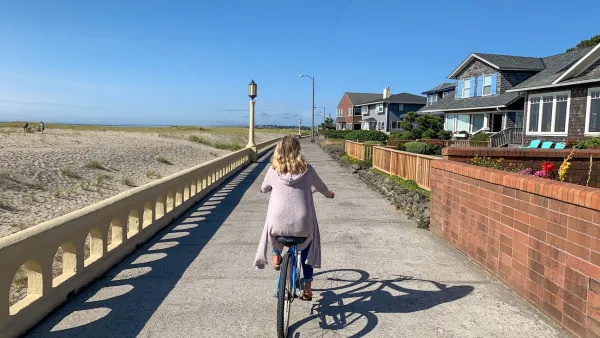
Oregon updates coastal bike map for the first time in a decade
The printed guide helps cyclists navigate the coastal region where cellular service can be unpredictable.
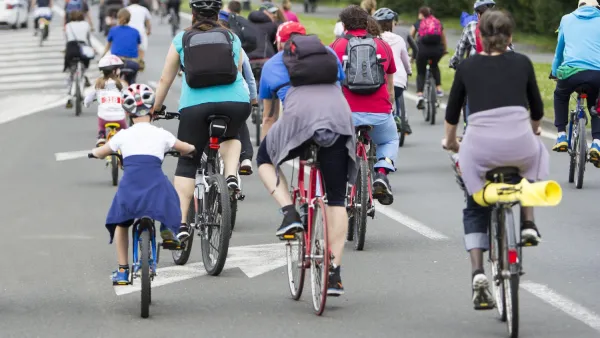
Unleashing the Power of Cycling With Smart Messaging
Lloyd Alter describes how creative design and copywriting can flip the script and promote active transport.
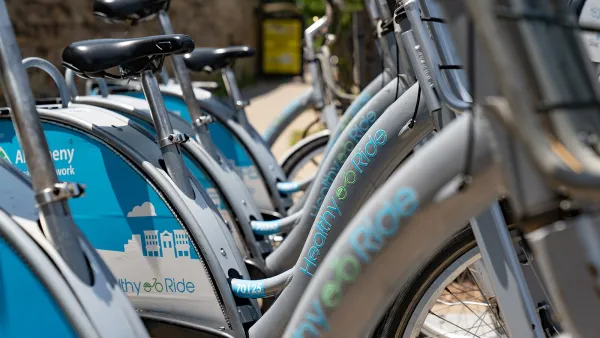
Pittsburgh To Revamp its Bike Share System With E-Bikes, New Stations
The system overhaul is partly due to nextbike's shift to focusing on its European markets. The new fleet will include 350 e-bikes and expand service to new neighborhoods.

Planetizen Federal Action Tracker
A weekly monitor of how Trump’s orders and actions are impacting planners and planning in America.

‘Going backwards:’ Baltimore mayor, students rally against state's transit funding plan
Maryland's proposed six-year plan provides no funding for Baltimore’s BMORE bus program and reduces its road maintenance funding.

Detroit to transform waterfront with $2.2 billion investment
Developers will convert about 18 acres of unused parking lot space into civic spaces.

Guerilla urbanists’ DIY benches joined by sanctioned seats in Chicago
The group behind the original homemade benches said they will continue installing them across bench-less bus stops in Chicago.

Boston spent $765 million to lease battery-powered trains
The trains will serve Boston’s Fairmount Line for fifteen years.

NYC may expand key reservoir after devastating drought
The aqueduct that carries water from the reservoir to New York City has been leaking 35 million gallons of water per day since the 1990s.

FREE Course: Walkable City 1: Why Walkability?
After describing his path towards focusing on walkability as the essence of good planning, Jeff Speck marches through his five principal reasons for making more walkable places.
Reinventing Malls: Planning Alchemy—Turning Gray Fields Into Gold
The course focuses on the opportunities and imperatives that shape reinvention of mall sites.

One Hundred Miles
County of Mendocino
planning NEXT
The Architects Foundation
University of Cincinnati Online
Montrose County
Northern Illinois Transit Authority (NITA)
The Pocatello Development Authority