Cities attract skilled workers. But skillsets are not the same across different cities, according to this recent study.


"Cities of different sizes draw on different types of skills. This distribution of skills is also a function of industry structure which can be driven by region size. Manufacturing is overrepresented in small and medium sized cities while knowledge and standardized services are more located in bigger cities The chart below shows that larger cities have a mix of employment in occupations requiring higher average levels of analytical and social intelligence skills, whereas average physical skill content of occupations does not differ significantly by city size. Very large cities, defined by population greater than 2 million such as New York, NY or Washington, DC, draw most heavily on social intelligence skills."
This report from the Martin Prosperity Institute compares physical, social intelligence and analytical skillsets against the sized of cities where these skillsets tend to have more demand.
Read the full story: Cities of different sizes draw on different types of skills
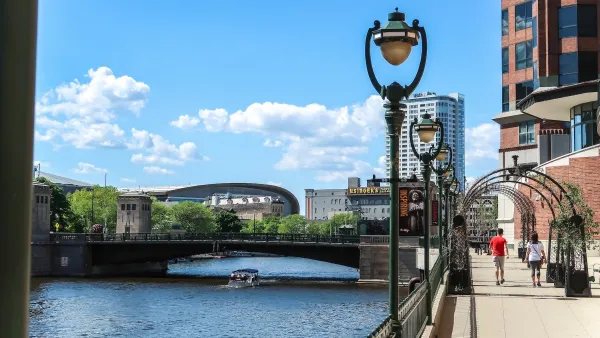
Wisconsin's declining population reduces housing needs by almost 50%
The state's working age population declined by over 25,000 people between 2020 and 2024.

Heat-Related ER Visits Soar in Florida
The state has the most heat-related hospital visits in the nation, but efforts to create protections for outdoor workers and other vulnerable residents have been stymied by state legislators.

Gig Workers Demand Data Transparency
Access to data for gig workers can provide a valuable source of information and bargaining power in a traditionally opaque and risky industry.

Planetizen Federal Action Tracker
A weekly monitor of how Trump’s orders and actions are impacting planners and planning in America.

Washington state to charge fee to drivers with fuel-efficient cars
Revenue from the fee will go towards supporting the state’s highways.

Trump to blast ‘hydrocarbon highway’ through ‘world’s longest art gallery’
Environmental and historic preservation groups are suing to stop the project.

MBTA Green Line project moved to next phrase of CIG program
The modernization effort will cost $4.08 billion.

22-mile pedestrian and bike path to encircle Atlanta by 2030
The project will also support affordable housing.

Army detonates nearly 5 tons of lead in Iowa
The detonation comes after days of delays and public outcry.

FREE Course: Walkable City 1: Why Walkability?
After describing his path towards focusing on walkability as the essence of good planning, Jeff Speck marches through his five principal reasons for making more walkable places.
Reinventing Malls: Planning Alchemy—Turning Gray Fields Into Gold
The course focuses on the opportunities and imperatives that shape reinvention of mall sites.

City of Charlotte
City of Rosemead
Rutgers University, Edward J. Bloustein School of Planning and Public Policy
University of Michigan School for Environment and Sustainability (SEAS)
Hunter College, City University of New York (CUNY)
The Architects Foundation
University District Partnership