San Joaquin Valley's bad air will cause their air district a $29 million fine for exceeding federal ozone limits - and they plan to ask motorists to pay the bill, if the board supports the new registration fee.


The air district notes that motorists are responsible for 80% of the ozone problem. The fine itself will remain within the 8-county district and could be used to pay for mitigations like trading in older cars for less polluting ones.
"Faced with a fine of at least $29 million for exceeding federal ozone limits, the San Joaquin Valley's air quality regulators are proposing an annual surcharge of $10 to $24 on registration fees for the region's 2.7 million cars and trucks beginning next year."
The fee is enabled by 2008 legislation that requires a vote of the governing board only, unlike vehicle registration fees that the electorate will decide on Nov. 2. [See Prop. 21 would aid state parks by tacking $18 to car fees and county vehicle registration fees up to $10 enabled by SB 83 last year.]
From Bakersfield Californian: Drive a car? You may pay more for our bad air: "Rather than assessing the valley's largest stationary polluters, such as oil refineries, power plants and agricultural-production facilities, Air District officials are proposing to add approximately $10 to $12 to vehicle registrations in the valley."
"This is a fair thing to do in our view, since 80 percent of our smog comes from mobile sources," said Seyed Sadredin, Air District director."
Read the full story: New Tactic in California for Paying Pollution Bill
Volkswagen Submits Another Recall Plan for Diesel Cars
Volkswagen has already submitted its recall plan for its 2-liter diesel engines—it was rejected by both the EPA and California Air Resources Board. It also needed to submit a recall plan for 3-liter diesel engines to CARB by Feb. 2, which it did.
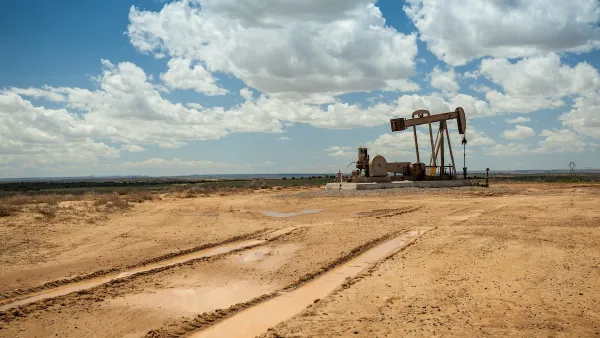
High Ozone Levels Threaten New Mexico Oil Town
The small community of Loving, New Mexico has higher ozone levels than dense cities like Los Angeles.
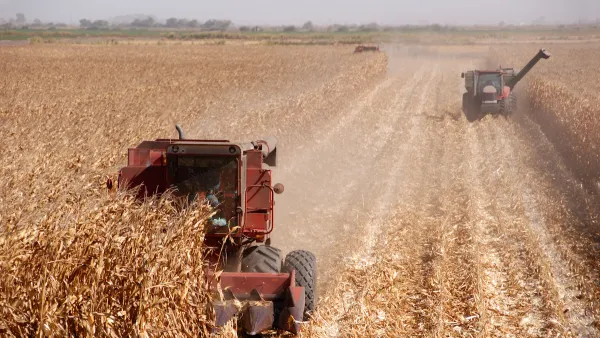
San Joaquin Valley Struggles to Lower Emissions
The San Joaquin Valley has some of the worst air pollution and particulate matter emissions in the nation, but agricultural sources are loosely regulated.

Desperate measures: Advocates weigh draining Lake Powell to fill Colorado River
Draining the reservoir could reduce evaporation losses by a couple hundred thousand acre-feet.

Eastern Nebraska is running out of electricity
Data centers and electrification are straining eastern Nebraska’s grid, throttling economic development.

Move over, LA: St. Louis gears up for Olympics, invests millions in downtown redevelopment
The Missouri city will host the 2028 Olympic soccer group stage and knockout matches.

Mass. votes against statewide minimum lot size for single-family homes
Over 2 million residents voted on Question 7; it was decided by just over 30,000 votes.

Maryland’s $15 billion bridge project gains key approval
The Maryland Transit Authority said the project will create over 60,000 jobs and add $23 billion to the local economy.

‘No clear next steps’ for Chicago's permanent festival grounds
Eleventh Ward Ald. Nicole Lee has suggested Soldier Field as a possible location for the permanent event space.

FREE Course: Walkable City 1: Why Walkability?
After describing his path towards focusing on walkability as the essence of good planning, Jeff Speck marches through his five principal reasons for making more walkable places.
Reinventing Malls: Planning Alchemy—Turning Gray Fields Into Gold
The course focuses on the opportunities and imperatives that shape reinvention of mall sites.

City of Rosemead
Rutgers University, Edward J. Bloustein School of Planning and Public Policy
One Hundred Miles
University of Michigan School for Environment and Sustainability (SEAS)
Hunter College, City University of New York (CUNY)
The Architects Foundation
City of Cambridge
The Pocatello Development Authority
The Urban Renewal Agency of the City of Pocatello