The new 23-acre Seaport Square in the South Boston waterfront district will bring a mix of uses and ample parkland to a former railroad property.


Designed by architects KPF and backed by a developer team led by Boston Global Investors, the 6.3 million square foot project will include retail, office, hotel, civic and cultural spaces, with nearly 40 percent of the site reserved for green space. The city hopes the $3 billion development will draw high-tech and creative companies and provide affordable housing.
However, some city official are concerned about handing over such a large site to a single developer, notes Ted Smalley Brown:
'While the plan's approval is encouraging, city officials are wary of getting left with acres of vacant sites should the development stall out. Indeed, Boston Global Investors CEO John Hynes III played a lead role in a condo and office tower on the site of the former Filene's department store in nearby Downtown Crossing-a project that notoriously stalled after demolition and excavation in 2008.'
Read the full story: Boston's Seaport Square Sails Ahead
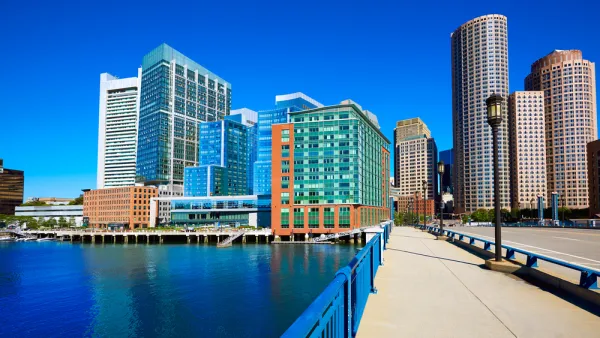
Boston’s Seaport District, Where Building Started Before Flood Preparation
The Boston waterfront has been booming, but the area is extremely vulnerable to climate change and rising sea levels. Measures to address those risks have come just recently.

Development Overtakes Open Space in Boston's Seaport District
Planners worry that the success of the waterfront district has led to its overdevelopment.
Something's Missing in Boston's Reinvented Seaport
Boston would hardly seem capable of resembling "Anytown, USA" but that might be precisely what's happening in the Seaport neighborhood of the city's waterfront.

Planetizen Federal Action Tracker
A weekly monitor of how Trump’s orders and actions are impacting planners and planning in America.

California plans to bury El Niño’s downpour
If the state plays its cards right, it may be able to store a billion acre-feet of El Niño’s water in aquifers.

Desperate measures: Advocates weigh draining Lake Powell to fill Colorado River
Draining the reservoir could reduce evaporation losses by a couple hundred thousand acre-feet.

US buildings threatened, destroyed by fires set to triple by 2060
Researchers found a high fire risk for socioeconomically vulnerable neighborhoods in the American West.

LA residents may be allowed to paint their own crosswalks
Councilwoman Katy Yaroslavsky put out a motion instructing the Los Angeles Department of Public Transportation to study the feasibility of allowing volunteers to paint crosswalks.

Dallas moves to overhaul its zoning code
The city's zoning reform will allow more multi-family and mixed-use developments.

FREE Course: Walkable City 1: Why Walkability?
After describing his path towards focusing on walkability as the essence of good planning, Jeff Speck marches through his five principal reasons for making more walkable places.
Reinventing Malls: Planning Alchemy—Turning Gray Fields Into Gold
The course focuses on the opportunities and imperatives that shape reinvention of mall sites.

City of Rosemead
Rutgers University, Edward J. Bloustein School of Planning and Public Policy
One Hundred Miles
Hunter College, City University of New York (CUNY)
The Architects Foundation
University of Cincinnati Online
City of Cambridge
Montrose County
The Pocatello Development Authority