In the last ten years, more than two thirds of poverty growth has happened in suburban areas of American cities. According to Brookings', social services such as transit have failed to keep up in the face of decreasing tax revenue.


In addition, suburbs are simply not setup to deal with increasing levels of poverty because this is such a new problem. Expanding public transit through suburban areas is costly compared to inner city projects. In downtown areas efficiencies of scale 'ensure people will use new rail lines,' but in the suburbs this guarantee almost evaporates.
The lack of public transportation is forcing poor suburbanites to reduce the number of trips taken at a time when they need to be doing the exact opposite to find jobs.
Suburbs need to be realigned "in the fashion of traditional town centers, with walkable connections to surrounding neighborhoods and good transit access."
Read the full story: As Suburban Poverty Grows, U.S. Fails to Respond Adequately

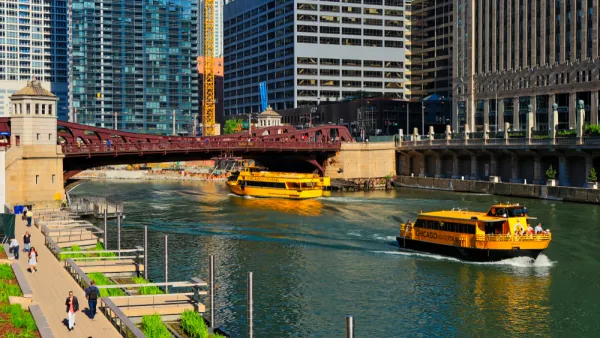
COVID-19 and Big, Dense Cities That Aren't New York
As in metropolitan New York, big, dense cities don't always suffer from coronavirus to a greater extent than their car-oriented suburbs.
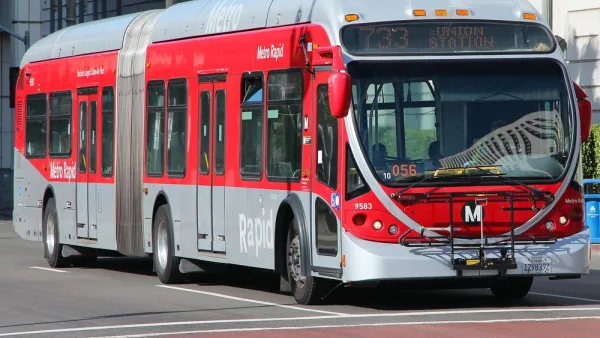
Causes of the Pre-COVID Decline in Bus Ridership
Even before the effects fo the coronavirus pandemic drastically reduced ridership, transit riders were declining in cities across the country. The reasons for the downward trend were varied.
The Middle Class Fights for Survival in Lima, Ohio
An article surveys Lima, Ohio's long-term residents, politicians, and economy to weave a narrative tracing the ups and downs of the shrinking small town.

Planetizen Federal Action Tracker
A weekly monitor of how Trump’s orders and actions are impacting planners and planning in America.

‘Going backwards:’ Baltimore mayor, students rally against state's transit funding plan
Maryland's proposed six-year plan provides no funding for Baltimore’s BMORE bus program and reduces its road maintenance funding.

Detroit to transform waterfront with $2.2 billion investment
Developers will convert about 18 acres of unused parking lot space into civic spaces.

HUD, USDA agree on framework to simplify housing environmental review standards
Their agreement is a requirement of the 21st Century ROAD to Housing Act.

Cost of water rising at a faster pace than inflation, median household income
California and Maryland residents have seen their water bills grow especially high.

NYC building owners overwhelmingly comply with new emissions limits
The New York City Department of Buildings is fining owners who did not file emissions reports.

FREE Course: Walkable City 1: Why Walkability?
After describing his path towards focusing on walkability as the essence of good planning, Jeff Speck marches through his five principal reasons for making more walkable places.
Reinventing Malls: Planning Alchemy—Turning Gray Fields Into Gold
The course focuses on the opportunities and imperatives that shape reinvention of mall sites.

City of Thousand Oaks
City of Wisconsin Rapids
Harvard University Graduate School of Design
The Architects Foundation
University of Cincinnati Online
Northern Illinois Transit Authority (NITA)
The Pocatello Development Authority
The Urban Renewal Agency of the City of Pocatello