A new community kitchen and pie-baking program in small town Alabama is trying to help a struggling and impoverished area rebound.


"PieLab first began to take shape in March 2009 at a bar in Belfast, where 14 members of Project M gathered over burgers and beer. "We realized that we couldn't solve global warming," recalled Megan Deal, a native of suburban Detroit, who, like most of the other Project M members, was a recent college graduate. "And we couldn't fix the plummeting economy. Before pie came to us, we were kind of paralyzed."
They started out small. Their first foray was Free Pie Day, during which Project M members stood on a Belfast street corner and handed out slices of pecan pie, pumpkin pie and apple pie to passers-by. The idea was to spur community and conversation, one slice at a time. Free Pie Day inspired similar efforts in Washington, Brooklyn and elsewhere. Most important, it inspired PieLab."
The cafe allows community members to come in and bake pies, which founders believe is a good step towards improving community interaction and confidence in Greensboro, Alabama.
Read the full story: Pie + Design = Change
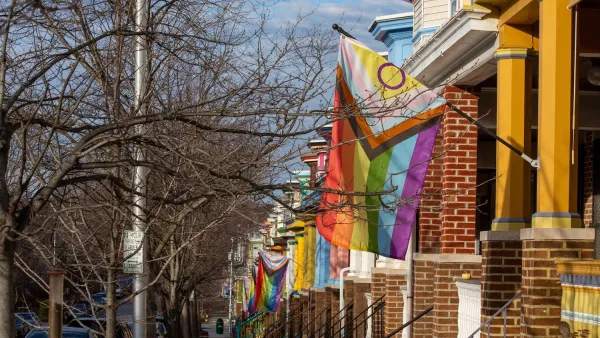
LGBTQ+ Groups Have Been Quietly Buying Property, Building Equity and Community
A temporary window of flexible funds in the early 2020s allowed many queer- and trans-led organizations to achieve long-held dreams of owning their own buildings and housing their members.
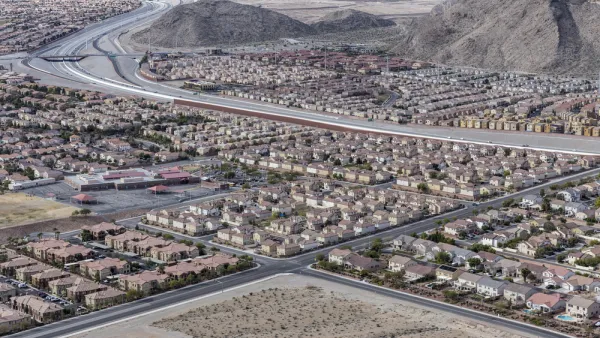
Research: Sprawl Linked to Poverty
Low-income families living in high-sprawl neighborhoods are limited in their access to education, jobs, and other amenities, often trapping them in a cycle of poverty.

Is Inequality Destroying American Cities?
A recent video claimed that high income inequality is the “Thing That Will Destroy Our Cities.” Is this true?

Planetizen Federal Action Tracker
A weekly monitor of how Trump’s orders and actions are impacting planners and planning in America.

Eastern Nebraska is running out of electricity
Data centers and electrification are straining eastern Nebraska’s grid, throttling economic development.

Study reveals best places in the U.S. for cycling, walking
New research from Streetlight Data examines bicycle and pedestrian miles per capita in the 100 largest U.S. cities by population.

Federal government nominates new FTA administrator
Mark Aesch is currently the founder and CEO of a transportation management consulting firm.

Developers reveal $10 billion stadium plan as ‘Hail Mary’ to keep Bears in Chicago
The plan would also boast a public park, high- and mid-rise buildings and a youth sports complex.

As Texas embraces carbon storage, a Black community questions the risks
Texas now issues permits for companies to store carbon dioxide underground. East Texas residents fear safety risks, and skeptics doubt the climate benefits.

FREE Course: Walkable City 1: Why Walkability?
After describing his path towards focusing on walkability as the essence of good planning, Jeff Speck marches through his five principal reasons for making more walkable places.
Reinventing Malls: Planning Alchemy—Turning Gray Fields Into Gold
The course focuses on the opportunities and imperatives that shape reinvention of mall sites.

City of Charlotte
City of Rosemead
Rutgers University, Edward J. Bloustein School of Planning and Public Policy
University of Michigan School for Environment and Sustainability (SEAS)
Hunter College, City University of New York (CUNY)
The Architects Foundation
City of Cambridge
The Pocatello Development Authority
The Urban Renewal Agency of the City of Pocatello