Activists who want to solve the problem of "food deserts" in underserved areas push for co-ops and and independent grocery stores. But would large chains like WalMart be a better solution?


Non-profit and activist groups that are trying to assist neighborhoods with little access to healthy foods and produce often advocate for small, independently-owned groceries.
But as Stephanie Ogbert reports in Grist:
"Research and focus groups completed by Hesterman's Fair Food Network, the Oakland research group PolicyLink, and academics like sociologist Alkon, however, show that many residents of low-income neighborhoods do not yet use the alternative venues offered by food justice groups. These residents also say they want what most people already have easy access to -- a full-service grocery store in their neighborhood that would offer a wide range of products for one-stop shopping."
Read the full story: Would a Walmart solve West Oakland's and Nashville's food problems?


Making economic sense of city-owned grocery stores
Several cities are moving to create municipal stores, but do they actually save low-income households money?
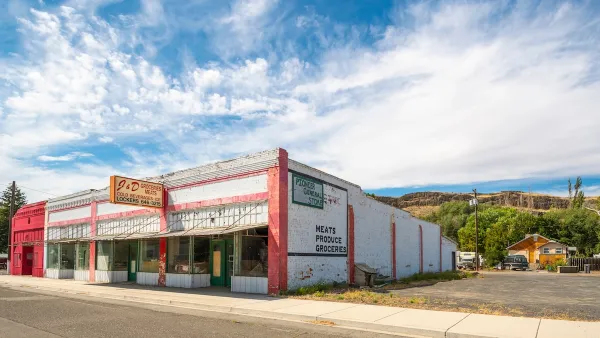
One Weird Trick for Eliminating Food Deserts
How enforcing one federal law, ignored since the 1980s, could bring back small grocers and ensure more people have convenient access to fresh foods.

Even in ‘Food Deserts,’ Independent Grocers Struggle to Survive
Government support has helped open stores in underserved communities, but cost and scale make it difficult for small businesses to survive long-term.

Planetizen Federal Action Tracker
A weekly monitor of how Trump’s orders and actions are impacting planners and planning in America.

‘Going backwards:’ Baltimore mayor, students rally against state's transit funding plan
Maryland's proposed six-year plan provides no funding for Baltimore’s BMORE bus program and reduces its road maintenance funding.

Detroit to transform waterfront with $2.2 billion investment
Developers will convert about 18 acres of unused parking lot space into civic spaces.

Less housing, wasted money: study reveals impact of city parking mandates
The study found that 71% of carless households in the United States pay for a parking space they don’t use.

Minnesota seeks to replace fraud-ridden Housing Stabilization Services with new program
Federal prosecutors have charged over a dozen people in fraud cases involving at least $26 million.

A multi-billion dollar problem is brewing under Oakland’s streets
Oakland’s stormwater drainage systems are in desperate need of upgrades and repairs. The El Niño will only further strain the city’s infrastructure.

FREE Course: Walkable City 1: Why Walkability?
After describing his path towards focusing on walkability as the essence of good planning, Jeff Speck marches through his five principal reasons for making more walkable places.
Reinventing Malls: Planning Alchemy—Turning Gray Fields Into Gold
The course focuses on the opportunities and imperatives that shape reinvention of mall sites.

One Hundred Miles
County of Mendocino
planning NEXT
The Architects Foundation
University of Cincinnati Online
Montrose County
Northern Illinois Transit Authority (NITA)
The Pocatello Development Authority