Electric cars sap a lot of electricity out of the grid, and many vehicles charging at once can cause unprepared cities to blackout.


Cities are courting the big automotive manufacturers to begin installing infrastructure in their cities:
"Nissan, Ford and other electric vehicle makers said they look at three factors in picking cities for rollouts: large numbers of hybrid owners - a sign electric cars will be embraced - friendly public policy and supportive utilities.
"We need to get the right policies in place, moving forward, soon. And when I say soon, I mean get them in place over the next six months to a year," said Howard Learner, executive director of the Environmental Law & Policy Center in Chicago, which is participating in the consortium."
Read the full story: Cities scramble to woo first wave of electric vehicles

Swapping your gas car for an EV is greener than keeping it, research shows
An EV repays the 'carbon debt' caused by building it after 4,400 miles.

Florida wants to shift its entire EV charger budget to air taxi 'vertiports'
FDOT argues the private sector is already building out the state's fast-charging infrastructure, so the state could redirect those funds elsewhere.
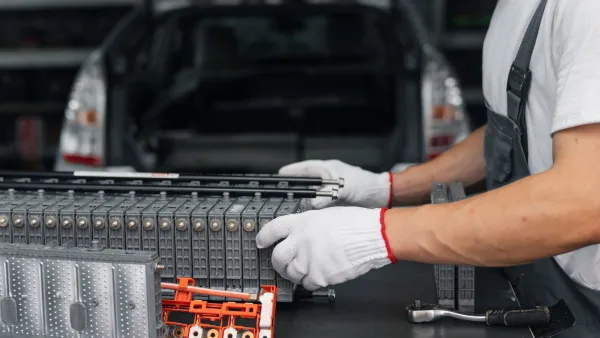
EV battery waste threatens to overwhelm China's recycling system
The county processed over 400,000 metric tons of EV battery waste last year.

Desperate measures: Advocates weigh draining Lake Powell to fill Colorado River
Draining the reservoir could reduce evaporation losses by a couple hundred thousand acre-feet.

Eastern Nebraska is running out of electricity
Data centers and electrification are straining eastern Nebraska’s grid, throttling economic development.

Malls are becoming the midtowns of the future
Mall and office park redevelopments are a generational opportunity to create new nodes of urbanity.

NYC breaks ground on anti-flooding infrastructure project
New York City's new system will reduce stormwater flows to local sewers by 90%.

One Kentucky town’s secret to affordable housing
The Smoketown Community Land Trust has already built seven affordable homes for community members.

Houston gains petal-shaped cooling infrastructure to make streets more ‘delightful’
The city has installed the pavilions along 15 blocks in Houston.

FREE Course: Walkable City 1: Why Walkability?
After describing his path towards focusing on walkability as the essence of good planning, Jeff Speck marches through his five principal reasons for making more walkable places.
Reinventing Malls: Planning Alchemy—Turning Gray Fields Into Gold
The course focuses on the opportunities and imperatives that shape reinvention of mall sites.

City of Rosemead
Rutgers University, Edward J. Bloustein School of Planning and Public Policy
One Hundred Miles
University of Michigan School for Environment and Sustainability (SEAS)
Hunter College, City University of New York (CUNY)
The Architects Foundation
City of Cambridge
Montrose County
The Pocatello Development Authority