Through the example of the booming megacity of Chongqing, this article explores how urban growth is occurring in China, and what it means to plan a rapidly growing city.


The city was home to just 200,000 people in the 1930s, but now has a metropolitan population of 32 million.
"In today's China, it is most accurate to say there is a profound appearance of planning. This holds true for urbanization, as for much else. "Planning is really a form of publicity," one researcher at the Ministry of Housing and Urban-Rural Development in Beijing told me. He explained: 'It's a paradox. Things here are very planned, in that lots of plans are being made. But in practice, it's a lot messier. It has to do with the way that plans are used -- or not used.' As for the megacities now rising across the country: 'In theory, all development has to be guided by plans. But cities across China are operating without plans being approved -- plans don't have that constraining effect. 'City planner' is an aspirational title; mainly it involves approving plans that are already in the process of being built.'
And so, as we watch the world's fastest project in city-building unfold, it is important to realize that there is no blueprint; China has embarked on an extraordinary course of what Jeffrey Wasserstrom, author of China in the 21st Century, calls 'unintentional urbanization.' Think of it as a railroad car hurtling down the line at the same time that attendants scramble to hitch on the wheels and lay the track."
Read the full story: Chicago on the Yangtze

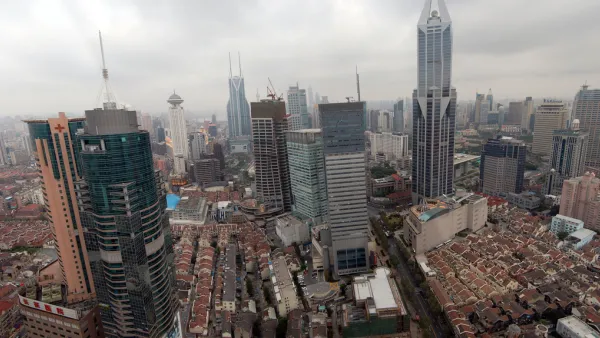
China's Megacities May Soon Rely on Urban Farming
While widespread urban farming remains pipe dream in the United States, dwindling arable land and a mass shift to cities might make it a necessity in China.
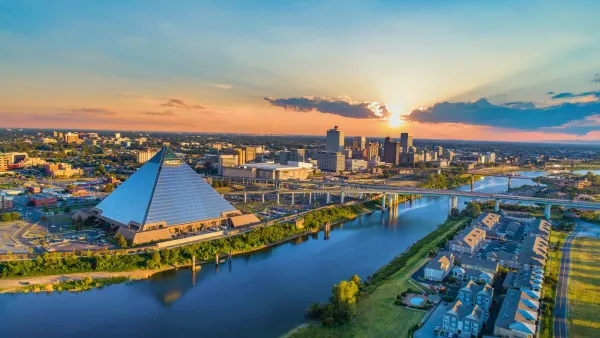
15 US cities and their global namesakes
Hundreds of cities around the United States are named after other places. We tour a few of them.
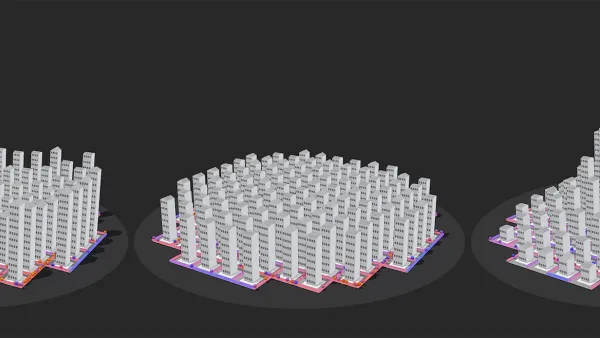
New study visualizes how city shapes impact mobility
Whether circular or linear, the shape and layout of cities affects how their residents get around.

Planetizen Federal Action Tracker
A weekly monitor of how Trump’s orders and actions are impacting planners and planning in America.

The state-sanctioned urbicide of Austin
People don’t kill cities. Freeways do.

US to reduce Colorado River water deliveries to Mexico
A new Colorado Treaty amendment reduces Mexico’s Colorado River water allocation by 250,000 acre feet.

Nation's most wind-powered state turns to coal as data centers increase energy demand
For the first time in decades, Iowa has increased its generation of coal power.

NYC cools commuters with city's first rain garden above a bus stop
New York City officials say the plants in the rain garden can absorb 16 gallons of rainwater during heavy storms.

Brightline West’s future may rely on $6 billion federal loan
The company has until Nov. 2 to make a $400 million equity investment into its proposed high-speed rail line.

FREE Course: Walkable City 1: Why Walkability?
After describing his path towards focusing on walkability as the essence of good planning, Jeff Speck marches through his five principal reasons for making more walkable places.
Reinventing Malls: Planning Alchemy—Turning Gray Fields Into Gold
The course focuses on the opportunities and imperatives that shape reinvention of mall sites.

Greater Baltimore Committee
Eagle County Government
Harvard University Graduate School of Design
The Architects Foundation
University of Cincinnati Online
The Pocatello Development Authority
The Urban Renewal Agency of the City of Pocatello
Journal of the American Planning Association