Former major league baseball player Maurice Vaughn has made a new new career of buying, then rehabilitating public housing projects. The Times describes Mo's life and transformation as well as that of his six-year-old company, Omni New York LLC.


"Mr. Vaughn, a (42-year-old) star slugger for the Boston Red Sox who quit baseball in 2003 after a lackluster run with the Mets, decided to build what he called his "afterlife" from the ashes of his baseball career."
The Times chronicles the start of his business, teaming up with his attorney and a low-income housing expert. In 2004, the three purchased two deteriorating projects near foreclosure that the City wanted to unload.
"Omni New York LLC is on its way to becoming a major player in the low-income housing world. It has acquired 4,000 apartments, most of them in New York State's scrappiest neighborhoods, housing the poorest of tenants (98 percent of them qualify for Section 8 rent subsidies). It has bought and rehabilitated 23 sites in New York, Massachusetts and Wyoming for a total of $503 million."
Read the full story: Power Player
Modular Housing for Homeless in San Francisco Hits Roadblocks
Lego-type housing construction has attracted the attention of two separate developers as an efficient means to provide housing for the city's large homeless population but has met objections from labor unions and the Mayor's Office.
Mayor de Blasio Stresses Affordable Housing in State of the City Address
In his State of the City Address on Feb. 3, the New York City mayor made it clear that his overriding priority is affordable housing. He targeted six neighborhoods in all five boroughs where development will be required to include affordable housing.
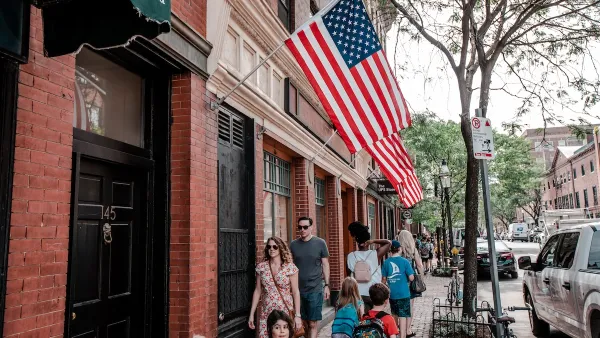
Boston is hard to build housing in: its chief of planning wants to keep it that way
Chief of Planning Kairos Shen said she would not make changes to Boston’s affordability requirements for new housing, which critics say have slowed down development.

Planetizen Federal Action Tracker
A weekly monitor of how Trump’s orders and actions are impacting planners and planning in America.

California plans to bury El Niño’s downpour
If the state plays its cards right, it may be able to store a billion acre-feet of El Niño’s water in aquifers.

Desperate measures: Advocates weigh draining Lake Powell to fill Colorado River
Draining the reservoir could reduce evaporation losses by a couple hundred thousand acre-feet.

Mamdani’s pied-à-terre tax survives legal challenge
A panel of judges found that the plaintiffs failed to demonstrate injury as a result of New York City's implementation of the tax.

Eastern Nebraska is running out of electricity
Data centers and electrification are straining eastern Nebraska’s grid, throttling economic development.

Seattle passes record-breaking transit services expansion
Proposition 1 will double the city’s transit tax to add 95,000 more bus trips and preserve 180,000 bus trips annually.

FREE Course: Walkable City 1: Why Walkability?
After describing his path towards focusing on walkability as the essence of good planning, Jeff Speck marches through his five principal reasons for making more walkable places.
Reinventing Malls: Planning Alchemy—Turning Gray Fields Into Gold
The course focuses on the opportunities and imperatives that shape reinvention of mall sites.

City of Rosemead
Rutgers University, Edward J. Bloustein School of Planning and Public Policy
One Hundred Miles
University of Michigan School for Environment and Sustainability (SEAS)
Hunter College, City University of New York (CUNY)
The Architects Foundation
City of Cambridge
Montrose County
The Pocatello Development Authority