Tax revenue-per-acre figures for big box developments are only slightly higher than residential developments, and not as high as mixed use project, according to this column from Mary Newsom.


"Sarasota County Director of Smart Growth Peter Katz, speaking to a meeting of Citistates Associates here late last month, described a recent analysis of the county's property tax revenue per acre. He pointed first to residential areas. Not surprisingly, when you work the numbers on a per-acre basis, residential property inside the county's municipalities offered the biggest revenue per acre - a little more than $8,200 per acre for single family houses within the city of Sarasota. This makes sense, as in-town land values tend to be higher.
Next, Katz showed the results from retail properties. Here comes surprise No. 1.: Big box stores such as WalMart and Sam's Club, when analyzed for county property tax revenue per acre, produce barely more than a single family house; maybe $150 to $200 more a year, Katz said."
These findings challenge conventional wisdom, according to Newsom. More surprising is that mixed use developments produce even higher tax revenue-per-acre.
Read the full story: Multi-Use Downtown Development Puts Standard Malls’ Tax Yield to Shame

Big Box Retail Owners Ask For Stacked Housing
The two owners of a traditional 8-acre strip, big box retail center in San Francisco have asked for an amendment to the neighborhood plan (undergoing revision) to allow them to add housing on top of their stores, thus doubling the height limit.
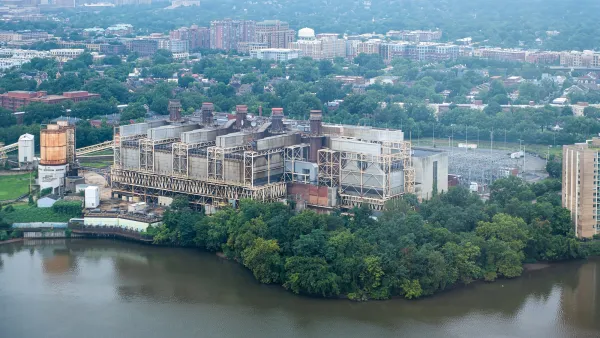
Former power plant in Alexandria to become walkable waterfront neighborhood with 800 homes
The Potomac River Generating Station was once the biggest source of air pollution in northern Virginia.
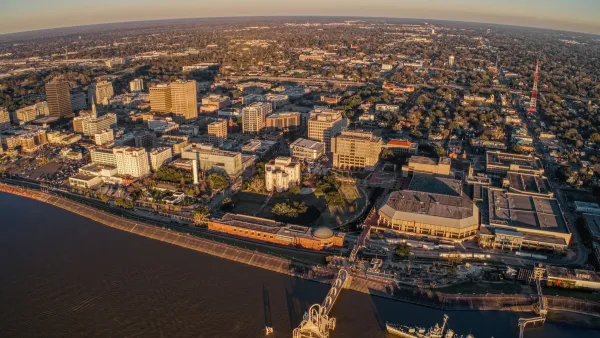
Baton Rouge master plan aims to triple downtown population
The Louisiana capital wants to entice developers to its riverfront district.

Planetizen Federal Action Tracker
A weekly monitor of how Trump’s orders and actions are impacting planners and planning in America.

The state-sanctioned urbicide of Austin
People don’t kill cities. Freeways do.

US to reduce Colorado River water deliveries to Mexico
A new Colorado Treaty amendment reduces Mexico’s Colorado River water allocation by 250,000 acre feet.

Nation's most wind-powered state turns to coal as data centers increase energy demand
For the first time in decades, Iowa has increased its generation of coal power.

NYC cools commuters with city's first rain garden above a bus stop
New York City officials say the plants in the rain garden can absorb 16 gallons of rainwater during heavy storms.

Brightline West’s future may rely on $6 billion federal loan
The company has until Nov. 2 to make a $400 million equity investment into its proposed high-speed rail line.

FREE Course: Walkable City 1: Why Walkability?
After describing his path towards focusing on walkability as the essence of good planning, Jeff Speck marches through his five principal reasons for making more walkable places.
Reinventing Malls: Planning Alchemy—Turning Gray Fields Into Gold
The course focuses on the opportunities and imperatives that shape reinvention of mall sites.

Greater Baltimore Committee
Eagle County Government
Harvard University Graduate School of Design
The Architects Foundation
University of Cincinnati Online
The Pocatello Development Authority
The Urban Renewal Agency of the City of Pocatello
Journal of the American Planning Association