Vision California, the state's first planning document in over thirty years, was released Wednesday and concludes that planners "should focus on creating compact development in already established cities," over continued suburban sprawl.


New developments in California need to be planned from conception to conserve increasingly scarce resources such as water and gasoline. These measures will translate to a healthier lifestyle for dwellers through reduced commutes and improved air quality. The authors argue that "bringing commuters closer to their jobs can help Californians drive 3.7 trillion fewer miles and save 140 billion gallons of gasoline by 2050."
Although the report does not impact law directly, it takes aim at local governments who have enjoyed the "autonomy to create their own growth initiatives." The report is likely to become a hotly debated topic as the state approaches November gubernatorial elections.
Read the full story: Cut Suburban Sprawl, Save Energy, Study Urges

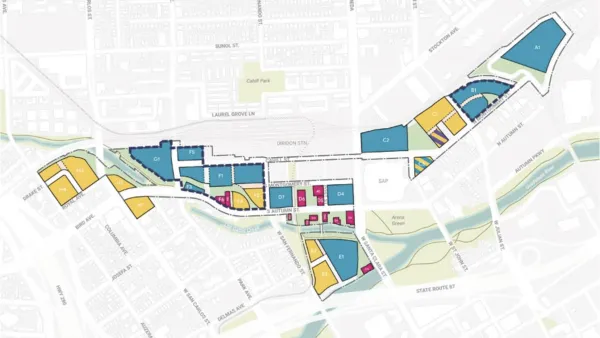
Google's Big Mixed-Use Plans for Downtown San Jose Come Into Focus
Google's plan for a mixed-use transit village at a mile-long site near the Diridon Station in San Jose has a newly released planning document available for public review.

S.F. Bay Area City Says It Wants More Housing—But Votes Down Project
The project included everything San Bruno and residents asked for, and it would have helped the city make significant progress in addressing its growing housing crisis. Still, it was voted down.

California’s Inheritance Tax Break Is Helping Some Much More Than Others
An inheritance tax benefit, along with Proposition 13, has resulted in lower tax rates passing down through generations and billions of dollars in lost tax revenue.

Planetizen Federal Action Tracker
A weekly monitor of how Trump’s orders and actions are impacting planners and planning in America.

‘Going backwards:’ Baltimore mayor, students rally against state's transit funding plan
Maryland's proposed six-year plan provides no funding for Baltimore’s BMORE bus program and reduces its road maintenance funding.

Detroit to transform waterfront with $2.2 billion investment
Developers will convert about 18 acres of unused parking lot space into civic spaces.

Battered from federal attacks, Louisiana's offshore wind industry refuses to give up
State Representative Joe Orgeron expressed hope that the state could revitalize its wind industry once President Trump leaves office.

Data center developers are using lawsuits, cash offers to ‘overwhelm’ rural America
Newsrooms in five states worked together to uncover the tactics big tech developers use to buy land from reluctant communities.

U.S.-Iran war may have ‘devastating’ impact on cost to warm homes
Vermont and Maine residents may see a 76% increase in the cost of warming their homes this winter.

FREE Course: Walkable City 1: Why Walkability?
After describing his path towards focusing on walkability as the essence of good planning, Jeff Speck marches through his five principal reasons for making more walkable places.
Reinventing Malls: Planning Alchemy—Turning Gray Fields Into Gold
The course focuses on the opportunities and imperatives that shape reinvention of mall sites.

One Hundred Miles
County of Mendocino
planning NEXT
The Architects Foundation
University of Cincinnati Online
Montrose County
Northern Illinois Transit Authority (NITA)
The Pocatello Development Authority