In the next year, Detroit will be putting in 30 miles of bike lanes throughout the city. But an ambitious new plan imagines up to 400 miles of bicycling infrastructure.


A 2010 League of American Bicyclists report ranked Detroit among the worst cities for bikers in the country, but new policies may change all that. The current push is part of a larger greenways effort supported by non-profit groups to connect neighborhoods with walking and biking paths.
Matt Helms writes, "City traffic engineer Prasad Nannapaneni said the bike lanes generally will be created using space from existing traffic lanes, with striping repainted to make room for 5-foot-wide bike lanes adjacent to curbs or parking lanes. Nannapaneni said most of this year's bike lane work will start in September."
Read the full story: Detroit to put 30 miles of bicycle lanes on streets


Can Beijing Return to its Transportation (and Communist) Roots?
Beijing has strayed so far from its roots as a bicycling city that it now claims the title of the world's largest auto market, while only 12 per cent of commuters use bicycles. City planners wants to make it popular again to reduce air pollution.
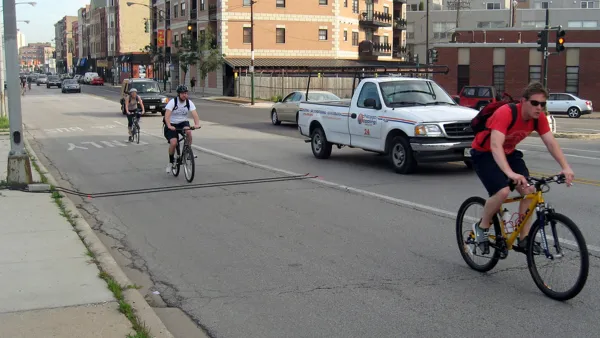
One Expert's Response to Misinformation from Bike Lane Opponents
Swatting down untruths and misinformation by bike lane opponents in St. Paul doesn't require a PhD, but it helps.
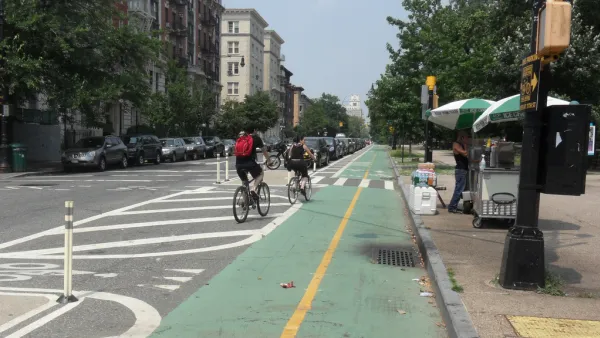
The Chicken and the Egg: Gentrification and Bicycling
Shaun Courtney examines the current politics surrounding gentrification and bicycling throughout the country and what planners can do to address the issue.

Planetizen Federal Action Tracker
A weekly monitor of how Trump’s orders and actions are impacting planners and planning in America.

Amtrak, CN end decades-long dispute with eight-year agreement
The new operating agreement establishes an updated framework for the companies to work together, including processes to resolve disputes.

Judges permit Denver to divert 77,000 acre feet from the Colorado River for reservoir expansion
Overuse and climate change have caused the Colorado River’s water levels to plummet.

Boston has spent millions making the Green Line more accessible — and there’s no end in sight
While the city has invested millions into expanding and adding platforms to the Green Line to make it more accessible, new train cars set to arrive next year will be too tall for disabled passengers to board without raising the current platforms.

Idaho may see an 18% drop in federal surface transit funding — the largest estimated cut in the US
Transit systems in rural communities are much more reliant on federal funding to provide their services.

How ‘post-disaster gentrification’ alters neighborhoods after natural calamities
After hurricanes, fires or other calamities, the original residents of a community are often replaced by younger, wealthier residents.

FREE Course: Walkable City 1: Why Walkability?
After describing his path towards focusing on walkability as the essence of good planning, Jeff Speck marches through his five principal reasons for making more walkable places.
Reinventing Malls: Planning Alchemy—Turning Gray Fields Into Gold
The course focuses on the opportunities and imperatives that shape reinvention of mall sites.

City of Wisconsin Rapids
Harvard University Graduate School of Design
KFH Group Inc.
The Architects Foundation
University of Cincinnati Online
The Pocatello Development Authority
The Urban Renewal Agency of the City of Pocatello