The recent World Urban Forum in Brazil attracted media from around the world, but surprisingly few from the U.S. But as Neal Peirce writes, that doesn't mean the U.S. government wasn't involved.


The U.S. sent a large delegation to the meetings in Rio de Janeiro, and officials met with leaders from other international cities to discuss the mutual problems and challenges they face as urbanization increases.
"Running as a constant theme in Rio was the idea of according all peoples - even the poorest - a fundamental 'right to the city' including basic services from clean water to education to transportation along with secure land tenure, even in favela-like settlements.
One can imagine supercilious journalists, or advocates of hard American military power, dismissing such city-to-city, nation-to-nation learning efforts as social frills, irrelevant to maintaining the United States' global ascendancy.
But worldwide exchanges and learning of the best city practices could be the best national security steps imaginable. They start with the cooperative promise of building constructive relationships as a less arrogant America."
Read the full story: Obama Crew ‘Gets’ World Urban Ties — But Not Our Media

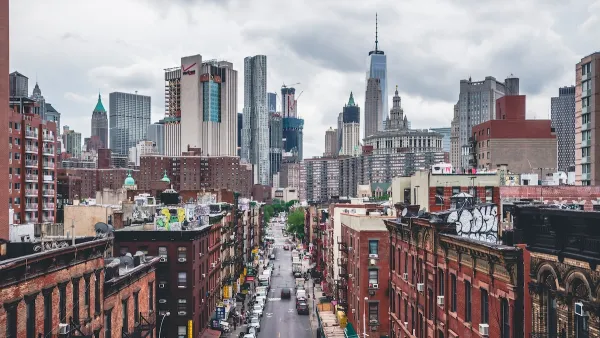
Is the Urban Form Sustainable?
One author offers a framework for resilience that rethinks common assumptions about the inevitability of cities as we know them.
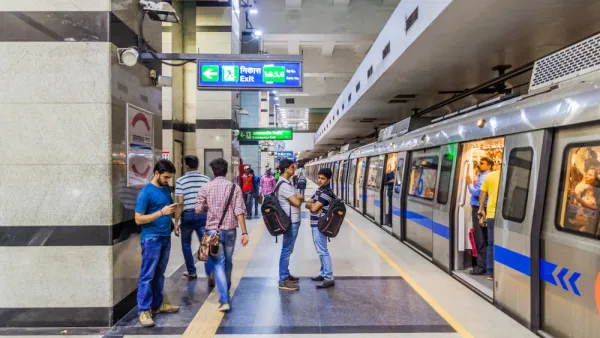
The Fastest Growing Cities in the World
None of the fastest growing cities in the world are found in North or South America.
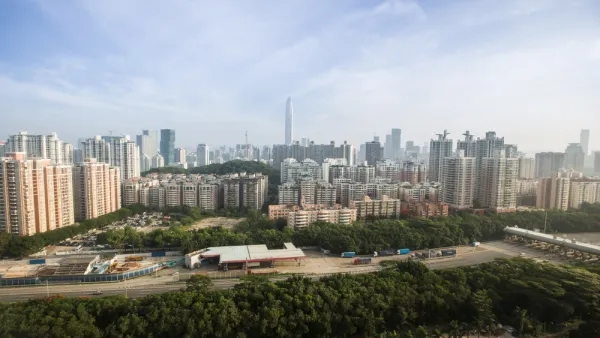
10,000 Cities—and Counting
A novel approach to quantifying the world's urban population provides insight into a changing world.

Planetizen Federal Action Tracker
A weekly monitor of how Trump’s orders and actions are impacting planners and planning in America.

California plans to bury El Niño’s downpour
If the state plays its cards right, it may be able to store a billion acre-feet of El Niño’s water in aquifers.

Desperate measures: Advocates weigh draining Lake Powell to fill Colorado River
Draining the reservoir could reduce evaporation losses by a couple hundred thousand acre-feet.

In Texas, data centers are swallowing promised parkland
Residents who moved to Taylor, Texas for a rural community now have to contend with three data centers in their backyard.

How a Chicago-sized wind farm beat the odds and powered on
The project spanned five presidential administrations and a standoff with a U.S. military base.

MTA gives itself 30 days to transform pit into basketball court
The site has been under construction since 2022; the city originally estimated it would finish the court in 2024.

FREE Course: Walkable City 1: Why Walkability?
After describing his path towards focusing on walkability as the essence of good planning, Jeff Speck marches through his five principal reasons for making more walkable places.
Reinventing Malls: Planning Alchemy—Turning Gray Fields Into Gold
The course focuses on the opportunities and imperatives that shape reinvention of mall sites.

City of Rosemead
Rutgers University, Edward J. Bloustein School of Planning and Public Policy
One Hundred Miles
Hunter College, City University of New York (CUNY)
The Architects Foundation
University of Cincinnati Online
City of Cambridge
Montrose County
The Pocatello Development Authority