A recent report from NASA outlined the threat solar storms pose to Earth-based electrical and communications systems, and warned that the social and economic disruptions could be catastrophic.


Back in 2008, the Committee on the Societal and Economic Impacts of Severe Space Weather Events released a report warning that severe solar storms -- of the kinds witnessed in 1859 and 1921 -- could fry electrical grids on a continent-wide scale. The Big Think blog points out that the repercussions could be huge, and that the technology already exists to protect ourselves:
"The report said something that used to be unthinkable: our own sun could have a temper tantrum that would unleash a tsunami of radiation from outer space, potentially wiping out our space satellites, wiping out power lines, and leaving entire continents without power.
[I]n 1859 there was a solar storm which paralyzed our telegraph wires and was the largest geomagnetic storm in recorded history...if that solar storm of 1859 were to hit us today it would cause (according to the report) trillions of dollars in property damage and hundreds of billions of dollars in damage for each of the countries that were affected. Transformers could get wiped out, meaning that whole continents would not have electrical power. [P]ower stations and especially transformers should be insulated and reinforced so as to be able to withstand radiation coming from outer space. This is not rocket science; we know how to do it and the technology is already there-it's just a question of political will."
Read the full story: A Possible Solar Storm in 2012?


Planetizen Federal Action Tracker
A weekly monitor of how Trump’s orders and actions are impacting planners and planning in America.

The state-sanctioned urbicide of Austin
People don’t kill cities. Freeways do.

Colorado’s Largest Data Center Could Rise Next to Homes — Without a Public Hearing
The proposed campus would consume 11 times the power of Denver International Airport; as it has across the country, opposition mounts.

Raised interest rates may kill financially vulnerable construction projects
The chief economist at ConstructConnect warns that if construction project owners are negatively impacted by the raised rates, it could result in delayed payments to contractors.
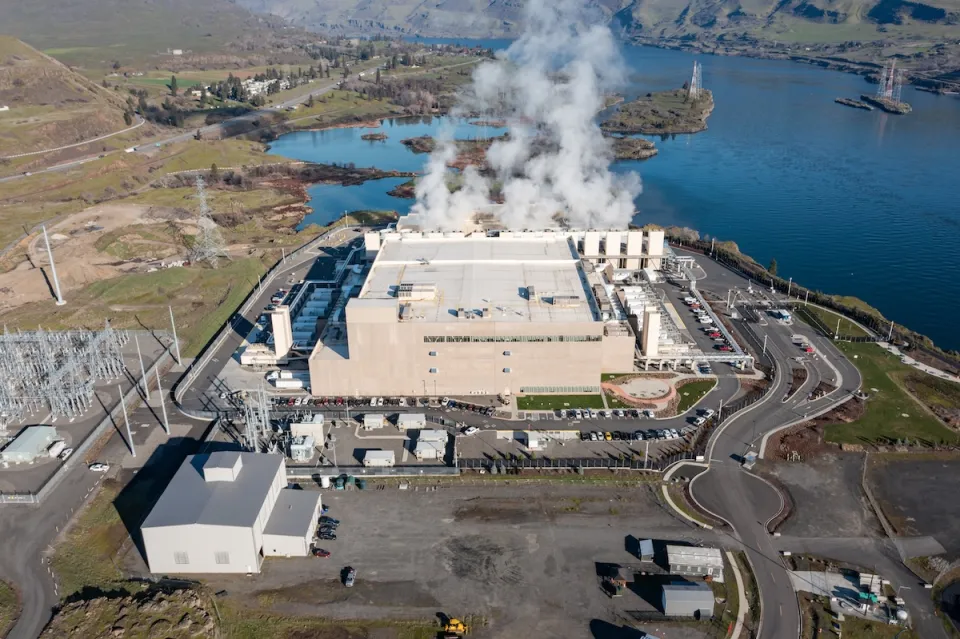
Data centers are consuming nearly 25% of Oregon’s power
The state has 111 data centers, with 32 more either planned or under construction.

A third of Texas cities must update their zoning codes to comply with new housing law
Texas municipalities are now required to allow manufactured housing in at least one residential zoning district.

FREE Course: Walkable City 1: Why Walkability?
After describing his path towards focusing on walkability as the essence of good planning, Jeff Speck marches through his five principal reasons for making more walkable places.
Reinventing Malls: Planning Alchemy—Turning Gray Fields Into Gold
The course focuses on the opportunities and imperatives that shape reinvention of mall sites.

Greater Baltimore Committee
Eagle County Government
Harvard University Graduate School of Design
The Architects Foundation
University of Cincinnati Online
The Pocatello Development Authority
The Urban Renewal Agency of the City of Pocatello
Journal of the American Planning Association