Vancouver is preparing to take the global stage when it hosts the Winter Olympic next month. With all the sports-related pomp, the city's unique approach to sustainability will also fall under the spotlight.


"To a degree probably unmatched anywhere else in North America, the city of Vancouver has tried to impose notions of sustainability in its decisions on what, where and how to build.
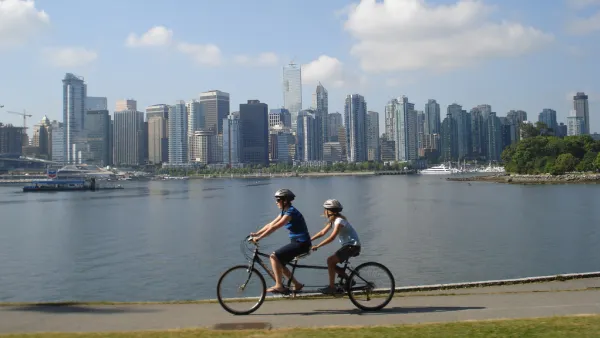
The result has come to be known as "Vancouverism," an urban motif of public transit instead of freeways, a low-carbon energy infrastructure and gleaming high-rise condominium towers in sunlit, walkable neighborhoods laced with urban parks.
The 2010 Winter Olympic Games next month provide a showcase for how Vancouver is trying to evolve. A $1-billion development that houses the athletes' village generates up to 70% of its power from converted sewage, and the vaulted ceiling of the Richmond speed-skating venue emphasizes that most renewable of resources, wood."
By stressing urban growth and densification, Vancouver has developed a distinctly urban core over the last two decades.
FULL STORY: Vancouver engineers its own urban dream

Making Density a Cornerstone for Successful City-Making
Density is a loaded term that brings with it many negative connotations. But it can help solve "our city's toughest challenges." Brent Toderian discusses lessons from Vancouver on how to turn "the third rail of municipal politics" into an asset.
Why Has 'Vancouverism' Become a Hard Sell in Canada?
Vancouver's remarkable experiment in livable density is the envy of, and model for, cities across the world. So, after a decade of skyline expansion across Canada, why has densification 'lost steam' in the country? Doug Saunders investigates.
As Flames Dies, Olympic Costs Pile Up for Vancouver
The Olympics have ended in Vancouver, but their costs live on.

Planetizen Federal Action Tracker
A weekly monitor of how Trump’s orders and actions are impacting planners and planning in America.

The state-sanctioned urbicide of Austin
People don’t kill cities. Freeways do.

US to reduce Colorado River water deliveries to Mexico
A new Colorado Treaty amendment reduces Mexico’s Colorado River water allocation by 250,000 acre feet.

5 New England states march closer to 800 megawatt wind energy project
Securing federal approval for the project may be complicated under the Trump administration, which has historically been hostile towards domestic wind power.

Baltimore to break ground on $50 million Transit Priority Project
The project will bring faster bus trips, safer streets and better bike connections to Baltimore.

Airbnb launches $250 million 'last-dollar financing' housing accelerator, makes first investment in Austin
The company will put $6.4 million towards affordable housing development in Texas’ capital.

FREE Course: Walkable City 1: Why Walkability?
After describing his path towards focusing on walkability as the essence of good planning, Jeff Speck marches through his five principal reasons for making more walkable places.
Reinventing Malls: Planning Alchemy—Turning Gray Fields Into Gold
The course focuses on the opportunities and imperatives that shape reinvention of mall sites.

Eagle County Government
Harvard University Graduate School of Design
Nashville Planning Department
The Architects Foundation
University of Cincinnati Online
The Pocatello Development Authority
The Urban Renewal Agency of the City of Pocatello
Journal of the American Planning Association