SF Public Press and McSweeney's Panorama newspaper bring a series of in-depth reports on the construction of the new Bay Bridge, focusing on why the project has become so expensive.


"When completed, the new east span of the San Francisco-Oakland Bay Bridge will be not only the most complex engineering feat in California history, but also the most expensive, with a cost never subjected to public scrutiny. Although today's price tag stands at $6.3 billion, the figure accounts for only salaries and hard materials-things like concrete and steel and cranes. When all is said and done, the new Bay Bridge will wind up costing tax- and toll-payers more than $12 billion-a figure that leaves even the officials in charge 'staggered.'"
The series looks at the funding behind the bridge, its construction process and the Wall Street investors that stand to benefit from the project.
Read the full story: The Bay Bridge Report

$100 Billion Bay Area Transportation Tax Considered for November 2020 Ballot
Two years after voters in the nine-county Bay Area agreed to hike tolls on the region's seven state-owned bridges, regional business leaders are hoping they will approve a one-cent regional sales tax to fund $100 billion in transportation projects.
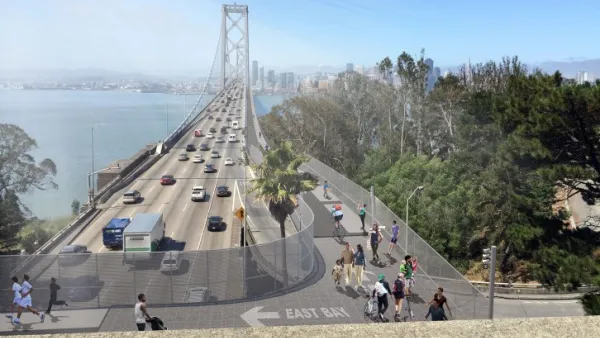
Planning Underway for New Bay Bridge Bike Path, and a Second Transbay BART Tube
In a distant and expensive future, there are two new ways to get across the San Francisco Bay without a car. One will have a much better view.
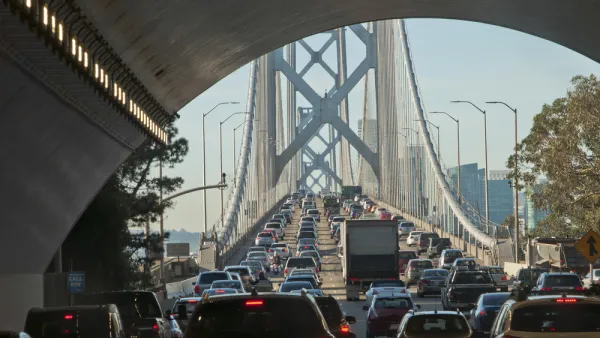
Bay Area's Transbay Dilemma: Second BART Tube or Second Bay Bridge?
In December, Sen. Dianne Feinstein reactivated her call for a southern crossing over the Bay while the BART Board last week began studying a second Transbay tube. The San Francisco Chronicle editorial board opines on which is preferable.

Eastern Nebraska is running out of electricity
Data centers and electrification are straining eastern Nebraska’s grid, throttling economic development.

Move over, LA: St. Louis gears up for Olympics, invests millions in downtown redevelopment
The Missouri city will host the 2028 Olympic soccer group stage and knockout matches.
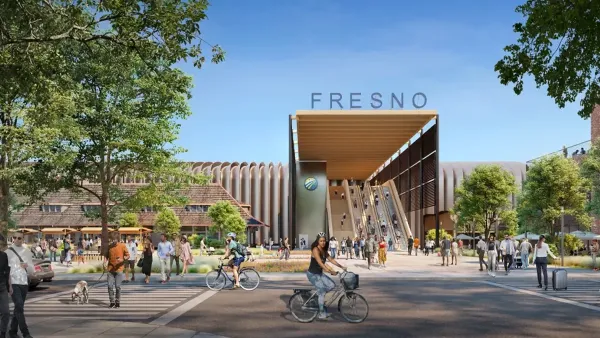
California High-Speed Rail Authority picks trainset manufacturer
The California High-Speed Rail Authority aims to start servicing passengers by 2033.

Dallas releases zoning code overhaul to officials
The drafted overhaul is over 400 pages long.

NYC renovations for dangerous, ‘mercilessly crammed’ street delayed until 2027
Construction was supposed to begin this fall.

San Diego’s Midway Rising project gets greenlight from city council
The project looks to become the largest affordable housing development in California's history.

FREE Course: Walkable City 1: Why Walkability?
After describing his path towards focusing on walkability as the essence of good planning, Jeff Speck marches through his five principal reasons for making more walkable places.
Reinventing Malls: Planning Alchemy—Turning Gray Fields Into Gold
The course focuses on the opportunities and imperatives that shape reinvention of mall sites.

City of Rosemead
Rutgers University, Edward J. Bloustein School of Planning and Public Policy
One Hundred Miles
University of Michigan School for Environment and Sustainability (SEAS)
Hunter College, City University of New York (CUNY)
The Architects Foundation
City of Cambridge
The Pocatello Development Authority
The Urban Renewal Agency of the City of Pocatello