As reported here, many boomburbs have ceased growing, if only temporarily. Streetsblog notes that experts are suggesting that in order to maintain their economic viability, these fast growing communities will have to, gasp, become more urban in form


Planetizen reported recently on USA Today's "Housing bust halts growing suburbs". Now Streetsblog connects some of the dots to show how boomburbs can regain their growth - by booming upward rather than outward, and thus moderating it as well.
"The most interesting angle in the article, however, isn't the decline of suburban fortunes and the real estate market that fueled them. It's what municipal leaders and researchers are saying will be necessary to make those places economically viable in the future. Which is this: they'll have to become more like cities. Denser. More walkable. Not bedroom communities, but self-contained communities.
Robert Lang, a professor of sociology at the University of Nevada, Las Vegas who coined the term "boomburbs," put it this way: "The irony is that if they want to keep growing, they must grow as cities, which is diametrically opposite of how they got so big in the first place."
From USA Today (7/15/09): Suburbs get urban makeover:
"Suburbs that had not allowed development to rise too high above the single-family homes that have shaped suburbia for decades are beginning to embrace the "urban" in "suburban."
Thanks to SF Streetsblog
FULL STORY: To Thrive, Suburbs Might Become More Urban

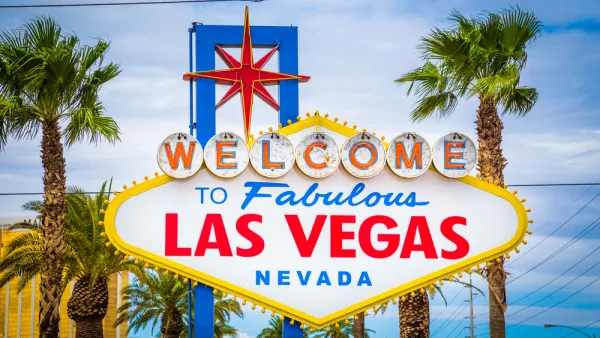
California Migration Boosts Nevada Population Above 3 Million
Californians fleeing the nation's highest housing prices were key to Nevada's growth according to newly released Census data. The Las Vegas Review-Journal's reporter, editorial board, and readers all had something to say about the newcomers.
Booming Burbs Stop Growing
Areas like Bellevue, Washington and Coral Springs, Florida have grown by 10% or more every decade since the 1970s. Today, these suburban communities are actually losing people.

Planetizen Federal Action Tracker
A weekly monitor of how Trump’s orders and actions are impacting planners and planning in America.

The state-sanctioned urbicide of Austin
People don’t kill cities. Freeways do.

US to reduce Colorado River water deliveries to Mexico
A new Colorado Treaty amendment reduces Mexico’s Colorado River water allocation by 250,000 acre feet.

5 New England states march closer to 800 megawatt wind energy project
Securing federal approval for the project may be complicated under the Trump administration, which has historically been hostile towards domestic wind power.

Baltimore to break ground on $50 million Transit Priority Project
The project will bring faster bus trips, safer streets and better bike connections to Baltimore.

Airbnb launches $250 million 'last-dollar financing' housing accelerator, makes first investment in Austin
The company will put $6.4 million towards affordable housing development in Texas’ capital.

FREE Course: Walkable City 1: Why Walkability?
After describing his path towards focusing on walkability as the essence of good planning, Jeff Speck marches through his five principal reasons for making more walkable places.
Reinventing Malls: Planning Alchemy—Turning Gray Fields Into Gold
The course focuses on the opportunities and imperatives that shape reinvention of mall sites.

Eagle County Government
Harvard University Graduate School of Design
Nashville Planning Department
The Architects Foundation
University of Cincinnati Online
The Pocatello Development Authority
The Urban Renewal Agency of the City of Pocatello
Journal of the American Planning Association