More than 750 traffic signals in Montgomery County, Maryland, were crippled last week after the failure of a piece of electrical equipment that was 37 years old. The old technology and the repercussions are being called a warning to other cities.


"The coincidence of twin mini-disasters for commuters last week might foreshadow scores of problems as cash-strapped governments stagger into the 21st century burdened by creaking 20th-century technology. Unlike businesses, which have had to keep pace with technological advances to stay competitive, government and public agencies facing budget woes more readily can postpone spending to replace old but still functional equipment.
'This is a wake-up to all municipalities across the nation and the area and underscores the dangers -- the ticking time bombs -- buried in our aging traffic engineering infrastructure,' said John B. Townsend II, spokesman for AAA Mid-Atlantic. 'We are playing catch-up, because lawmakers have been unwilling to fund upgrades.'"
The aging infrastructure that caused the problem was already a known risk, but the local government had few resources to replace it with newer technologies.
Read the full story: Montgomery, Metro outages suggest more lapses coming
Cities and States Large Borrowing Causes Concern
As the economic downturn has caused many states and municipalities to borrow large amounts of money, some worry there may be a glut of them going bankrupt.
15 US cities and their global namesakes
Hundreds of cities around the United States are named after other places. We tour a few of them.
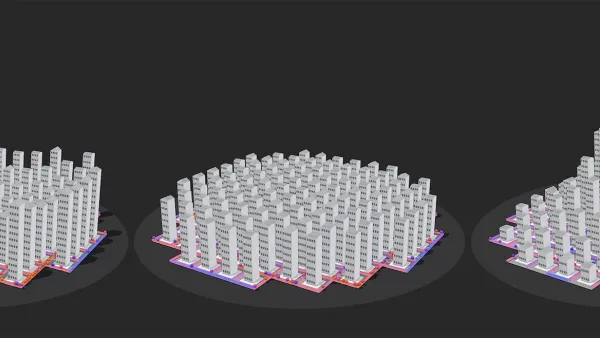
New study visualizes how city shapes impact mobility
Whether circular or linear, the shape and layout of cities affects how their residents get around.

Planetizen Federal Action Tracker
A weekly monitor of how Trump’s orders and actions are impacting planners and planning in America.

Eastern Nebraska is running out of electricity
Data centers and electrification are straining eastern Nebraska’s grid, throttling economic development.

Washington state to charge fee to drivers with fuel-efficient cars
Revenue from the fee will go towards supporting the state’s highways.

Instead of building new housing, LA developers are turning mansions into mega-mansions
In the richest areas, the number of houses valued at $30 million with demolition permits has skyrocketed since 2018.

Illinois considers spending $1 billion in taxpayer money on data center
A quantum computing campus and data center are currently under construction in Chicago.

As development costs rise, Boston moves to lessen affordable housing requirements
The Boston Zoning Commission and the City Council still need to approve Boston Mayor Michelle Wu’s proposed changes

FREE Course: Walkable City 1: Why Walkability?
After describing his path towards focusing on walkability as the essence of good planning, Jeff Speck marches through his five principal reasons for making more walkable places.
Reinventing Malls: Planning Alchemy—Turning Gray Fields Into Gold
The course focuses on the opportunities and imperatives that shape reinvention of mall sites.

City of Charlotte
City of Rosemead
Rutgers University, Edward J. Bloustein School of Planning and Public Policy
University of Michigan School for Environment and Sustainability (SEAS)
Hunter College, City University of New York (CUNY)
The Architects Foundation
University District Partnership
City of Cambridge
The Pocatello Development Authority