Golf courses use dangerous pesticides and hundreds of thousands of gallons of water to maintain their manicured look. Many people would like to change that. But some golf courses says you can have your cake and tee off, too.


The Problem:
"Just this past July, residents near a golf course in Tampa, Florida, citing health problems, won their yearlong battle to halt the use of a synthetic soil fumigant, the active ingredient in which is considered likely to be carcinogenic by the U.S. Environmental Protection Agency. The manufacturer said the residents' claims were unfounded, but agreed to the stoppage to avoid further negative publicity and legal fees. The fumigant, not used in colder northern states due to fears it could poison drinking water, continues to be used on other golf courses in Florida."
The Solution?:
"There are a handful of other courses worldwide pushing the environmental envelope, opting to go totally organic-using no synthetic pesticides at all. One of those pioneers is Kabi Organic Golf Course, in Queensland, Australia. In addition to 27 holes of golf, Kabi is home to 1,200 organic fruit trees and 200 acres of land for wildlife. Kabi is organic right down to its compost toilets, the waste from which is treated by a sand filtration system and pumped back into the forest as fertilizer. Kabi is certified organic and monitored by Australia's Biological Farmers Association."
FULL STORY: Greener Pastures


More Cash for Lawns in Vegas
Las Vegas home and business owners can now receive $3 for every square foot of lawn they replace with less water-intensive landscaping.

To guarantee residents fresh water, Tijuana looks to the sea
Construction on one of the largest desalination plants in Latin America will soon break ground to reduce reliance on the dwindling Colorado river.
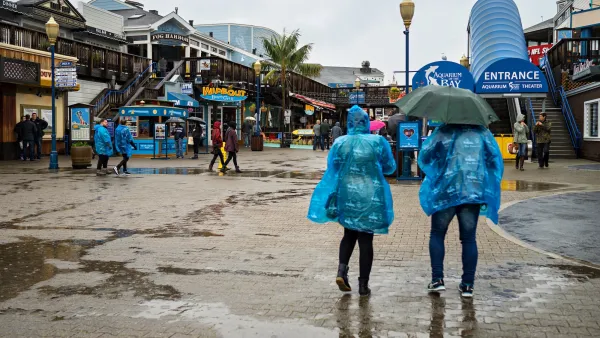
Rain gardens keep up to 99% of pollutants out of San Francisco Bay
The city's roadside rain gardens soak up stormwater and filter out dozens of harmful micropollutants.

Planetizen Federal Action Tracker
A weekly monitor of how Trump’s orders and actions are impacting planners and planning in America.

The state-sanctioned urbicide of Austin
People don’t kill cities. Freeways do.

US to reduce Colorado River water deliveries to Mexico
A new Colorado Treaty amendment reduces Mexico’s Colorado River water allocation by 250,000 acre feet.

5 New England states march closer to 800 megawatt wind energy project
Securing federal approval for the project may be complicated under the Trump administration, which has historically been hostile towards domestic wind power.

Baltimore to break ground on $50 million Transit Priority Project
The project will bring faster bus trips, safer streets and better bike connections to Baltimore.

Airbnb launches $250 million 'last-dollar financing' housing accelerator, makes first investment in Austin
The company will put $6.4 million towards affordable housing development in Texas’ capital.

FREE Course: Walkable City 1: Why Walkability?
After describing his path towards focusing on walkability as the essence of good planning, Jeff Speck marches through his five principal reasons for making more walkable places.
Reinventing Malls: Planning Alchemy—Turning Gray Fields Into Gold
The course focuses on the opportunities and imperatives that shape reinvention of mall sites.

Eagle County Government
Harvard University Graduate School of Design
Nashville Planning Department
The Architects Foundation
University of Cincinnati Online
The Pocatello Development Authority
The Urban Renewal Agency of the City of Pocatello
Journal of the American Planning Association