Las Vegas home and business owners can now receive $3 for every square foot of lawn they replace with less water-intensive landscaping.


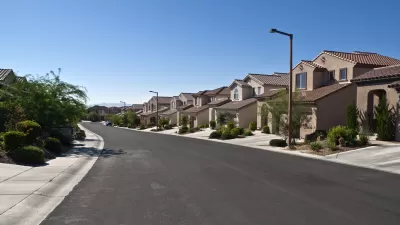
The Southern Nevada Water Authority is bumping up its bounty on lawns by 50 percent. "The authority will now pay residents and business owners $3 for every square foot of thirsty grass they rip out and replace with desert landscaping," Henry Brean reports for the Las Vegas Review Journal.
The agency fears that the program has already picked up the least-loved lawns. The number of square feet converted to desert landscaping was well off its 2004 peak. Now with a higher price they hope to persuade more lawn owners to join the program.
"The Water Smart Landscapes Program is one of several conservation measures adopted by the authority in the early 2000s in response to drought on the Colorado River, which supplies about 90 percent of the community’s water," Brean reports. Other programs targeted fountains, misters and golf courses. Many of these temporary programs have since become permanent.
Read the full story: Southern Nevada water agency ups incentive to get rid of lawns
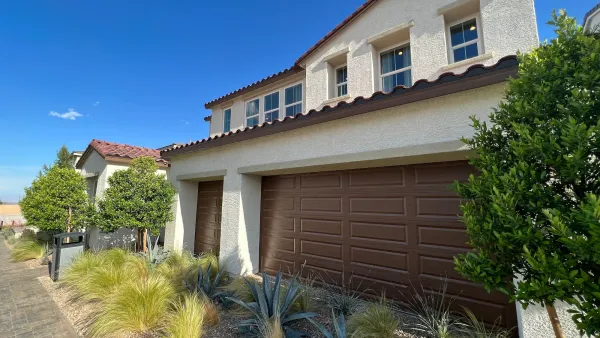
Nevada Law Requiring Removal of ‘Useless’ Grass Has Killed 100,000 Las Vegas Trees, Lawsuit Claims
The lawsuit alleges that the removal of ornamental grass has damaged the city’s tree canopy.
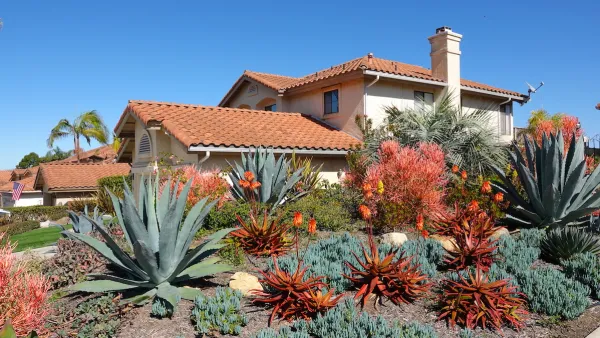
California Agency Awards $38 Million for Turf Replacement
The grant funds grass replacement rebates for commercial and residential properties and water-saving devices for fire stations.
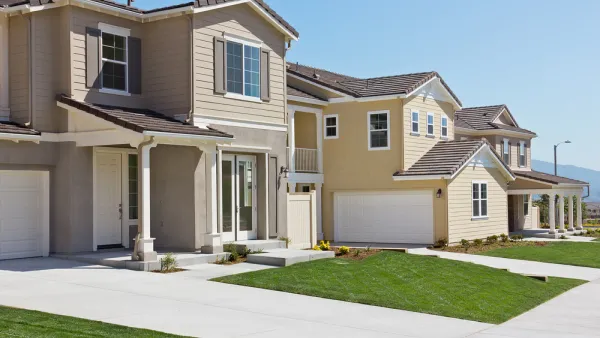
The Rise of Artificial Turf
Once scratchy and unrealistic, artificial grass has come a long way. Now, it’s quickly becoming a popular lawn replacement as droughts and climate change make traditional lawns harder to maintain.

Planetizen Federal Action Tracker
A weekly monitor of how Trump’s orders and actions are impacting planners and planning in America.

California plans to bury El Niño’s downpour
If the state plays its cards right, it may be able to store a billion acre-feet of El Niño’s water in aquifers.

Desperate measures: Advocates weigh draining Lake Powell to fill Colorado River
Draining the reservoir could reduce evaporation losses by a couple hundred thousand acre-feet.

US buildings threatened, destroyed by fires set to triple by 2060
Researchers found a high fire risk for socioeconomically vulnerable neighborhoods in the American West.

LA residents may be allowed to paint their own crosswalks
Councilwoman Katy Yaroslavsky put out a motion instructing the Los Angeles Department of Public Transportation to study the feasibility of allowing volunteers to paint crosswalks.

Dallas moves to overhaul its zoning code
The city's zoning reform will allow more multi-family and mixed-use developments.

FREE Course: Walkable City 1: Why Walkability?
After describing his path towards focusing on walkability as the essence of good planning, Jeff Speck marches through his five principal reasons for making more walkable places.
Reinventing Malls: Planning Alchemy—Turning Gray Fields Into Gold
The course focuses on the opportunities and imperatives that shape reinvention of mall sites.

City of Rosemead
Rutgers University, Edward J. Bloustein School of Planning and Public Policy
One Hundred Miles
Hunter College, City University of New York (CUNY)
The Architects Foundation
University of Cincinnati Online
City of Cambridge
Montrose County
The Pocatello Development Authority