Give software developers open transit data, and they'll create applications that make riding easier and more convenient, says Ben Fried. But straphangers in the nation's largest transit market, New York, are still waiting for the MTA to open up.


"If you live in Portland, there are dozens of mobile applications that help fill gaps in transit information. You can check your phone to see when the next bus is supposed to come. You can plan a trip from one unfamiliar part of town to another. You can even have your mobile device buzz if you fall asleep before reaching your destination. For the basic stuff, there's no iPhone necessary (although that certainly helps for information luxuries). Anyone who has a plain old cell phone with text messaging can ride the train or the bus with greater ease thanks to these apps."
"New Yorkers are still waiting for the MTA to join the club. Simply put, the MTA makes it difficult to create applications using its data, even for a behemoth like Google with enormous reach."
Read the full story: The Case for Open MTA Data: Transparency, Savings, and Easier Riding

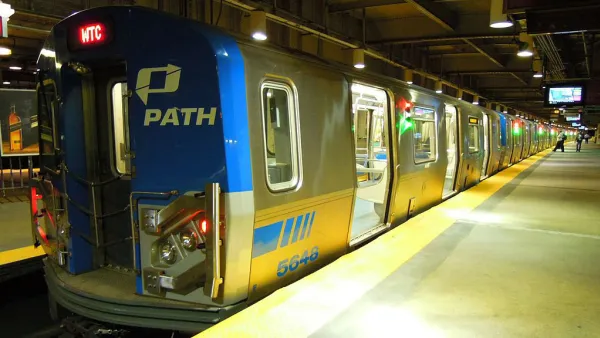
On Isolated Transit Systems
In cities like New York where multiple transit operators serve the same travelers, nothing compels those operators to work together. This isolation can result in embarrassing inefficiencies.
How "Train Nerds" Saved NYC's Subway from Sandy
It took an effort that was both well-planned and ad-hoc to save NYC's backbone from Hurricane Sandy, and have the city's transit system back up and running again soon after the storm. Robert Sullivan examines that effort and what happens next time.
Growing People And Jobs While Shrinking Traffic
As New York City faces its worst financial crisis in 2 decades, a NYC D.O.T. study was released showing that from 2003-2007, the increase in jobs and people was accompanied by a slight decrease in traffic due primarily to increased transit usage.

Planetizen Federal Action Tracker
A weekly monitor of how Trump’s orders and actions are impacting planners and planning in America.

Northwest rail fans eager for Sept. 30 debut of Amtrak’s Airo fleet
Get ready for that new train smell and more seats. But they won’t go faster or run more frequently on the Cascades route in Washington and Oregon.
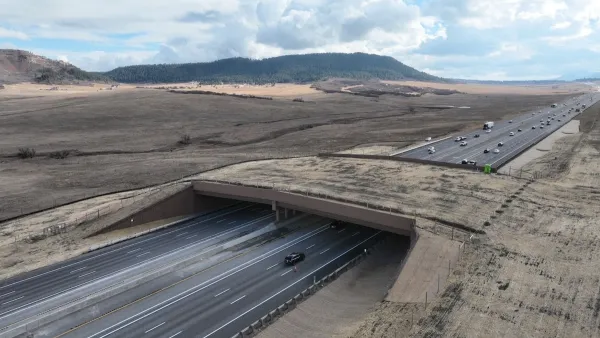
Record-breaking wildlife overpass in Colorado brings 91% reduction in animal collisions
Prior to the overpass, vehicles were hitting one deer per day on Colorado’s Interstate 25.

Detroit to transform waterfront with $2.2 billion investment
Developers will convert about 18 acres of unused parking lot space into civic spaces.

‘Going backwards:’ Baltimore mayor, students rally against state's transit funding plan
Maryland's proposed six-year plan provides no funding for Baltimore’s BMORE bus program and reduces its road maintenance funding.

Trump wants to cancel nearly 98% of funding for HUD housing support program
Multiple housing groups are suing the administration in an effort to preserve the funding.

FREE Course: Walkable City 1: Why Walkability?
After describing his path towards focusing on walkability as the essence of good planning, Jeff Speck marches through his five principal reasons for making more walkable places.
Reinventing Malls: Planning Alchemy—Turning Gray Fields Into Gold
The course focuses on the opportunities and imperatives that shape reinvention of mall sites.

City of Thousand Oaks
City of Wisconsin Rapids
Harvard University Graduate School of Design
The Architects Foundation
University of Cincinnati Online
Northern Illinois Transit Authority (NITA)
The Pocatello Development Authority
The Urban Renewal Agency of the City of Pocatello