In Philadelphia, a number of palatial restaurants have closed due to the bad economy. In their place, several more intimate, neighborhood places have popped up.


"Unlike the barn-size, $10 million-plus projects like the plush steak houses that were the norm as recently as a year ago, restaurants now on the books tend to have fewer seats, lower prices, and less lofty ambitions. More often than in headier times, they eschew the BYOB model, opting for liquor licenses to pump profits. And they are relying on private financing rather than harder-to-come-by bank loans."
Decreasing rents and an available workforce are a few reasons restauranteurs cite for braving the economic climate.
Read the full story: A new course: Vast, ritzy out; cozy, modest in

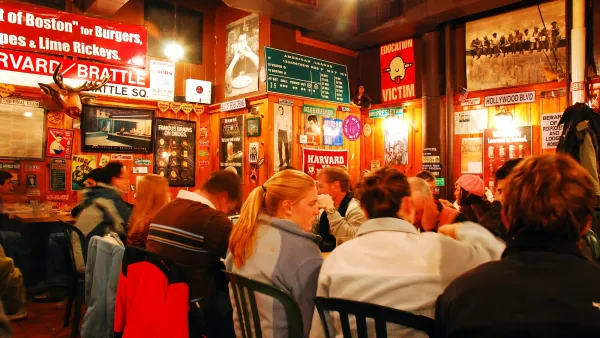
The Restaurant Industry’s ‘Missing Middle’
Locally owned restaurants affordable to middle-income families are disappearing or being forced to raise prices as costs grow.

DC ‘Streatery’ Fees Could Kill Most Outdoor Dining
The new, permanent outdoor dining program will cost businesses $20 per square foot of dining space, prompting most restaurants to dismantle their Covid-era ‘streateries.’
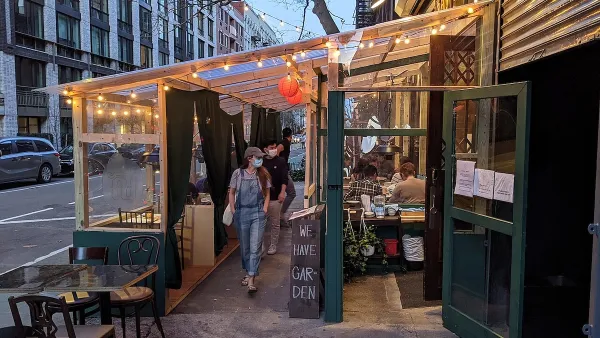
Restaurant Patios Were a Pandemic Win — Why Were They so Hard to Keep?
Social distancing requirements and changes in travel patterns prompted cities to pilot new uses for street and sidewalk space. Then it got complicated.

Planetizen Federal Action Tracker
A weekly monitor of how Trump’s orders and actions are impacting planners and planning in America.

‘Going backwards:’ Baltimore mayor, students rally against state's transit funding plan
Maryland's proposed six-year plan provides no funding for Baltimore’s BMORE bus program and reduces its road maintenance funding.

Detroit to transform waterfront with $2.2 billion investment
Developers will convert about 18 acres of unused parking lot space into civic spaces.

HUD modernizes 50-year-old manufactured housing framework
The Next Generation Manufactured Housing Action Plan establishes new energy-efficiency standards for manufactured homes, and new guidelines for anchoring them.

New CA housing laws tear down development red tape
Recently-signed legislation makes building starter homes and ADUs cheaper and faster in California.

Metrolink finishes first expansion in 20 years
The transit agency is now one of very few in the United States to connect two major airports.

FREE Course: Walkable City 1: Why Walkability?
After describing his path towards focusing on walkability as the essence of good planning, Jeff Speck marches through his five principal reasons for making more walkable places.
Reinventing Malls: Planning Alchemy—Turning Gray Fields Into Gold
The course focuses on the opportunities and imperatives that shape reinvention of mall sites.

One Hundred Miles
County of Mendocino
planning NEXT
The Architects Foundation
University of Cincinnati Online
Montrose County
Northern Illinois Transit Authority (NITA)
The Pocatello Development Authority