A fierce battle is brewing over new requirements for sprinklers in homes. Firefighters say the sprinklers are needed, but builders say the Sprinkler Code Coalition is having undue influence on code development.


"According to the National Fire Protection Agency, an international nonprofit established in 1896, the fatality rate in homes with sprinklers is 80 percent lower than homes without sprinklers. The National Association of Home Builders counters that the survival rate for homes with operating smoke detectors is nearly 99.5 percent, and thus the added protection addresses a tiny proportion of fire-related deaths. The National Fire Protection Agency endorses the use of sprinklers in homes.
The home builders' association estimates the cost to install a sprinkler system in a roughly 2,200-square-foot home at $5,573. When factoring in financing costs, brokerage commissions, and other related costs, the builders estimate costs of nearly $6,700 per home - and up to $10,000 per home in rural areas, Toalson said."
Read the full story: Builders Fight Proposed Home Sprinkler Requirement
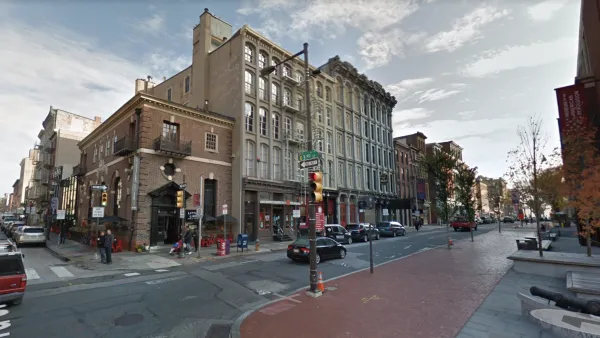
After Another Catastrophic Fire, Reexamining Fire Safety in Philadelphia
"Why does Old City keep burning?" That's the question posed by Philadelphia Inquirer architecture critic Inga Saffron.
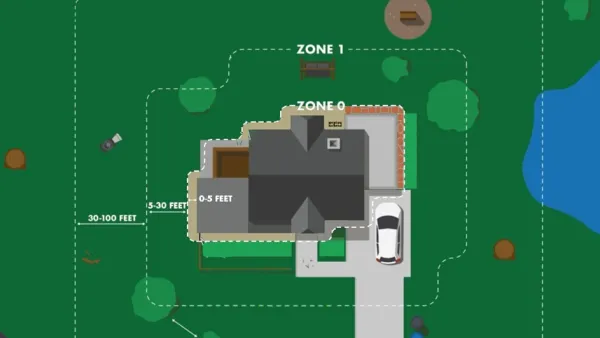
California implements strict new landscaping rules for residents in fire-prone areas
The new rules ban plants within one foot of homes and do not allow landowners to attach wooden fences to their homes.
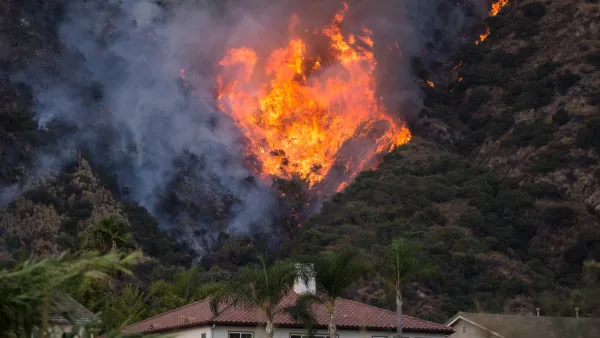
80% of California homes built between 2020-2022 are in high fire risk areas
In 2020, California wildfires destroyed nearly a fifth of homes they came in contact with.

Desperate measures: Advocates weigh draining Lake Powell to fill Colorado River
Draining the reservoir could reduce evaporation losses by a couple hundred thousand acre-feet.

Eastern Nebraska is running out of electricity
Data centers and electrification are straining eastern Nebraska’s grid, throttling economic development.

Malls are becoming the midtowns of the future
Mall and office park redevelopments are a generational opportunity to create new nodes of urbanity.

Officials claim feds 'rushed' Amtrak environmental review
Amtrak plans to move their Chicago maintenance facility from an industrial area to a residential one.

NYC breaks ground on anti-flooding infrastructure project
New York City's new system will reduce stormwater flows to local sewers by 90%.

One Kentucky town’s secret to affordable housing
The Smoketown Community Land Trust has already built seven affordable homes for community members.

FREE Course: Walkable City 1: Why Walkability?
After describing his path towards focusing on walkability as the essence of good planning, Jeff Speck marches through his five principal reasons for making more walkable places.
Reinventing Malls: Planning Alchemy—Turning Gray Fields Into Gold
The course focuses on the opportunities and imperatives that shape reinvention of mall sites.

City of Rosemead
Rutgers University, Edward J. Bloustein School of Planning and Public Policy
One Hundred Miles
University of Michigan School for Environment and Sustainability (SEAS)
Hunter College, City University of New York (CUNY)
The Architects Foundation
City of Cambridge
Montrose County
The Pocatello Development Authority