Portland, Oregon sees the revival of building styles not seen since the last time streetcars rolled through the city.


This article in The Oregonian is an introductory but thorough look at the return of mixed-use and streetcar-oriented development in Portland. Randal O'Toole critiques the movement, while Jeff Stuhr of Holst Architecture talks about some of their new streetcar-type buildings.
"While planners map out details for a modest east side streetcar loop that will open in 2011, the east side's original streetcar arterials such as Hawthorne, Belmont, Alberta and Mississippi are flourishing with the new generation of streetcar buildings.
The first heyday of streetcar architecture was 1900 to 1925. "The classic size was two and three stories," Abbott says. "Now we're getting five and six stories, if you look at what's happening on North Mississippi and Martin Luther King Jr. Boulevard. It's the same, but it's also different. It's higher density than we had 75 or 100 years ago.""
Thanks to Jon
Read the full story: Portland's streetcar architecture -- past becomes future
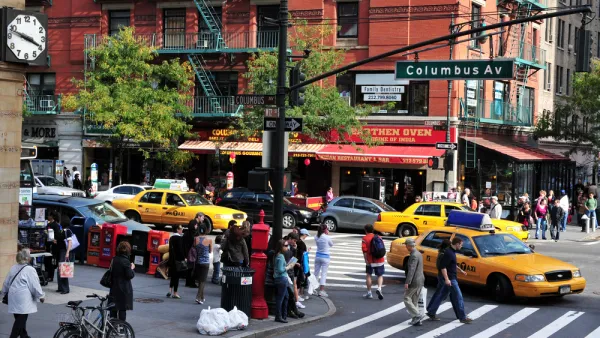
Looking Beyond the 'Sidewalk Ballet:' Jane Jacobs in the 21st Century
While The Death and Life of Great American Cities remains an urban planning classic, today's planners must contend with challenges that Jacobs couldn't have anticipated.
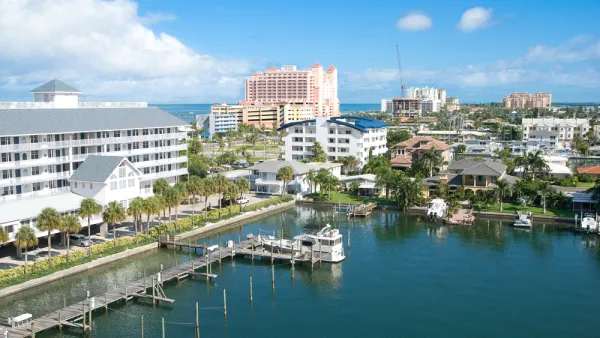
New Urbanists and New Housing
The Charter of the New Urbanism favors infill development, yet new urbanists sometimes oppose infill, especially in historic urban areas. This post speculates on why that might be the case.
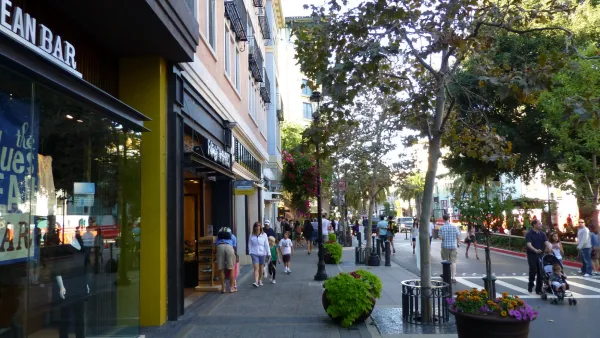
Can Urbanist Islands Make a Difference Where Sprawl Reigns?
The product of a single developer, San Jose's Santana Row is a pocket of urbanism in a sea of sprawl. But can it influence development patterns beyond its bounds, and should it?

Planetizen Federal Action Tracker
A weekly monitor of how Trump’s orders and actions are impacting planners and planning in America.

California plans to bury El Niño’s downpour
If the state plays its cards right, it may be able to store a billion acre-feet of El Niño’s water in aquifers.

Desperate measures: Advocates weigh draining Lake Powell to fill Colorado River
Draining the reservoir could reduce evaporation losses by a couple hundred thousand acre-feet.

US buildings threatened, destroyed by fires set to triple by 2060
Researchers found a high fire risk for socioeconomically vulnerable neighborhoods in the American West.

LA residents may be allowed to paint their own crosswalks
Councilwoman Katy Yaroslavsky put out a motion instructing the Los Angeles Department of Public Transportation to study the feasibility of allowing volunteers to paint crosswalks.

Dallas moves to overhaul its zoning code
The city's zoning reform will allow more multi-family and mixed-use developments.

FREE Course: Walkable City 1: Why Walkability?
After describing his path towards focusing on walkability as the essence of good planning, Jeff Speck marches through his five principal reasons for making more walkable places.
Reinventing Malls: Planning Alchemy—Turning Gray Fields Into Gold
The course focuses on the opportunities and imperatives that shape reinvention of mall sites.

City of Rosemead
Rutgers University, Edward J. Bloustein School of Planning and Public Policy
One Hundred Miles
Hunter College, City University of New York (CUNY)
The Architects Foundation
University of Cincinnati Online
City of Cambridge
Montrose County
The Pocatello Development Authority