A proposal authored by Stanford students for a class to create a pedestrian-only zone near campus has gotten the attention of business owners and the community.


"Amrita Mahale, a masters student in engineering at Stanford, explained that their assignment in class was to create a social movement that would reduce gas consumption, and after looking at traffic mitigation around campus, she and her fellow students thought that University Avenue would be more visible and significant. They started a Facebook page, which she was proud to note had over 1300 members in less than two weeks, canvassed businesses along the street to build support among a key constituency, conducted informal surveys of street users to measure their response ("all positive" she said), and enlisted Palo Alto's former mayor and current councilmember, Yoriko Kishimoto, who has become a champion for the proposal.
"Now I think we have enough momentum for the city to take us seriously," said Mahale."
Read the full story: Proposal to Limit Vehicles on University Ave in Palo Alto Gains Support
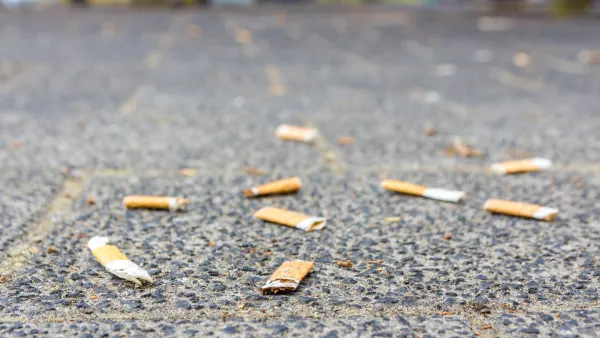
Maryland City Bans Smoking on a Public Street
City officials in Cumberland, Maryland, say smoking and use of smokeless tobacco products have deterred visitors to its downtown pedestrian mall and hopes the ban will make the area more welcoming.
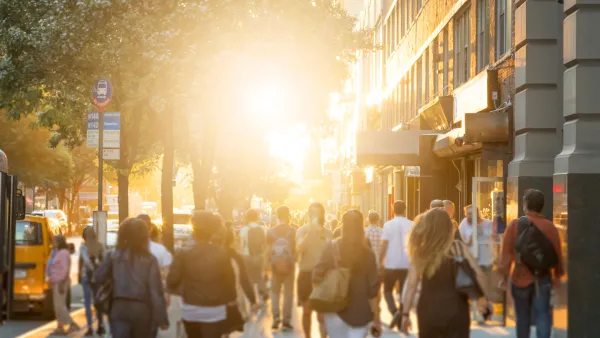
A Fair Share for Walking
Most people value walkability, yet most communities underinvest in pedestrian facilities. Some jurisdictions are investing more in sidewalks and crosswalks in order to better serve community values.
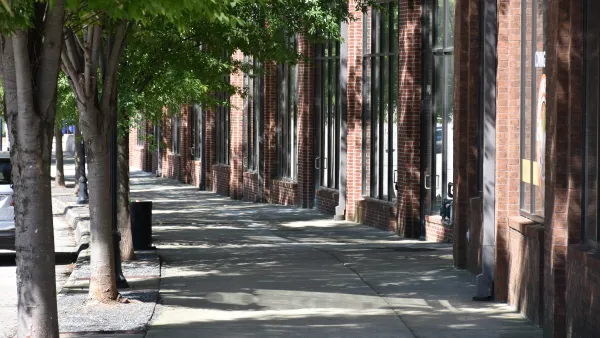
Cool Walkability Planning
Shadeways (covered sidewalks) and pedways (enclosed, climate controlled walkways) can provide comfortable walkability in hot climates. The Cool Walkshed Index can help plan these facilities.

Planetizen Federal Action Tracker
A weekly monitor of how Trump’s orders and actions are impacting planners and planning in America.

California plans to bury El Niño’s downpour
If the state plays its cards right, it may be able to store a billion acre-feet of El Niño’s water in aquifers.

Desperate measures: Advocates weigh draining Lake Powell to fill Colorado River
Draining the reservoir could reduce evaporation losses by a couple hundred thousand acre-feet.

US buildings threatened, destroyed by fires set to triple by 2060
Researchers found a high fire risk for socioeconomically vulnerable neighborhoods in the American West.

LA residents may be allowed to paint their own crosswalks
Councilwoman Katy Yaroslavsky put out a motion instructing the Los Angeles Department of Public Transportation to study the feasibility of allowing volunteers to paint crosswalks.

Dallas moves to overhaul its zoning code
The city's zoning reform will allow more multi-family and mixed-use developments.

FREE Course: Walkable City 1: Why Walkability?
After describing his path towards focusing on walkability as the essence of good planning, Jeff Speck marches through his five principal reasons for making more walkable places.
Reinventing Malls: Planning Alchemy—Turning Gray Fields Into Gold
The course focuses on the opportunities and imperatives that shape reinvention of mall sites.

City of Rosemead
Rutgers University, Edward J. Bloustein School of Planning and Public Policy
One Hundred Miles
Hunter College, City University of New York (CUNY)
The Architects Foundation
University of Cincinnati Online
City of Cambridge
Montrose County
The Pocatello Development Authority