The long-delayed and troubled design for Manhattan's Ground Zero site has undergone some improvements and been revealed in a new model. But as New York Times architecture critic Nicolai Oroussoff notes, the design is still lacking.


"During the next several years the project's cost spiraled to $3.2 billion from $2 billion. The scheduled completion date was delayed, first by a couple of years, then several more. Mr. Calatrava, determined to save his design, worked slavishly to get the budget under control. In a misguided effort to avoid more controversy, the Port Authority of New York and New Jersey enveloped the project in secrecy, essentially shutting the public out of the design process.
But even for those of us who had given up on the idea that anything good would ever emerge from ground zero, the unveiling of an elaborate new model of the revised design on Saturday at the Queen Sofía Spanish Institute was heart wrenching.
The model gives us the clearest picture yet of Mr. Calatrava's vision. Dozens of minor improvements have been made; his structural pyrotechnics look as dazzling as ever.
Even so, Mr. Calatrava remains unable to overcome the project's fatal flaw: the striking incongruity between the extravagance of the architecture and the limited purpose it serves."
Read the full story: Post-9/11 Realities Warp a Soaring Design
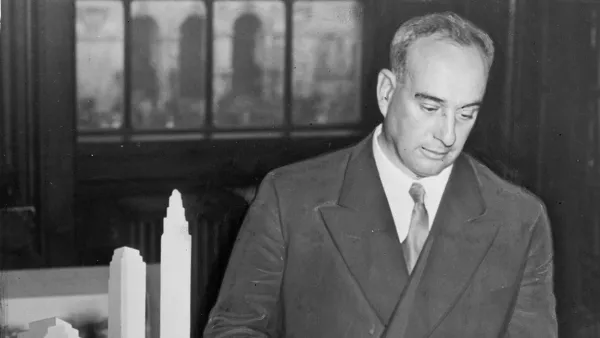
On Progressive Impotence and an Obsolete Penn Station
In a deep dive into the sad state of the nation's busiest transit hub, Marc J. Dunkelman raises a dispiriting question. In their zeal to ward off future Robert Moseses, have progressives crippled government's power to carry out its job?
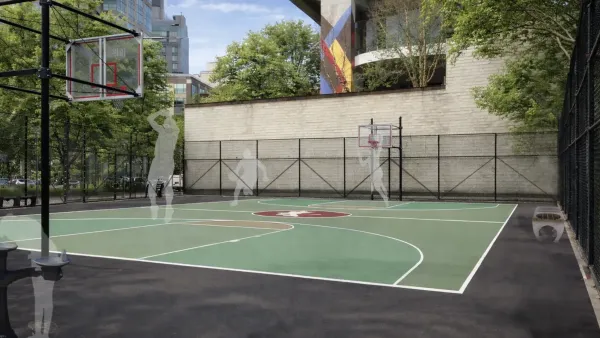
MTA gives itself 30 days to transform pit into basketball court
The site has been under construction since 2022; the city originally estimated it would finish the court in 2024.
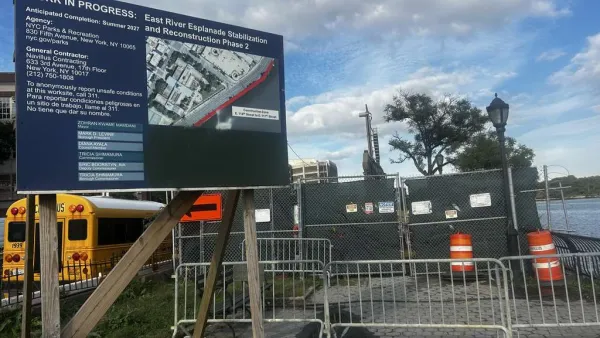
Ballooning costs delay NYC green space restoration after six years of planning
“There’s a stark inequity in how the city prioritizes infrastructure projects across different Manhattan neighborhoods," said Maria Kessler, executive director for Friends of the East River Esplanade. “Why is this neighborhood the last and unserved?”

Planetizen Federal Action Tracker
A weekly monitor of how Trump’s orders and actions are impacting planners and planning in America.

California plans to bury El Niño’s downpour
If the state plays its cards right, it may be able to store a billion acre-feet of El Niño’s water in aquifers.

Desperate measures: Advocates weigh draining Lake Powell to fill Colorado River
Draining the reservoir could reduce evaporation losses by a couple hundred thousand acre-feet.

Chicago voters approve permanent festival grounds, penalty for vacant property owners
Currently, major summer and fall festivals take over public parks for weeks at a time, drawing criticism from nearby residents

NYC votes to cut outdoor dining red tape, speed up permitting
New York City also voted to allow the Department of Transportation to begin work on urgent projects before notifying elected officials.

California appears to reject Prop. 45
The proposition would have expanded the projects that qualify for a streamlined environmental review, effectively paring down the California Environmental Quality Act.

FREE Course: Walkable City 1: Why Walkability?
After describing his path towards focusing on walkability as the essence of good planning, Jeff Speck marches through his five principal reasons for making more walkable places.
Reinventing Malls: Planning Alchemy—Turning Gray Fields Into Gold
The course focuses on the opportunities and imperatives that shape reinvention of mall sites.

City of Rosemead
Rutgers University, Edward J. Bloustein School of Planning and Public Policy
One Hundred Miles
Hunter College, City University of New York (CUNY)
The Architects Foundation
University of Cincinnati Online
City of Cambridge
Montrose County
The Pocatello Development Authority