Infrastructure and technology are blending together, creating infrastructure and infrastructural management more responsive and intelligent.


"A similar pattern is emerging today, experts say, for what is being called smart infrastructure - more efficient and environmentally friendlier systems for managing, among other things, commuter traffic, food distribution, electric grids and waterways. This time, the crucial technological ingredients include low-cost sensors and clever software for analytics and visualization, as well as computing firepower.
Wireless sensors can now collect and transmit information from almost any object - for instance, roads, food crates, utility lines and water pipes. And the improved software helps interpret the huge flow of information, so raw data becomes useful knowledge to monitor and optimize transport and other complex systems. The efficiency payoff, experts say, should translate into big reductions in energy used, greenhouse gases emitted and natural resources consumed.
Smart infrastructure is a new horizon for computer technology. Computers have proven themselves powerful tools for calculation and communication. The next step, experts say, is for computers to become intelligent instruments of control, linking them to data-generating sensors throughout the planet's infrastructure."
FULL STORY: Bringing Efficiency to the Infrastructure


Denver-Inspired Chatbot Serves as Prototype for AI in City Planning and Zoning
A prototype City Planning Chatbot uses AI to answer public questions on zoning and city planning in Denver. Although not endorsed by the City, the experiment demonstrates the potential power of AI to provide accurate planning and zoning answers.
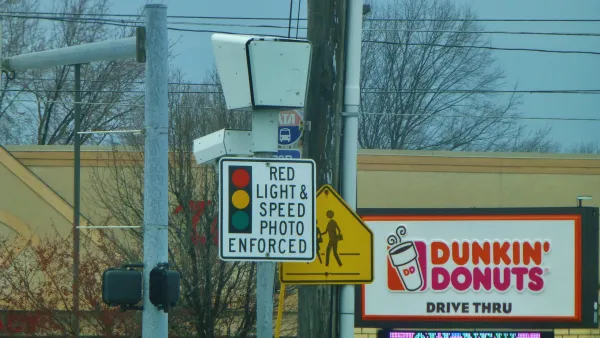
'World's Smartest Intersection' Debuts in Detroit
Putting the advanced hardware and software systems in the Motor City.
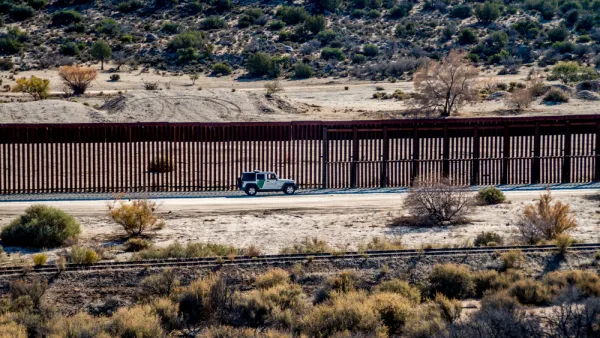
Lawsuit Targets Lack of Public Information on Trump's Border Wall
The Public Information Act has not been sufficient in getting the Trump Administration to divulge information about its plans to build a wall between the United States and Mexico.

Planetizen Federal Action Tracker
A weekly monitor of how Trump’s orders and actions are impacting planners and planning in America.

The state-sanctioned urbicide of Austin
People don’t kill cities. Freeways do.

US to reduce Colorado River water deliveries to Mexico
A new Colorado Treaty amendment reduces Mexico’s Colorado River water allocation by 250,000 acre feet.

5 New England states march closer to 800 megawatt wind energy project
Securing federal approval for the project may be complicated under the Trump administration, which has historically been hostile towards domestic wind power.

Baltimore to break ground on $50 million Transit Priority Project
The project will bring faster bus trips, safer streets and better bike connections to Baltimore.

Airbnb launches $250 million 'last-dollar financing' housing accelerator, makes first investment in Austin
The company will put $6.4 million towards affordable housing development in Texas’ capital.

FREE Course: Walkable City 1: Why Walkability?
After describing his path towards focusing on walkability as the essence of good planning, Jeff Speck marches through his five principal reasons for making more walkable places.
Reinventing Malls: Planning Alchemy—Turning Gray Fields Into Gold
The course focuses on the opportunities and imperatives that shape reinvention of mall sites.

Eagle County Government
Harvard University Graduate School of Design
Nashville Planning Department
The Architects Foundation
University of Cincinnati Online
The Pocatello Development Authority
The Urban Renewal Agency of the City of Pocatello
Journal of the American Planning Association