Economists worry that Vancouver's tumbling housing market is an indication that Canadians could see a dramatic -- and long-lasting -- decline in the value of their homes.


"[T]housands of people getting buried in the rubble of Vancouver's collapsing [housing] prices. A dream market has turned into a nightmare, faster than anyone thought possible. [T]he boom is shifting into reverse, and economists are warily backing away from their sunny predictions, and grappling with a question no one has posed for 20 years: how bad is it going to get? It's becoming increasingly likely that the answer to that question will be 'even worse than you imagined.'
[D]espite the carnage in Vancouver, many economists and real estate groups are still predicting that we'll have just a little stumble-maybe a drop of three to eight per cent in prices-and then the market will roar back to life by the end of the year. But new data on the plunging housing market suggests that those relatively upbeat assessments are wrong, and Canada could see a 20 per cent drop in average house prices between now and late 2011. If sophisticated investors are correct, it might be close to a decade before we once again see prices as high as they were last summer.
[If housing] prices are about to embark upon a long, slow decline followed by an anemic recovery, what will that mean for Canada? On the positive side, it will mean thousands of families who can't currently afford houses may gradually see them fall within reach. But the negative fallout will be painful, long-lasting and will touch us all. It will mean a huge drop in the wealth of millions of Canadians, as their biggest investment slowly sinks in value. It will mean consumers clamping down on their spending because they feel poorer, contributing to the general economic decline."
Read the full story: The shocking truth about the value of your home

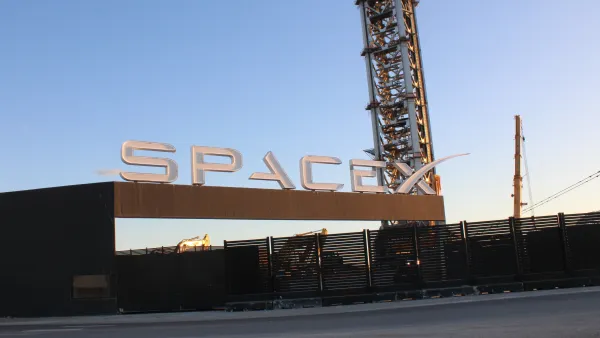
Home values, property tax rises in Texas county after the arrival of SpaceX
The median property tax bill in Cameron County increased by more than 57% over six years.
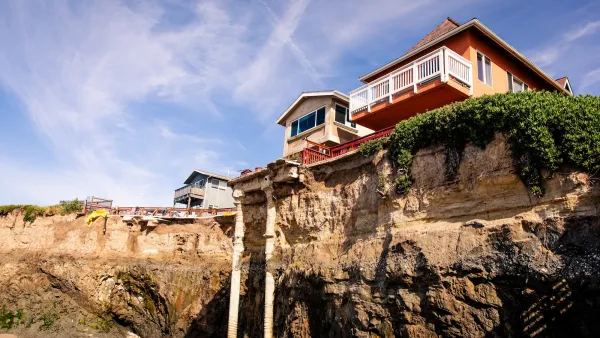
Zillow Deleted Climate Risk From California Listings. This Climate Expert Wants to Bring it Back.
While difficult to estimate for individual homes, experts argue that home buyers should have access to data about flood and wildfire risk, extreme heat, and other climate hazards in the area.
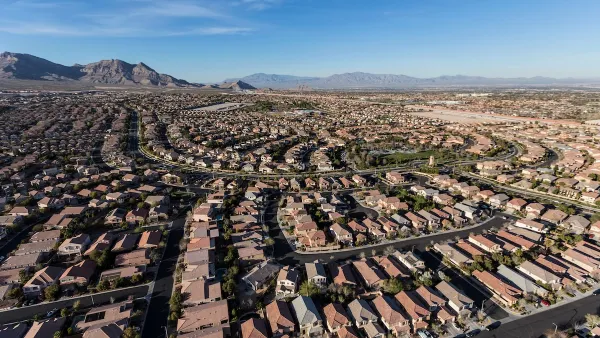
Nevada Bills Aim to Establish Home Insurance Assurance Amidst Wildfire Risk
Republican sponsor hopes the FAIR plan would be “a true market of last resort.”

Planetizen Federal Action Tracker
A weekly monitor of how Trump’s orders and actions are impacting planners and planning in America.

‘Going backwards:’ Baltimore mayor, students rally against state's transit funding plan
Maryland's proposed six-year plan provides no funding for Baltimore’s BMORE bus program and reduces its road maintenance funding.
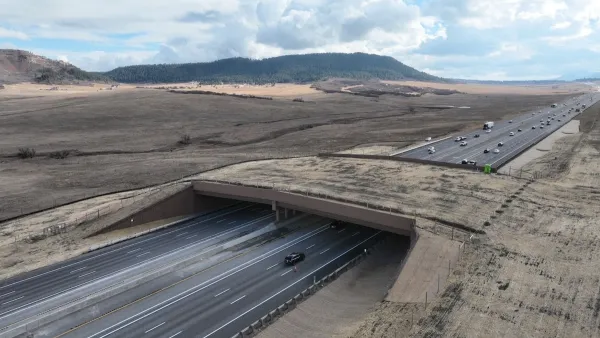
Record-breaking wildlife overpass in Colorado brings 91% reduction in animal collisions
Prior to the overpass, vehicles were hitting one deer per day on Colorado’s Interstate 25.

Mamdani sent nearly 6,000 pied-à-terre tax warnings to homes that didn’t qualify
A judge has ordered the administration to cancel thousands of pied-à-terre tax notices after it sent 35% of them erroneously.

Detroit to transform waterfront with $2.2 billion investment
Developers will convert about 18 acres of unused parking lot space into civic spaces.

‘Going backwards:’ Baltimore mayor, students rally against state's transit funding plan
Maryland's proposed six-year plan provides no funding for Baltimore’s BMORE bus program and reduces its road maintenance funding.

FREE Course: Walkable City 1: Why Walkability?
After describing his path towards focusing on walkability as the essence of good planning, Jeff Speck marches through his five principal reasons for making more walkable places.
Reinventing Malls: Planning Alchemy—Turning Gray Fields Into Gold
The course focuses on the opportunities and imperatives that shape reinvention of mall sites.

City of Thousand Oaks
City of Wisconsin Rapids
Harvard University Graduate School of Design
The Architects Foundation
University of Cincinnati Online
Northern Illinois Transit Authority (NITA)
The Pocatello Development Authority
The Urban Renewal Agency of the City of Pocatello