The Hope for Homeowners Act was designed to allow foreclosed homeowners to keep their homes by drawing up new and more affordable mortgages for qualified applicants. Barney Frank is one of many proclaiming it a failure.


"Hope for Homeowners was sponsored by Rep. Barney Frank (D-MA), the powerful head of the House Financial Services Committee.
'The problem was when we passed it, and it's interesting how things have changed, we were under pressure from the right,' he says. 'Remember, it was the Bush administration. So to get it passed we had to dumb it down, which I regretted, but I thought it was better than nothing.'
Frank says some lawmakers didn't want to spend taxpayer money on what they saw as a bailout for homeowners. So the lawmakers basically tightened the lid on the program. 'The fees were too high. The restrictions on who could enter it were too much,' Frank says.
Critics say homeowners didn't like the program, and most couldn't qualify anyway. There were problems with the way the law dealt with second mortgages such as home equity loans. And, perhaps most importantly, there was also no real money in it for the lenders who were supposed to do the work to refinance the borrowers.
'We cut it back, and then the Senate cut it back even further,' says Frank, adding that the program got cut back so far it just became unworkable."
Read the full story: Investors Support Overhauling Homeowner Program

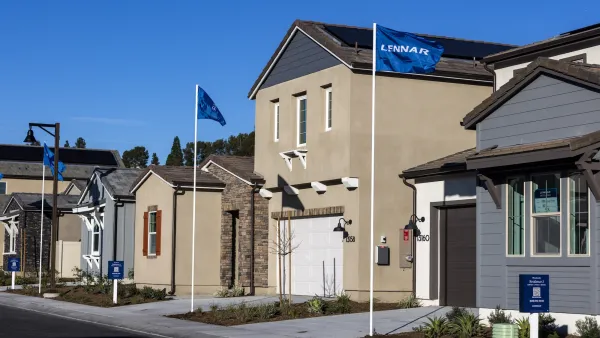
Just 17% of San Diego households can afford the city's $1M+ median home prices
The city is becoming increasingly unaffordable to prospective homebuyers.
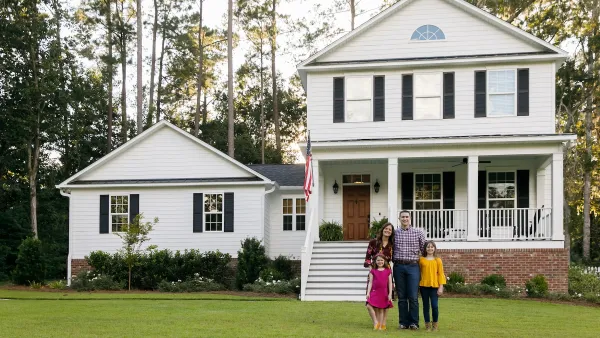
Report: Housing is becoming an 'inherited advantage'
As housing costs soar, buying a home is becoming unaffordable to a large swath of American families.
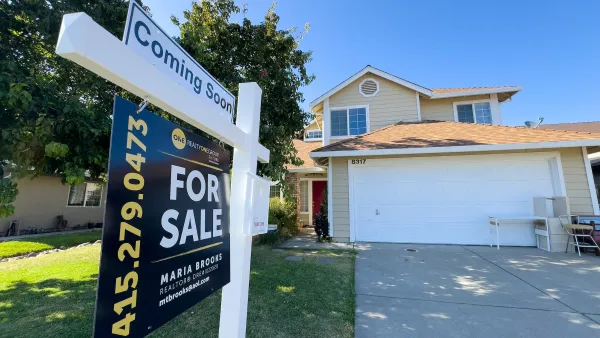
'Starter' homes cost over $1M in 242 US cities
Once concentrated in coastal regions, cities with starter homes valued at over $1 million are now spread across 26 states.

Planetizen Federal Action Tracker
A weekly monitor of how Trump’s orders and actions are impacting planners and planning in America.

Chicago breaks ground on $3 billion megadevelopment
The new neighborhood, titled Foundry Park, will one day host 3,700 residences.

This MA town is drowning in its own sewage — and residents like it that way
Susan Murcott, a waste water expert, said if Carlisle didn't address their leaking sewage, the problem could turn “deadly.”

Feds to more closely scrutinize proposed Amtrak facility’s environmental impact
The Federal Railroad Administration had initially said the facility qualified for a less extensive environmental review.

Boston is hard to build housing in: its chief of planning wants to keep it that way
Chief of Planning Kairos Shen said she would not make changes to Boston’s affordability requirements for new housing, which critics say have slowed down development.

California plans to bury El Niño’s downpour
If the state plays its cards right, it may be able to store a billion acre-feet of El Niño’s water in aquifers.

FREE Course: Walkable City 1: Why Walkability?
After describing his path towards focusing on walkability as the essence of good planning, Jeff Speck marches through his five principal reasons for making more walkable places.
Reinventing Malls: Planning Alchemy—Turning Gray Fields Into Gold
The course focuses on the opportunities and imperatives that shape reinvention of mall sites.

City of Rosemead
Rutgers University, Edward J. Bloustein School of Planning and Public Policy
One Hundred Miles
Hunter College, City University of New York (CUNY)
The Architects Foundation
University of Cincinnati Online
Montrose County
The Pocatello Development Authority
The Urban Renewal Agency of the City of Pocatello